#driver monitoring system
122 related articles
·2 min
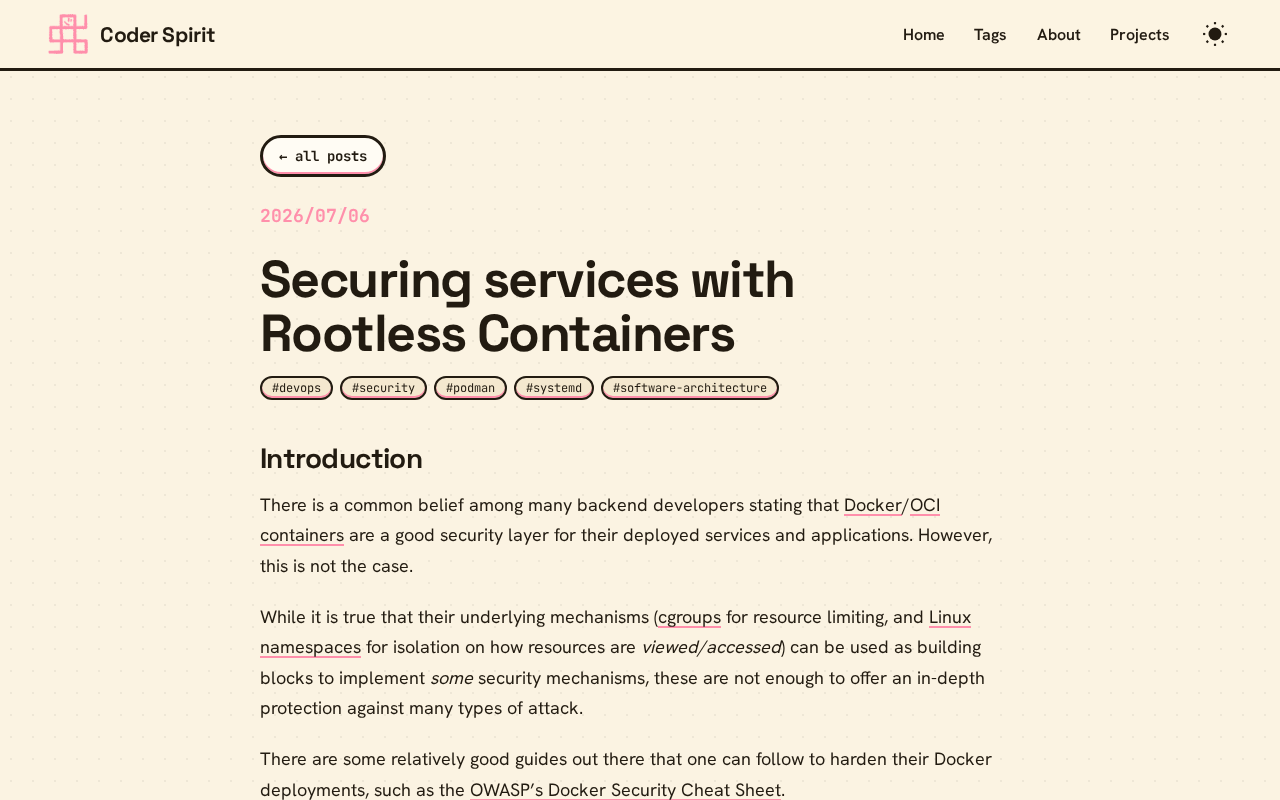
Rootless Containers: A Practical Guide to More Secure Service Deployment
A deep dive into Rootless Containers: technical principles, security advantages, and production practices. Learn how user namespaces and daemonless architecture reduce container escape risks.
Read more →
·2 min
Rootless Containers: A Practical Guide to More Secure Service Deployment
A deep dive into rootless containers: technical principles, security advantages, and production practices. Learn how user namespaces and daemonless architecture reduce container escape risks.
Read more →

·3 min
Volvo Fleet Management Platform Vulnerability Analysis: The Security Risk of One-Click Takeover of All Vehicles
Security researchers disclosed critical access control flaws in Volvo and Eicher's fleet management platform, enabling one-click takeover of all user accounts and vehicles.
Read more →

·3 min
PeaNUT: Deployment and Usage Guide for the NUT Open-Source UPS Monitoring Dashboard
PeaNUT is an open-source UPS monitoring Web dashboard built on NUT, offering real-time battery, load, and voltage metrics. Learn its features, deployment, and home lab best practices.
Read more →
·3 min
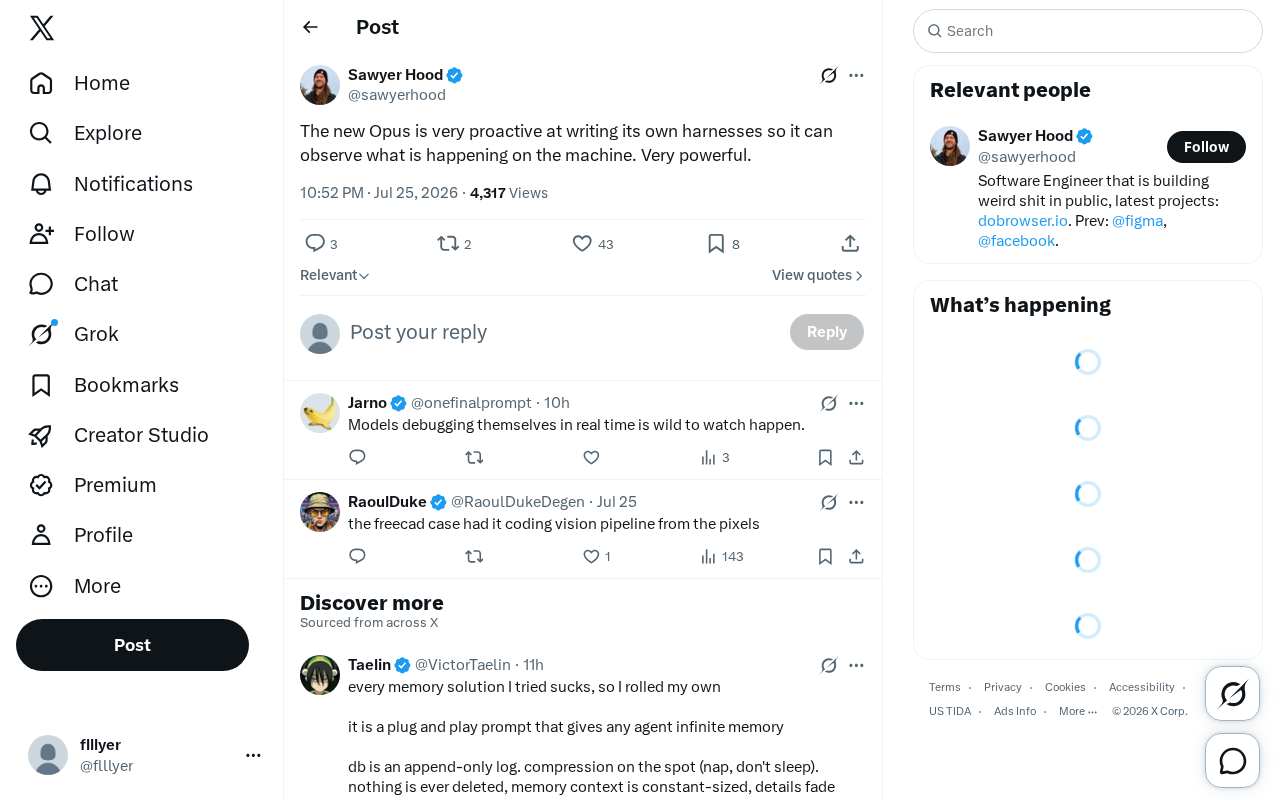
Claude Opus's Autonomous Debugging Capabilities: What It Means When AI Proactively Writes Test Harnesses
New Claude Opus proactively writes test harnesses to observe runtime behavior. We analyze how this shift from passive code generation to autonomous debugging marks a key evolution in AI programming.
Read more →
·4 min
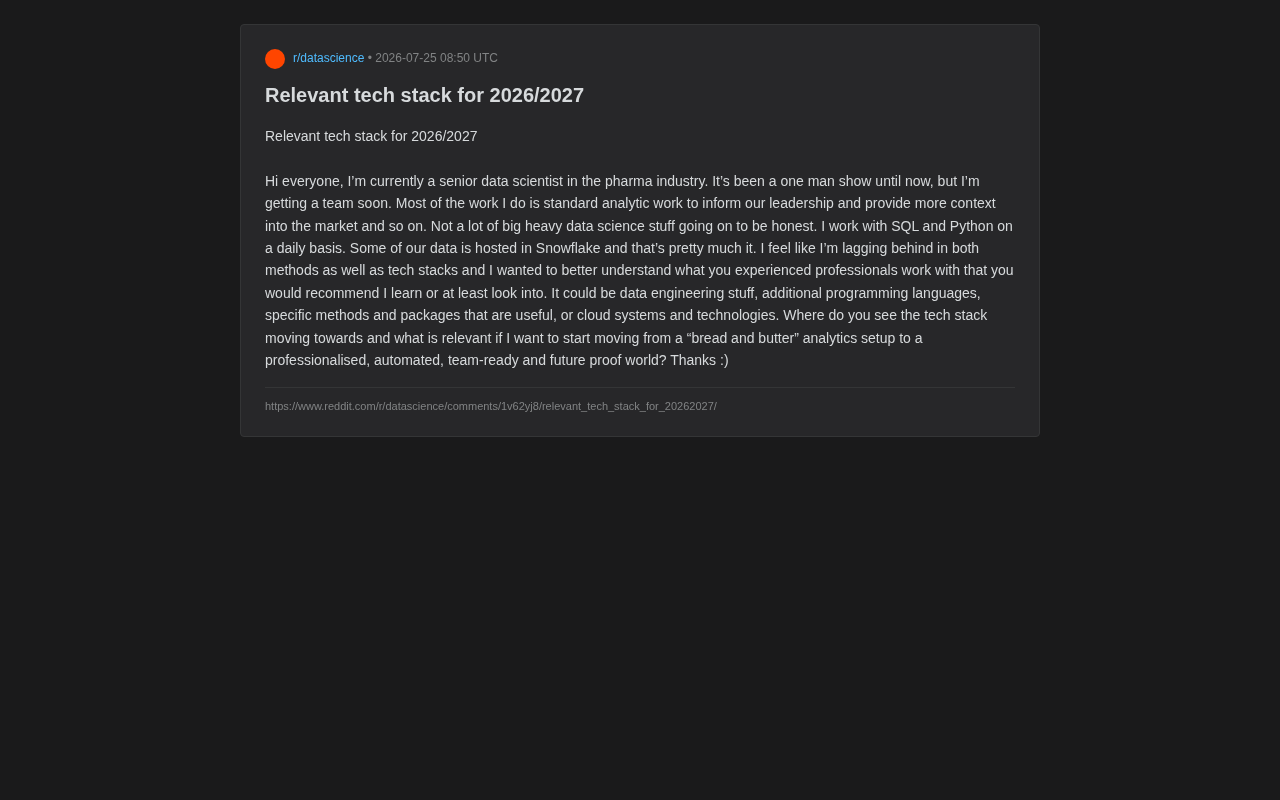
From Solo Analyst to Team Data Platform: A Practical Guide to Leveling Up Your Tech Stack
How should a data scientist upgrade their tech stack when transitioning from IC to team lead? A phased roadmap covering Git, dbt, Snowflake, modern data stack, and generative AI.
Read more →

·8 min
A Complete Guide to Agent Testing: Five Core Dimensions and Automation in Practice
In-depth analysis of the five core dimensions of AI Agent testing: command safety, tool-calling accuracy, task planning, output consistency, and error self-repair. Master automated testing and the transition path for test engineers.
Read more →

·8 min
The Complete Guide to Agent Testing: Five Core Dimensions and Automation in Practice
An in-depth analysis of the five core dimensions of AI Agent testing: command safety, tool-calling accuracy, task planning, output consistency, and error self-repair. Master automated testing methods and the transition path for test engineers.
Read more →

·6 min
Hands-On with Panel AI On-Premises Deployment: One-Click Enterprise Adoption and Unified Compute Cluster Scheduling
In-depth review of Panel AI v1.1.1: second-level installation, no-public-IP networking, batch compute cluster management. Learn how enterprise AI on-premises deployment barriers are dramatically lowered.
Read more →

·7 min
The Complete Guide to LLM Application Engineer Interviews: Six High-Frequency Topics in the Agent Domain
A focused guide to the core interview topics for LLM application engineers, covering agent architecture, Multi-Agent, Langfuse evaluation & tracing, security, and RAG optimization.
Read more →

·7 min
The Complete Guide to LLM Application Engineer Interviews: Six High-Frequency Agent Topics
A focused guide to core LLM application engineer interview topics, covering agent architecture, Multi-Agent, Langfuse evaluation, security, and RAG optimization.
Read more →

·7 min
From Chat to Agent Platform: A Practical Guide to Engineering AI Applications
A deep dive into engineering AI applications: from a simple chat page to a multi-layer Agent platform, covering RAG knowledge bases, Workflow scheduling, multi-model management, and run tracing.
Read more →

·3 min
The Complete Guide to AI-Native Architecture: RAG, Agents, and MCP
A comprehensive guide to AI-native application architecture: LLM inference, RAG retrieval (vector DB/knowledge graph/BM25), Agents, MCP tool calling, AI gateways, and observability — end-to-end.
Read more →

·2 min
Pushing Home Media Servers to the Limit: 21 Concurrent Plex Streams and a Custom Monitoring Dashboard
How one self-hoster achieved 21 concurrent Plex streams, tackled bandwidth and disk I/O bottlenecks, and built Manifold — a custom React dashboard combining netdata and MQTT.
Read more →
YimMenuV2 Deep Dive: An Open-Source Ex…
·2 min
YimMenuV2 Deep Dive: An Open-Source Experimental Menu Tool for GTA 5 Enhanced
YimMenuV2 is an open-source experimental in-game menu tool for GTA 5 Enhanced, built in C++. This deep dive covers DLL injection, function hooking, anti-cheat risks, and reverse engineering value.
Read more →

·4 min
AMD Ryzen AI Halo Real-World Test: Can a Non-Programmer Use Local AI to Write Code?
A non-programmer tests AMD Ryzen AI Halo by deploying local AI models to tackle a real dev task. After testing Ollama and Qwen3, the verdict: AI amplifies developers, it doesn't replace them.
Read more →

·3 min
LangChain V1.3 in Practice: Mastering AI Engineering Mindset — From Tool User to Tool Master
Why do AI results vary so dramatically? LangChain V1.3 reveals the answer: engineering mindset. Covers LangGraph, Deep Agent, RAG, Time Travel, and more.
Read more →

·3 min
Codex on Both Fronts: A Complete Setup Guide for the Desktop and CLI AI Coding Clients
A complete guide to installing and configuring OpenAI Codex desktop and CLI clients, covering model settings, API relay integration, prompt caching, and real cost data for GPT-5.6 AI coding.
Read more →

·2 min
AI Task Routing for Cost Reduction: A Framework for Smaller Teams to Evaluate ROI
Task routing is hailed as a silver bullet for LLM cost reduction, but routing strategy design, model training, and self-hosting each carry hidden engineering costs. This deep dive helps smaller teams evaluate ROI and offers a phased implementation path.
Read more →

·3 min
From RAG to Agent: A Complete Architecture Guide for AI-Native Systems
A comprehensive guide to modern AI-native system architecture: LLM reasoning, three RAG paradigms (vector/knowledge graph/BM25), Agents, MCP tool calling, AI gateways, and observability for enterprise AI.
Read more →