#enterprise RAG
2248 related articles

·3 min
Mondragon Cooperative: How the World's Largest Worker-Owned Enterprise Operates
Deep analysis of Mondragon Corporation—the world's largest worker cooperative: its organizational structure, governance principles, operating model, and implications for decentralized collaboration.
Read more →

·2 min
Enterprise RAG in Practice: A Complete Guide to the Core Challenges from Setup to Production Optimization
A deep dive into enterprise RAG from setup to production, covering document chunking, vector search, query rewrite, reranking, and quality evaluation frameworks.
Read more →

·3 min
Spring AI Explained: Unified API, RAG, and Enterprise AI Development Practical Guide
Deep dive into Spring AI framework's core features including provider-agnostic unified API abstraction, RAG retrieval-augmented generation, and structured output to help Java developers build enterprise AI apps.
Read more →

·3 min
Spring AI Explained: Unified API, RAG, and Enterprise AI Development Guide
Deep dive into Spring AI framework's core features including provider-agnostic unified API abstraction, RAG retrieval-augmented generation, and structured output to help Java developers build enterprise AI apps.
Read more →

·4 min
Spring AI 2.0 in Practice: Building an Enterprise RAG Knowledge Base Q&A System with Cursor
Build an enterprise RAG knowledge base Q&A system using Spring AI 2.0, Cursor AI programming, Ollama local deployment, and Redis vector storage. Runs on just 4GB VRAM.
Read more →

·3 min
Enterprise RAG Knowledge Isolation in Practice: Physical Isolation vs. Adaptive Soft Boundaries
A deep dive into two enterprise RAG knowledge isolation strategies: physical isolation vs. adaptive soft boundaries — covering metadata tagging, dynamic user-profile filtering, hybrid retrieval architecture, and data quality best practices.
Read more →

·2 min
Building a RAG Knowledge Base with Dify: A Zero-Code Guide from Basics to Enterprise Practice
Learn how to build a RAG knowledge base with zero code using Dify's visual platform. Compare Dify vs Coze for private deployment, and master the Dify+Qwen+RAG stack.
Read more →

·6 min
5 Critical Engineering Pitfalls in Enterprise RAG Knowledge Base Deployment: The Real Barriers from Demo to Production
Why do enterprise RAG knowledge bases dazzle in demos but fail in production? This article dissects five critical engineering pitfalls with real-world case studies from million-doc platforms and ops agents.
Read more →

·3 min
Building a RAG Q&A Workflow with Dify: A 4-Step Guide to Enterprise Knowledge Base Chatbots
Learn RAG fundamentals and build an enterprise knowledge base chatbot with Dify in 4 steps: data prep, model config, knowledge base import, and workflow orchestration.
Read more →

·4 min
Building an Enterprise Knowledge Base with RAG: A Complete Guide from Principles to Optimization
A comprehensive guide to building enterprise knowledge bases with RAG, covering vector database selection, text chunking, Embedding models, multi-strategy retrieval, re-ranking, and Agent integration for high-accuracy AI Q&A systems.
Read more →

·3 min
Enterprise-Grade RAG Full-Pipeline Optimization: Multi-Turn Conversations, Retrieval Tuning, and Production Engineering in Practice
A deep dive into full-pipeline optimization for enterprise RAG systems, covering multi-turn query rewriting, retrieval tuning, and quality evaluation to take RAG from demo to production.
Read more →
 Tutorials
·3 min
Enterprise RAG Project in Practice: A Complete Guide from Principles to Deployment
Complete guide to enterprise RAG projects covering principles, LangChain implementation, data processing, retrieval optimization, evaluation, and cloud deployment for AI knowledge base applications.
Read more →
 Tutorials
·3 min
From Traditional RAG to Agentic RAG: Principles Compared and Enterprise-Grade Implementation Guide
Deep dive into traditional RAG limitations and Agentic RAG upgrades, with ChatBox source code analysis covering core tool design, intelligent decision flows, and LangGraph implementation for enterprise deployment.
Read more →
 Tutorials
·3 min
RAG Technology Full-Stack Analysis: Core Principles, Enterprise Implementation & Learning Path
Deep analysis of RAG technology's core principles, three key values, enterprise implementation cases, common pitfalls, and a systematic learning roadmap covering vector databases, retrieval optimization, and Knowledge Graph fusion.
Read more →
 Tutorials
·3 min
Enterprise RAG Implementation: Architecture Principles and Production-Grade Optimization Guide
Complete guide to enterprise RAG architecture covering data indexing, vectorization, and retrieval optimization. Practical insights on chunking strategies, hybrid retrieval, and hallucination control for production-grade LLM applications.
Read more →
 Product Reviews
·2 min
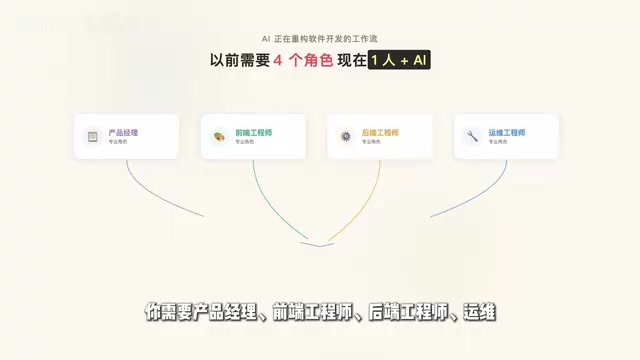
Full-Stack Delivery with Claude Code: One Person Completing an Enterprise-Level RAG Project
How to use Claude Code to independently deliver an enterprise-level multimodal RAG project, covering frontend/backend strategy, spec docs, and full-pipeline methodology.
Read more →
 Tutorials
·1 min
RAGFlow Local Deployment Guide: Complete Tutorial for Building an Enterprise-Grade RAG Knowledge Base with Docker
Complete RAGFlow local deployment guide covering RAG principles, Docker setup, Ollama LLM integration, knowledge base creation, and chat testing. Build an enterprise-grade private knowledge base Q&A system from scratch.
Read more →

·3 min
Numbat Open Source: A Cross-Framework AI Agent Security Detection and Response Solution Explained
Numbat is an open-source AI Agent security detection and response tool supporting cross-framework deployment with Agent behavior visibility and pre-execution interception capabilities.
Read more →

·3 min
Open Weight Models: The Strategic Game Between AI Democratization and American Competitiveness
Explore how open weight models achieve both global AI democratization and maintain U.S. competitiveness. Learn the differences between open weight, open source, and closed models, and their strategic impact.
Read more →

·3 min
Open Weight Models: The Strategic Game of AI Accessibility and American Competitiveness
Explore how open weight models simultaneously enable global AI accessibility and maintain U.S. competitiveness. Learn the differences between open weight, open source, and closed source models.
Read more →