#fuzz testing
120 related articles

·5 min
July 24 AI Daily Brief: Flux 3 Multimodal Release, Kimi K3 Lags in Testing, Qwen Tops TTS Rankings
July 24 AI news: Black Forest Labs launches Flux 3 multimodal model, Kimi K3 lags in US-UK gov tests, Alibaba Qwen tops TTS rankings, Etched raises $300M, AMD unveils MI430X.
Read more →

·5 min
A Beginner's Guide to Prompt Engineering: From One-Off Instructions to a Systematic Methodology
A beginner's guide to prompt engineering covering the four functions of prompts, the key differences from prompt engineering, a six-step systematic workflow, and critical technical and practical limitations.
Read more →

·5 min
Complete Breakdown of Core Competencies for AI Agent Engineers: From Demo to Production-Grade Systems
Deep breakdown of 4 core AI Agent engineer competencies: business decomposition, multi-Agent architecture, quantitative evaluation, and engineering delivery—bridging the gap from Demo to production.
Read more →

·3 min
Cross-Region Packet Loss Monitoring in Practice: Tool Selection and Deployment Guide
A systematic guide to cross-region packet loss monitoring covering core challenges, tool comparison (MTR, SmokePing, PRTG, Zabbix, ThousandEyes), and a self-hosted deployment solution using Prometheus + Grafana.
Read more →

·4 min
The Cursor Swarm Experiment: What AI Rebuilding SQLite from Scratch in Rust Reveals About Cost
Cursor's swarm experiment had AI teams implement a SQLite engine in Rust from scratch using only 835 pages of docs. All-frontier models cost $10K+, hybrid role division just $1.3K—a 7.9x gap.
Read more →

·2 min
Three Flow Control Nodes in Dify Workflows: Question Classifier, Conditional Branch, and Human-in-the-Loop Explained
An in-depth look at three core flow control nodes in Dify workflows: the Question Classifier for intelligent LLM-based routing, the Conditional Branch for precise if-else logic, and Human-in-the-Loop for high-risk confirmation checkpoints.
Read more →

·2 min
Dependency Drift in Production AI Agents: Detection, Response, and Building Resilient Systems
AI Agents in production face systemic dependency drift risks — model updates silently change outputs and silent failures are hard to detect. Learn detection strategies, hidden costs, and engineering practices.
Read more →

·3 min
LangSmith Triple Release: Harness, Sandboxes, and Eval Complete the Agent Engineering Toolchain
LangChain launches Harness, Sandboxes, and Eval integrated into LangSmith, creating the first complete Agent engineering toolchain from development to acceptance testing.
Read more →

·3 min
OpenCode In-Depth Review: Can This Open-Source Coding Agent Replace Claude Code?
OpenCode is an open-source terminal coding agent with 180K+ GitHub stars, supporting hundreds of models and a dual-layer agent architecture — completely free. See how it compares to Claude Code.
Read more →

·3 min
SQLite STRICT Tables Explained: The Type Enforcement Debate and Best Practices
Deep dive into SQLite STRICT tables: is flexible typing a feature or flaw? Covers the author's stance, type vs. validation debate, Turso alternatives, and best practices for type-safe database design.
Read more →

·3 min
Bun Rewrote a Million Lines of Code in 11 Days with Claude Code: A New Paradigm for AI-Assisted Programming
Bun author Jared Sumner used Claude Code's dynamic workflows to rewrite 1M+ lines of Zig code into Rust in 11 days for $165K — what 3 engineers would need a year to do.
Read more →

·2 min
Quantifying LLM Output Quality with Pydantic Evals and Integrating It into CI Quality Gates
Learn how to build an LLM evaluation system with Pydantic AI and Amazon Bedrock — turning fuzzy AI output quality into automated, CI-enforceable engineering metrics.
Read more →

·4 min
From 50% to 92%: A Practical Methodology for Teaching AI Agents to Master Spreadsheets
An engineering team spent four months raising an AI coding agent's spreadsheet accuracy from 50% to 92%. Deep dive into REPL architecture, validation loops, and domain knowledge injection.
Read more →
Zig Creator Calls Out Anthropic: The G…
·2 min
Zig Creator Calls Out Anthropic: The Gap Between AI Hype and Technical Reality
Zig creator Andrew Kelley publicly criticizes Anthropic for "blowing smoke" in AI marketing. A deep dive into the tension between AI hype and engineering integrity.
Read more →

·4 min
LangChain V1.3 in Practice: Master AI Engineering Thinking and Break Free from Tool Dependency
LangChain V1.3 course deep-dive: why engineering thinking beats tool-chasing. Covers RAG accuracy myths, Token cost control, and LangChain/LangGraph/Deep Agent breakdowns.
Read more →

·2 min
Why Claude Code Ditched RAG in Favor of Grep for Code Search
Why Claude Code uses Grep instead of RAG for code search — exploring the 4 core pain points of RAG in coding contexts and how Agentic Search actually works.
Read more →
·5 min
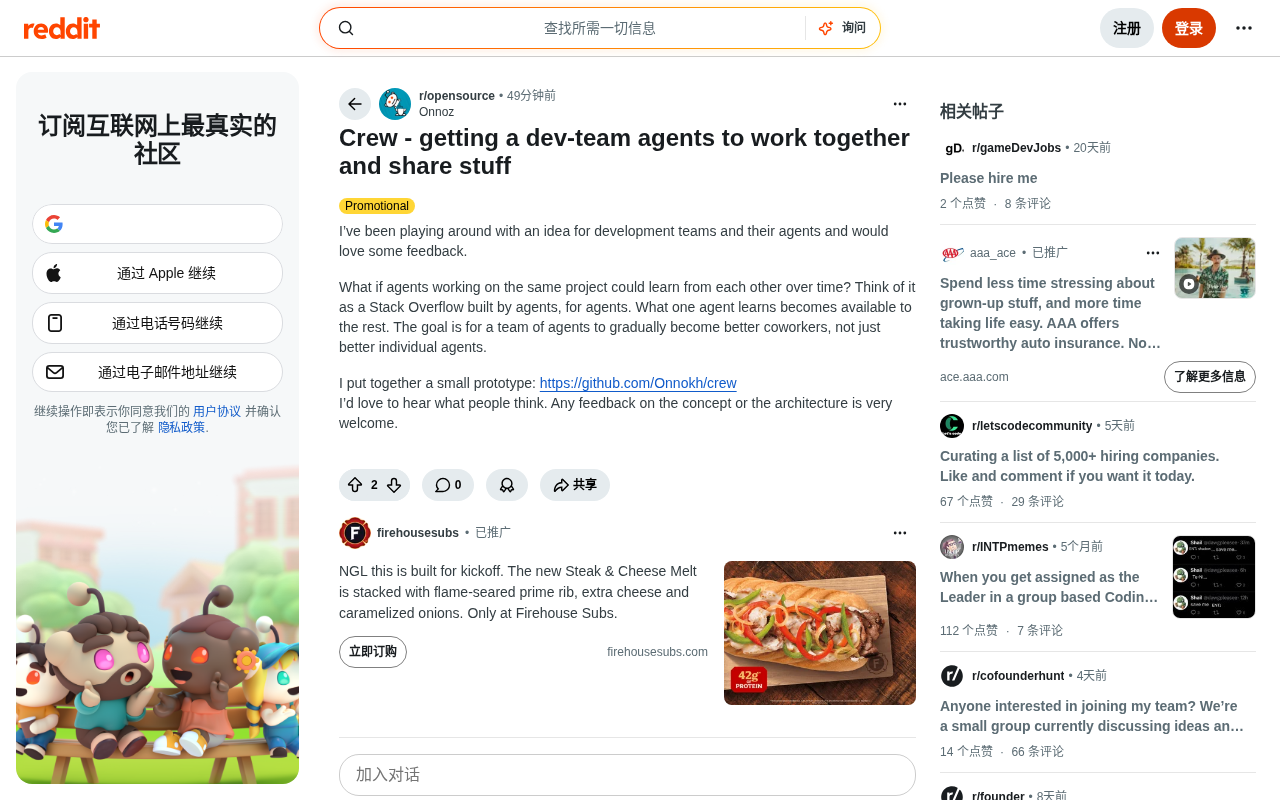
Crew: Enabling Multiple AI Agents to Collaborate and Share Knowledge Like a Team
Crew is an open-source AI agent collaboration framework whose core idea is to build a "Stack Overflow" for agents—letting multiple agents share experience and accumulate knowledge, shifting from optimizing single agents to building evolving teams.
Read more →

·3 min
OpenAI Codex CLI Hands-On Tutorial: A Guide to Using the Local Terminal AI Coding Agent
An in-depth guide to installing, logging in, and using OpenAI Codex CLI: call AI directly in your local terminal to modify code, refactor components, and add file and image context, with Git branch management for an efficient local AI coding workflow.
Read more →

·5 min
Local Code Indexing: Cutting AI Coding Token Costs by 94%
AI coding bills exploding? 90% of the cost hides on the input side. Learn how local code indexing + dual-path search cuts each query from 83,000 to 4,900 tokens—saving 94%.
Read more →
·4 min
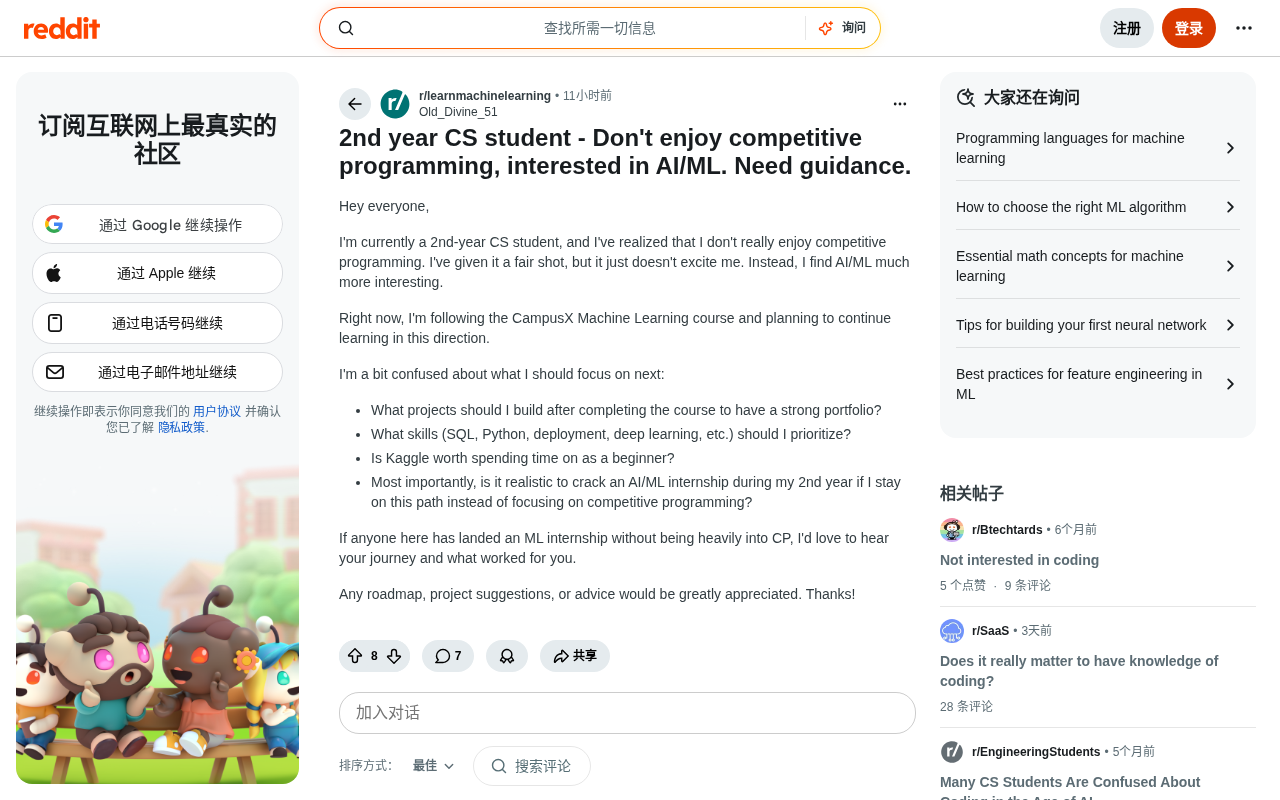
No Competitive Programming Required: How CS Students Can Pivot to AI/ML and Land Internships
How can CS students who dislike competitive programming systematically pivot to AI/ML? This guide covers skill priorities (Python/SQL/ML/deployment), portfolio strategy, Kaggle tips, and real paths to landing AI/ML internships.
Read more →