#image recognition tutorial
90 related articles

·3 min
Codex in Action: A Complete Guide to Building a WeChat Mini Program with AI — No Coding Experience Required
A complete walkthrough of building and launching a WeChat Mini Program using OpenAI Codex and ChatGPT — from AI prototyping to ICP filing. MVP delivered in 5 days, no coding required.
Read more →

·3 min
Understanding Large Language Models from Scratch: The Complete AI Evolution from Deep Blue to DeepSeek
A beginner-friendly guide clarifying AI, machine learning, deep learning, and LLMs — tracing the evolution from Deep Blue to AlphaGo, ChatGPT, and DeepSeek.
Read more →

·3 min
LangGraph Production Template in Practice: A Complete Guide to Budget Control and Canary Routing
Deep dive into langgraph-agent-stack: per-run dollar budget control, canary traffic routing, Mock testing mode, and 800+ test cases to safely deploy AI Agents from demo to production.
Read more →

·4 min
MiniMax M2 Local AI Knowledge Base Test: Source Tracing, Deduplication, and Fact Verification
Build a local AI knowledge base with MiniMax M2 in OpenCode: source tracing, fact vs. opinion separation, conflict preservation, and timeliness management.
Read more →

·3 min
How to Choose AI Learning Books: A 5-Dimension Rational Evaluation Framework
How to evaluate AI/ML books rationally? Use these 5 dimensions—content depth, code quality, currency, community reputation, and companion resources—to choose wisely.
Read more →

·3 min
Building a Transformer from Scratch: A PyTorch Hands-On Guide for Self-Taught Developers
A self-taught developer with 2 years of Python experience implements Transformer from scratch using plain PyTorch, following the original 'Attention Is All You Need' paper with a two-phase approach: inference first, then full training.
Read more →

·4 min
RoughCut: A Fully Automated AI Video Editing Tool Built with Codex
RoughCut is a fully automated AI editing tool generated by Codex, supporting talking-head, unboxing, and commentary modes with a semi-automated publishing system.
Read more →

·4 min
A Deep Dive into Claude Cookbooks: A Guide to the Official 47K-Star Hands-On Code Repository
Anthropic's open-source Claude Cookbooks project offers runnable Jupyter Notebook examples covering RAG, Tool Use, multimodal processing, and more—helping developers master Claude API best practices.
Read more →

·3 min
Building a Real-Time AI Tutor for 5-Year-Olds: Technical Challenges and the Educational Balance
Exploring the core challenges of building real-time AI tutors for preschoolers: low-latency voice interaction, children's ASR, content safety guardrails, and AI as a guide rather than an answer machine.
Read more →

·4 min
Learn ML Free at Public Libraries: A Complete Guide to O'Reilly Tech Book Resources
Getting O'Reilly machine learning books free at public libraries? It's no myth. This article reveals hidden tech learning resources at libraries, including online platform subscriptions and digital database access, helping self-learners build AI knowledge at zero cost.
Read more →

·4 min
Complete Guide to Gesture Control on Huawei Sound X5: From Waving to Switch Songs to Whole-Home Automation
The Huawei Sound X5 is more than a Bluetooth speaker! Learn how to activate wave detection via the Smart Life App for contactless song switching, volume control, AC control, and whole-home automation.
Read more →

·2 min
Fine-Tuning PaliGemma 2 for Custom Object Detection: A Practical Guide from General to Specialized
Learn how to fine-tune Google's open-source PaliGemma 2 VLM for custom object detection. Covers model architecture, data formatting, fine-tuning strategies, and real-world value.
Read more →

·4 min
The Secret of AI Power Users: Understanding the Underlying Logic Matters More Than Prompt Tricks
The gap between AI power users and everyone else isn't about prompt tricks — it's about understanding LLMs, multimodal models, workflows, and agents. Build your complete AI mental model here.
Read more →

·5 min
Runs on Low VRAM! A Hands-On Look at the ID LoRA Face-to-Video Workflow
A face-to-video workflow built on GGUF quantized models and ID LoRA runs on just an RTX 3060 with 6GB VRAM. This article breaks down its core principles, four-step process, and how it tackles facial consistency in AI video.
Read more →
·7 min
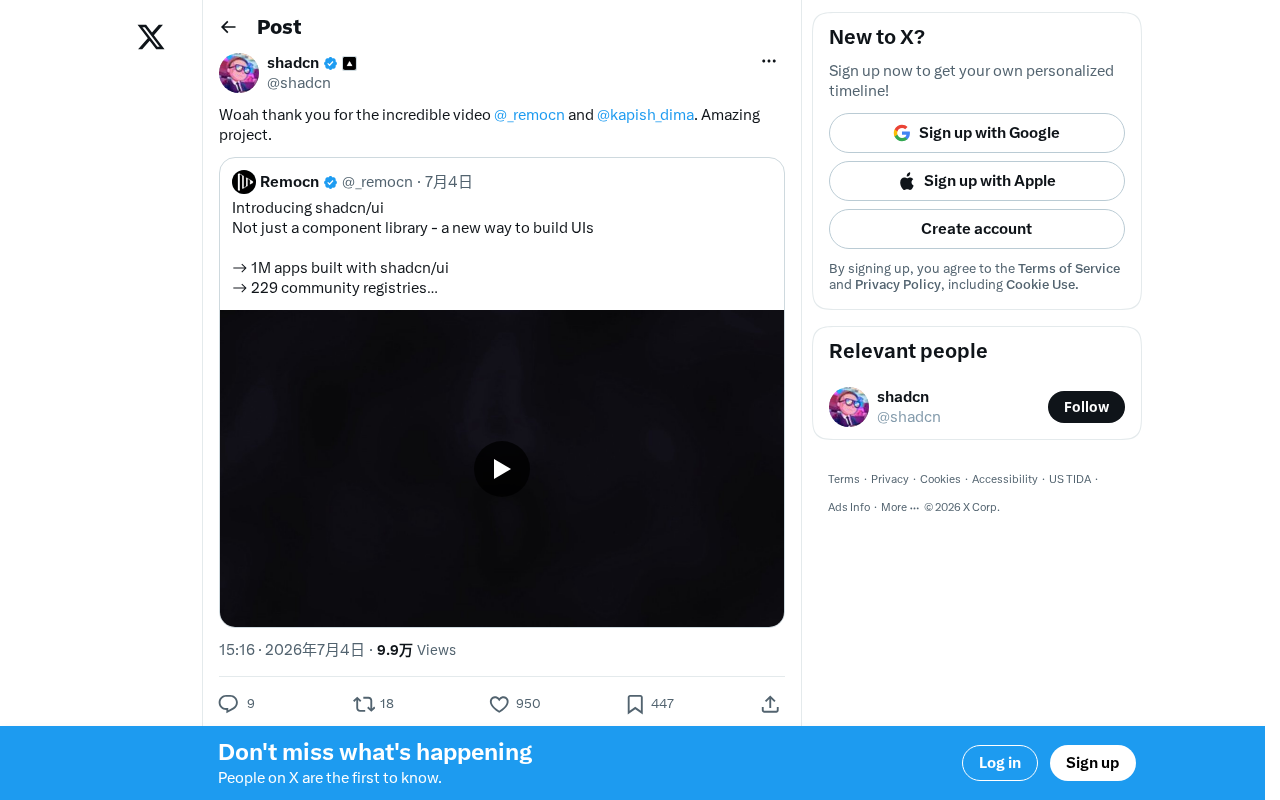
Open Source Community Collaboration Culture: How a Single Tweet Amplifies Technical Impact
Starting from a brief thank-you tweet, this article explores content co-creation in AI and open source communities—how video demos become a new dissemination medium and how creators and developers build trust networks together.
Read more →

·7 min
Dify 1.8.0 in Practice: A Complete Guide to Building Enterprise-Grade AI Workflows with Zero Code
An in-depth walkthrough of deploying Dify 1.8.0 and building applications: three-step Docker deployment, five app types compared, and Workflow vs Chatflow use cases—build enterprise AI apps with zero code.
Read more →
·6 min
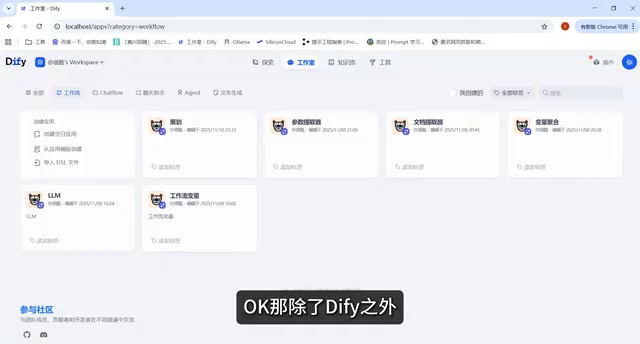
Complete Guide to Deploying Dify Locally: Docker + Ollama + RAG Setup Tutorial
A detailed guide to deploying the Dify agent platform locally: from Docker setup and integrating Ollama + DeepSeek local LLMs to workflow orchestration and RAG knowledge base construction.
Read more →

·7 min
Getting Started with LangChain: The Core Framework Connecting LLMs and AI Applications
A deep dive into LangChain's positioning and value—why do LLMs need a middle layer? How does LangChain serve as the 'glue' unifying multi-model interfaces and supporting Agent development? Learn its core modules and learning path.
Read more →

·3 min
Python for Absolute Beginners: A Complete Breakdown of a 10-Hour Systematic Course
Breaking down a 10-hour Python course for absolute beginners — covering syntax, OOP, functional programming, web scraping, and automation, with mind maps and exercises.
Read more →

·4 min
YOLO Learning Roadmap: From Version Evolution to Source Code Deep Dive
A systematic YOLO learning roadmap: from understanding V1/V3/V4 version evolution, to building knowledge via video, to mastering implementation by debugging source code.
Read more →