#inference costs
2747 related articles

·3 min
AI Costs Out of Control: Inference Expenses Skyrocketing—Who's Footing the Bill?
An in-depth analysis of why AI costs keep rising—inference expenses, premium model pricing, and context bloat—plus practical optimization strategies including model cascading, caching, and self-hosting.
Read more →

·3 min
OpenAI Cuts Inference Costs in Half: AI Competition Shifts from 'Who's Strongest' to 'Who's Cheapest'
OpenAI engineers have found ways to cut inference costs by over 50%. Combined with Anthropic's research AI tools and an $800M chip startup, the AI race is shifting from capability to cost efficiency.
Read more →

·6 min
AMD MI355X Running GLM5.2: Inference Costs at Half of NVIDIA Blackwell
AMD MI355X achieves 2,626 tokens/sec throughput running GLM5.2 at half the TCO of NVIDIA Blackwell. Deep analysis of the technical logic, ROCm ecosystem progress, and market implications.
Read more →

·4 min
KV Cache Saves 20x on Costs: The Underlying Principles and Practical Tips for LLM Inference Optimization
Deep dive into how KV Cache reduces LLM API costs by 20x. From Transformer attention matrix multiplication overhead to prompt caching best practices, understand the fundamentals of AI inference cost optimization.
Read more →

·4 min
Is Grokbot Worth Subscribing To? A Clear-Eyed Breakdown for Claude Code Users
Deep analysis of Grokbot's core appeal and fatal flaws: model lock-in, premium pricing, and false agent-chat needs. Why Claude Code and Codex users don't need it.
Read more →
·3 min
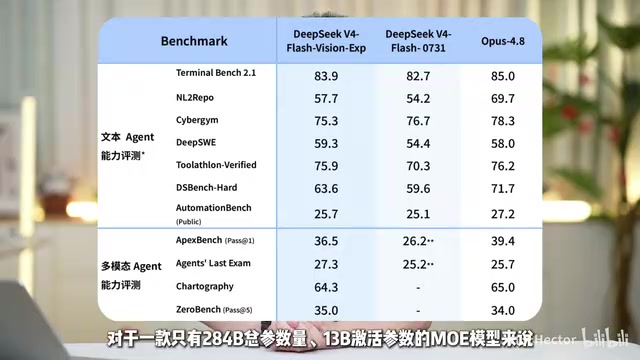
DeepSeek V4 Vision Model + Harness Workflow Practical Guide
Complete hands-on guide to DeepSeek V4 Flash multimodal model with Harness workflows: Agent Preset configuration, front-end web dev, AI PPT, and automated video generation.
Read more →

·3 min
Complete Guide to Connecting Third-Party Models in Cursor: Breaking Free from Vendor Lock-In
Learn how to connect third-party AI models in Cursor via Fireworks.ai, OpenRouter, and custom OpenAI-compatible endpoints to reduce costs and avoid vendor lock-in.
Read more →

·4 min
How to Find Research Gaps in ML/LLM/CV: A Systematic Methodology and Direction Guide
A systematic guide to identifying research gaps in ML, LLMs, and CV—covering paper reading techniques, reproduction-driven discovery, promising directions, and practical team advice.
Read more →

·2 min
Bolnee-Chat: A Self-Hosted Chatbot Solution for Enterprise Websites
Bolnee-Chat is a self-hosted chatbot tool for enterprise websites, supporting private deployment to ensure data sovereignty and compliance. This article analyzes its advantages, use cases, and maturity.
Read more →

·3 min
Privatized AI Programmers: The Best Solution for Enterprises to Escape Token Anxiety
AI coding is now standard, but third-party SaaS token limits and rising costs frustrate enterprises. This article analyzes privatized GPU deployment for unlimited Token-Free AI programming.
Read more →

·3 min
NVIDIA's Rumored Acquisition of Hugging Face: The Monopoly Crisis Facing the Open-Source AI Ecosystem
NVIDIA's rumored acquisition of Hugging Face raises concerns about open-source AI. This article analyzes the risks of a compute monopolist controlling the model distribution platform.
Read more →

·3 min
My Experience with AI Agents: The 'Oh My God' Moment from Chat to Agent
A real user's experience after spending $20 on an AI Agent: the paradigm shift from passive chat to active task execution, and how to use AI wisely while preserving critical thinking.
Read more →

·3 min
Old Sci-Fi Predictions Coming True? Real-World Lessons from AGI and the Centralization of Computing Power
An old sci-fi video goes viral on Reddit — its central machine premise eerily mirrors today's AGI and computing centralization trends. Exploring how sci-fi prophecies illuminate reality.
Read more →

·4 min
From Backend to Agent Engineer: What P7 Interviews Really Test
How can a 6-year backend dev transition to AI Agent engineer? Deep dive into P7 interview essentials: validation, semantic cache, state machines, and MCP.
Read more →

·4 min
Reusing LLM Inference Across Users: Exploring the Feasibility of Knowledge Graph Caching
Exploring cross-user LLM inference reuse via knowledge graph caching, analyzing the boundaries of semantic caching, GraphRAG, KV-Cache, and the engineering challenges of reasoning process reuse.
Read more →

·4 min
Deep Dive into DeepSeek Harness: The 'Everything is a Plugin' AI Agent Framework
DeepSeek Harness is an open-source AI agent framework with an "everything is a plugin" modular architecture. Learn about its core design, four operating modes, V4 Pro model, and real-world use cases.
Read more →

·4 min
OnePage: An Open-Source Minimalist E-Reader and AI Terminal
OnePage is an open-source minimalist e-reader just 5mm thick, powered by ESP32-C6 with a 4.26" e-ink display and CNC aluminum frame. It doubles as a voice AI Agent terminal supporting DeepSeek and more.
Read more →

·3 min
Is the Jetson Nano 4GB Still Worth Buying? A Guide to Avoiding Pitfalls in Edge AI Hardware Selection
Is the Jetson Nano 4GB still worth buying? This guide compares TOPS metrics, real-world FPS, and cost-effectiveness across Jetson Orin Nano, Raspberry Pi + Coral, and more for edge AI projects.
Read more →

·3 min
JetBrains Open-Sources go-modern-guidelines: Teaching AI to Write Modern Go Code
JetBrains open-sources go-modern-guidelines to help AI coding assistants generate modern Go code following best practices for generics, slog, error handling, and more.
Read more →

·3 min
Diffusion Language Models: Principles, Advantages, and Developer Practice Guide
A deep dive into Diffusion Language Models (DLMs): how they work, advantages over autoregressive models, continuous vs. discrete diffusion, training and inference pipelines, and developer practice guide.
Read more →