#kernel launch overhead
108 related articles

·5 min
A Deep Dive into Cloud Coding Agents: How Users in China Can Choose Wisely
What exactly is the Cloud Coding Agent Silicon Valley is hyping? This article breaks down the core concept across three axes—where it runs, who watches, where tasks start—and gives users in China practical advice on local alternatives.
Read more →

·5 min
Why Did Ollama Rise So Fast? Decoding the Success of a Local LLM Tool
How did Ollama grow from a niche open-source project into developers' default choice for running local LLMs? This article breaks down its rise across product design, technical strategy, and ecosystem building.
Read more →

·4 min
Complete Guide to Dify Local Deployment: Build a Private AI Workflow Platform from Scratch
Step-by-step guide to deploying Dify locally: Docker setup, Docker Compose installation, source code configuration, .env file setup, and container startup for Windows, macOS, and Linux.
Read more →

·7 min
Complete Guide to Training Small Models on Kaggle's Free Compute: GPU Quotas and Practical Tips
In-depth guide to Kaggle's free-tier compute: P100/T4 GPU with 30 hours/week quota, 12-hour sessions, suitable models like CNN and BERT fine-tuning, plus tips like mixed precision and checkpointing to start deep learning at zero cost.
Read more →

·4 min
Hardware-Level Phone AI Agent Control: Bypassing Software Restrictions with HDMI + USB HID
An open-source project uses HDMI capture for screen vision and USB HID to simulate touch input, enabling root-free, app-free hardware-level phone AI Agent control. Explore the principles, advantages, and limitations.
Read more →
·6 min
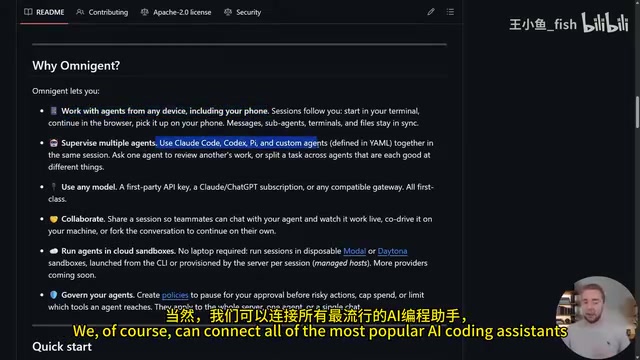
Omnigent Open-Sourced: A Meta-Harness for AI Coding Agents Built by Databricks
Databricks open-sources Omnigent, a Meta-Harness for orchestrating Claude Code, Codex, and more AI coding assistants together—with built-in guardrails, cross-model workflows, and real-time collaboration. Get started in 10 minutes.
Read more →

·4 min
Unsloth v0.1.463-beta: Fixes Studio Crash and llama-server Permission Issue
Unsloth v0.1.463-beta fixes a Studio crash caused by access-denied errors during llama-server service discovery. Improves stability for multi-user servers and Windows environments.
Read more →

·6 min
Steam Machine In-Depth: The Sweet Spot Between Console Convenience and PC Freedom
After weeks of hands-on time with the Steam Machine, it still carves out a unique niche thanks to its living-room-and-desk flexibility—even alongside a PS5 and Xbox Series X. Mature SteamOS, strong Proton compatibility.
Read more →

·3 min
GPT-5.6 Three-Model Launch, SenseNova Open-Source Training Stack: A Day of Dense AI Industry Updates
OpenAI launches GPT-5.6 Sol/Terra/Luna, SenseNova open-sources its full multimodal training stack, Gemini adds free Study Notebooks, Apple M7 brings on-device AI to mainstream — a roundup of today's AI updates.
Read more →

·6 min
Getting Started with Dify: A Complete Guide to Deployment, Configuration, and Workflow Practice
A systematic guide to Dify's three deployment methods (Docker/source/online), five application types, and hands-on workflow nodes—covering LLM integration, MySQL config, and app publishing.
Read more →
·7 min
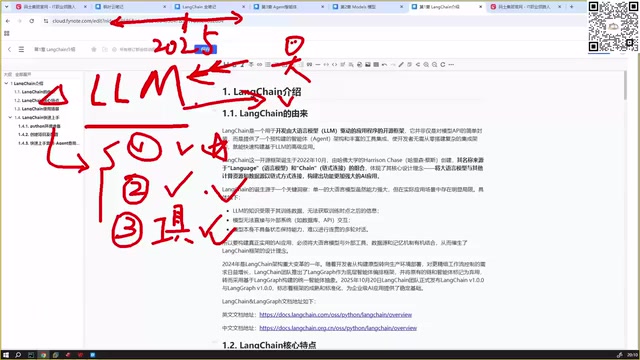
LangChain Hands-On Guide: From LLM Calls to Agent Development
Master LangChain from scratch: the three limitations of LLMs, init_chat_model unified interface config, the Message type system, and the path from LLM calls to Agent development.
Read more →

·6 min
AMD Ryzen AI Halo Dev Kit: A $4,000 Local LLM Powerhouse Taking on Apple and NVIDIA
AMD officially unveils the Ryzen AI Halo local AI dev kit, priced around $4,000 with 128GB unified memory, capable of running 70B LLMs locally. An in-depth look at its specs, pricing, and market competition.
Read more →

·7 min
LangSmith Engine: An Intelligent Operations Tool That Automatically Diagnoses and Fixes Agent Failures
LangChain's LangSmith Engine is an intelligent agent tool for tracking Agent failures, prioritizing issues, and auto-drafting fixes. Deep dive into its core capabilities, sandbox isolation, sub-Agent architecture, and continuous evaluation challenges.
Read more →
·5 min
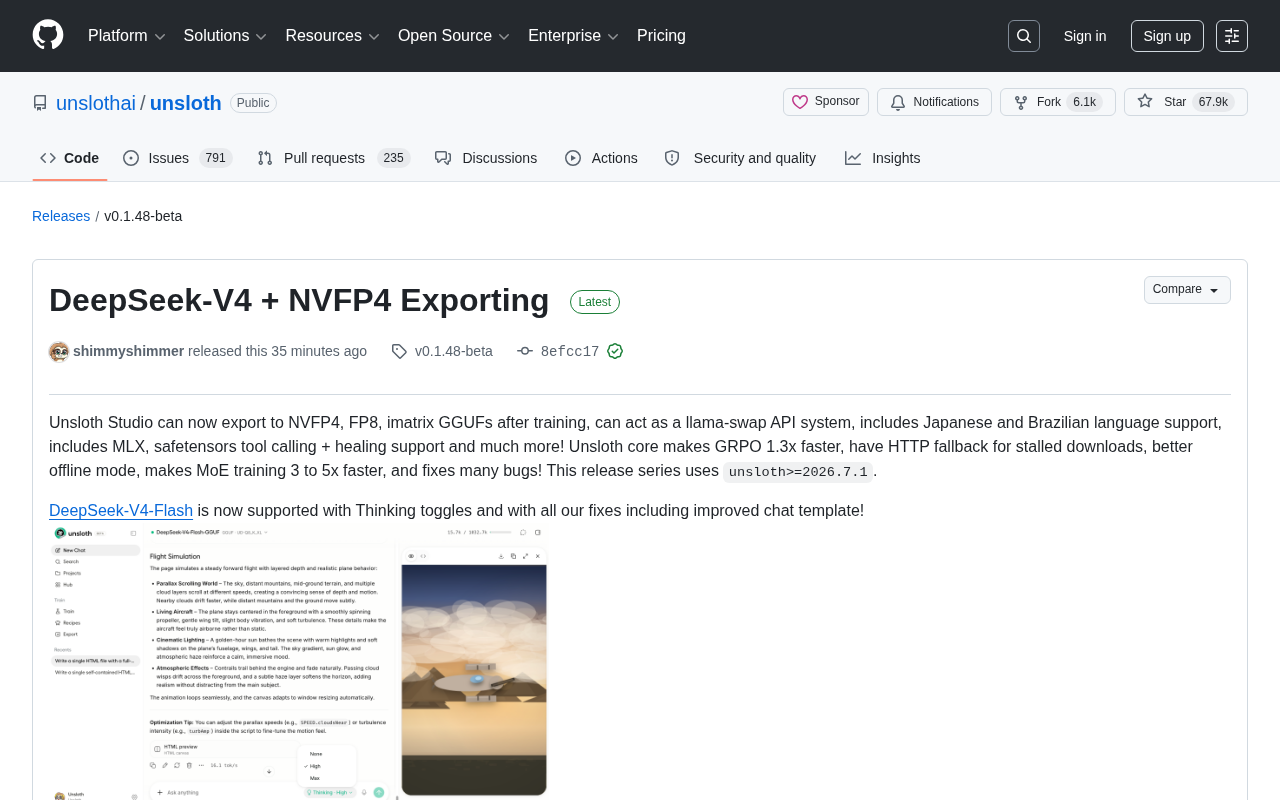
Major Unsloth Update: NVFP4 Quantization Export and DeepSeek-V4 Training Support
Unsloth v0.1.48-beta released, adding NVFP4/FP8 quantization export, OpenAI-compatible API hot-swapping, 3-5x faster MoE training, and 1.3x faster GRPO, covering the full LLM fine-tuning, quantization, and local deployment pipeline.
Read more →

·6 min
Deep Dive into GPT-5.6 Ultra's Sub-Agent Architecture and Ten Key AI Industry Trends
In-depth analysis of GPT-5.6 Ultra's sub-agent collaborative reasoning, the global rise of Chinese AI models, world-model evaluation gaps, and AI's real-world deployment challenges and bubble warnings.
Read more →

·6 min
Can AI Antivirus Cure the Chronic Pop-Up Problem? An In-Depth Hands-On Review of Wukong Security
Struggling with Windows pop-ups and rogue software? This in-depth review of Wukong Security reveals how AI antivirus breaks past traditional virus-database limits, blocking ads and bundleware in real time, plus a comparison of five repair shops.
Read more →

·2 min
Unsloth v0.1.461-beta: Fix for Local GGUF Vision Model Loading
Unsloth v0.1.461-beta fixes local GGUF vision model loading on llama-server in Studio, adds variant directory companion file lookup for stable multimodal deployment.
Read more →

·6 min
From Firefox to Android Root: Deep Analysis of a Browser Privilege Escalation Attack Chain
Deep analysis of a complete mobile exploit chain: how attackers start from Firefox, escape the sandbox, exploit kernel vulnerabilities, and achieve Android Root. Security insights for developers.
Read more →

·7 min
The Complete Codex Guide: From Installation to Real-World Practice
Master OpenAI Codex fast, even from scratch! Learn Codex vs ChatGPT differences, four versions, interface tips, plugins & skills, browser automation, plus six best practices.
Read more →

·5 min
Defending the Right to Run Local AI: A Battle for Privacy, Freedom, and Digital Sovereignty
Local AI faces a triple threat from tightening regulation, hardware lock-downs, and commercial pressure. A deep analysis of why running open-source LLMs on your own device is a digital right worth defending.
Read more →