#knowledge persistence
276 related articles

·7 min
Getting Started with Dify: A Complete Guide from Local Deployment to Building Enterprise-Grade AI Applications
A detailed guide to Dify, the open-source LLM app development platform, covering its core features and full local deployment via VMware + Ubuntu + aaPanel + Docker. Supports 100+ models like DeepSeek and ChatGPT to build enterprise AI apps fast.
Read more →
·7 min
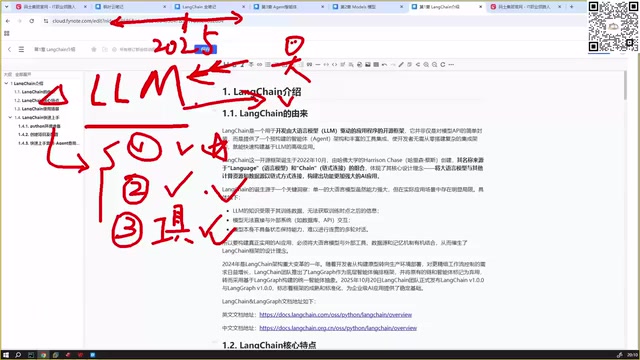
LangChain Hands-On Guide: From LLM Calls to Agent Development
Master LangChain from scratch: the three limitations of LLMs, init_chat_model unified interface config, the Message type system, and the path from LLM calls to Agent development.
Read more →

·7 min
Getting Started with LangChain: The Core Framework Connecting LLMs and AI Applications
A deep dive into LangChain's positioning and value—why do LLMs need a middle layer? How does LangChain serve as the 'glue' unifying multi-model interfaces and supporting Agent development? Learn its core modules and learning path.
Read more →
·5 min
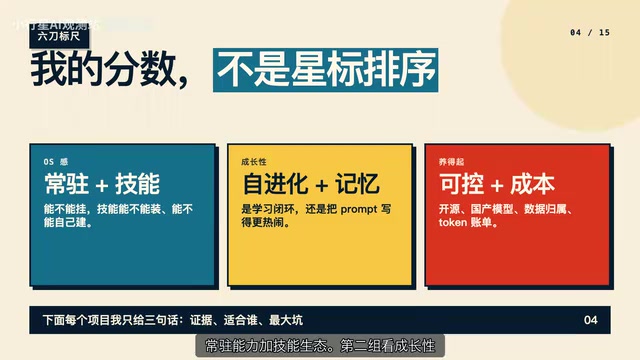
6 Self-Hosted AI Agents Compared: Which One Is a Truly Self-Evolving Digital Employee?
An open-source AI Agent with 380K stars ranks only third? This comparison of 6 self-hosted AI Agents scores them on persistence, self-evolution, and data control—revealing why Generic Agent won with just 3,000 lines of code.
Read more →

·6 min
LangChain 1.3 in Practice: A Complete Guide to DeepAgent Architecture and the Harness Philosophy
An in-depth look at LangChain 1.3's core modules and DeepAgent architecture—covering the Harness philosophy, LangGraph internals, HITL, memory management, and guardrails to master production-grade AI Agent development.
Read more →

·5 min
Claude Cowork Arrives on Mobile and Web, with Max Users Getting Early Access
Anthropic's AI collaboration platform Claude Cowork officially expands to mobile and web, breaking free from desktop-only limits. Max subscribers get early access, with other plans rolling out over the coming weeks.
Read more →
·6 min
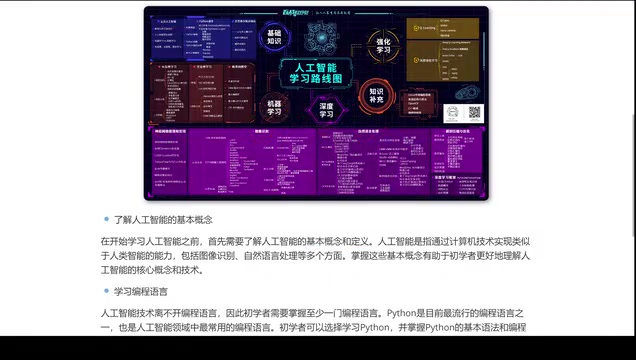
AI for Beginners: A Five-Step Practical Path That Skips the Math and Python Syntax Traps
Struggling with math and Python when learning AI from scratch? This article lays out a five-step entry path: grasp the concepts, learn Python lightly, master ML and deep learning principles, get hands-on with PyTorch, then deepen understanding through real projects.
Read more →

·2 min
The Real Challenge of Government AI Localization: How OpenGENAI Decouples Cloud Dependencies
OpenGENAI transforms Japan's government AI app into a fully localized deployment. Learn how it decouples cloud auth, backend, and LLM inference for data sovereignty.
Read more →

·5 min
GPT-5.6 Launches: Three Product Lines + Government Approval — The Rules of the AI Industry Are Being Rewritten
OpenAI releases GPT-5.6 with three models — Sol, Terra, Luna — bringing major gains in coding and cybersecurity. More critically: the U.S. government now reviews AI model releases, making frontier AI regulation the new industry norm.
Read more →
·7 min
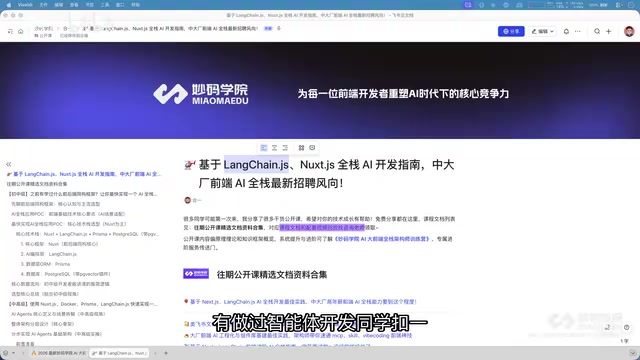
LangChain.js + Nuxt.js: An AI Full-Stack Advancement Path for Frontend Engineers
Frontend hiring now treats AI capabilities as a core assessment, covering RAG knowledge bases, AI Agent development, and LangChain.js engineering. Learn how LangChain.js + Nuxt.js helps frontend developers build memory- and retrieval-capable AI full-stack apps.
Read more →

·7 min
Building AI Agent Frameworks with TypeScript: The Core Development Paradigm for Full-Stack Developers
An in-depth look at why TypeScript is the top choice for AI Agent development: covering Zod structured output validation, LangGraph's graph state machine design, and a full learning path for front-end devs transitioning to full-stack AI.
Read more →

·4 min
Deep Dive into actions/checkout: The Core Foundation of GitHub Actions CI/CD
A comprehensive guide to GitHub Actions' actions/checkout: how it works, key parameters, and best practices covering fetch-depth, cross-repo checkout, security, and version pinning strategies.
Read more →

·6 min
AI Agent Learning Roadmap: A Four-Stage Guide from Beginner to Practical Mastery
A systematic AI Agent learning roadmap in four progressive stages: fundamentals → ReAct core paradigm → memory & tools → multi-agent collaboration. Master LangChain, AutoGen, and more, growing from beginner to practical developer in three months.
Read more →

·6 min
GPT-5.6 Released: Three-Tier Soul/Terra/Luna Lineup, Orchestration Baked Into the Model
OpenAI releases the GPT-5.6 series with Soul, Terra, and Luna models. Ranked first on Terminal Bench coding evaluation, Ultra mode natively bakes agent orchestration into the model, while revealing Agentic Trace data as the core competitiveness of next-gen AI training.
Read more →

·7 min
DryFox v0.3.3: AI Agent Team Collaboration + Composable UI Panels Explained
In-depth look at DryFox v0.3.3's three core features: multi-role agent team collaboration, one-click reusable team templates, and block-style composable UI panels. With Stop Hook, file mailbox comms, and hot-reload plugins.
Read more →

·7 min
A Complete Guide to LangGraph's Core Concepts: The Framework of Choice for Enterprise Agent Development
An in-depth analysis of LangGraph's core concepts: short-term and long-term storage mechanisms, its differences from LangChain, the MIT open-source license, and private deployment solutions for enterprise Agent development.
Read more →

·4 min
A Conversation with Dr. Rubin: How Professionals Fight Viral Medical Misinformation
Misinformation spreads for free; correcting it is costly. We speak with Dr. Zachary Rubin about why professionals must step up, and how AI is reshaping the battle for truth in science communication.
Read more →

·6 min
Alibaba Bans Claude Code: The Enterprise Security Red Line for AI Coding Tools
In-depth analysis of Alibaba's comprehensive internal ban on Claude Code: from the hidden-marker controversy and Anthropic's regional-restriction stance to five core questions of enterprise AI coding tool security admission.
Read more →

·5 min
Five Major Gemini Spark Upgrades: Building an Around-the-Clock Proactive Personal AI Agent
Google launches five major Gemini Spark upgrades including macOS native integration and Smart Triggers, transforming AI assistants from passive chat tools into proactive Personal AI Agents for around-the-clock autonomous task handling.
Read more →
·5 min
Five Major Upgrades to Gemini Spark: Building an Always-On Proactive Personal AI Agent
Google launches five major Gemini Spark upgrades including macOS native integration and Smart Triggers, transforming AI from passive chatbot to proactive Personal AI Agent for always-on task handling.
Read more →