#learn Python from scratch
507 related articles

·4 min
Full-Stack Machine Learning Project Repository Structure Guide: From Chaos to Convention
A detailed guide to organizing full-stack ML project repositories, covering directory structure design, data-code separation, and configuration externalization to help ML developers move from experimental code to production-grade engineering.
Read more →

·4 min
A Guide to Full-Stack Machine Learning Project Repository Structure: From Chaos to Convention
A detailed guide to organizing full-stack ML project repositories, covering directory structure design, data-code separation, and externalized configuration to help ML developers move from experimental code to production-grade engineering standards.
Read more →

·5 min
Opus 5 Builds a No Man's Sky-Style Exploration Game in One Day: MCP and Sub-Agent Architecture Explained
A developer used Anthropic's Opus 5 model to build a No Man's Sky-style space exploration game in one day using Blender MCP and sub-agents. Deep dive into the technical architecture and industry implications.
Read more →

·4 min
OpenAI Employee Shares How to Build an AI Work Operating System with Codex
OpenAI's Jason Liu shares how he uses ChatGPT Workbench and Codex to build an AI work OS: Chief of Staff automation, persistent threads, Skills/Plugins, browser control, and app-building methodology.
Read more →
·5 min
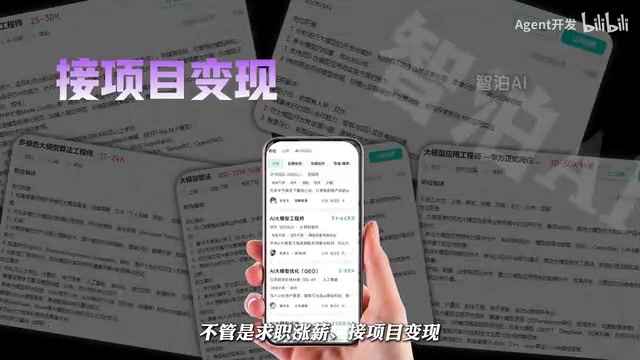
Learn AI Agent Development from Scratch: A 3-Step Practical Path to Get Started Quickly
How to learn AI Agent development from scratch? This article outlines a clear 3-step path: Python crash course, LLM theory & practice, and LangChain framework project implementation.
Read more →

·3 min
Backend Developer Transition to AI/LLM: 4 Core Skills and a Practical Learning Roadmap
Complete guide for backend developers transitioning to AI/LLM engineering. Covers the 4 core skills—Python, RAG, Fine-tuning, and Agents—with a phased learning roadmap and practical project advice.
Read more →

·4 min
A Beginner's Guide to AI Agents: Core Principles and Learning Paths Explained
Learn AI Agent core principles from scratch: understand how Agents differ from LLMs, their execution mechanisms, why rule design matters, and find the right learning path for your goals.
Read more →
·4 min
A Beginner's Guide to AI Agents: Core Principles and Learning Paths Explained
A beginner's guide to AI Agents: understand core principles, how Agents differ from LLMs, their execution mechanisms, and get tailored learning path recommendations.
Read more →

·3 min
Agent Skills Explained: Plug-and-Play Skill Packs for AI
A deep dive into Agent Skills architecture: modular design, progressive disclosure mechanism, and how it differs from Multi-Agent systems for AI capability extension.
Read more →

·3 min
Mathematical Foundations for Machine Learning: A Complete Learning Path from Linear Algebra to Probability Theory
A systematic guide to the three core math areas for ML—linear algebra, calculus, and probability—with verified free resources like Mathematics for Machine Learning, 3Blue1Brown, and practical learning strategies.
Read more →

·2 min
ag-kit: A Deep Dive into the TypeScript-Based AI Agent Development Toolkit
An in-depth analysis of ag-kit, a TypeScript-based AI Agent development toolkit covering core architecture, modular design, use cases, and tech selection advice for full-stack developers.
Read more →

·4 min
Claude Code Tutorial: Environment Setup, Command Reference & Git Workflow in Practice
Complete guide to Claude Code covering CLI installation, domestic model switching, core commands, Git automation workflows, and automated code review and fix loops for enterprise projects.
Read more →
·4 min
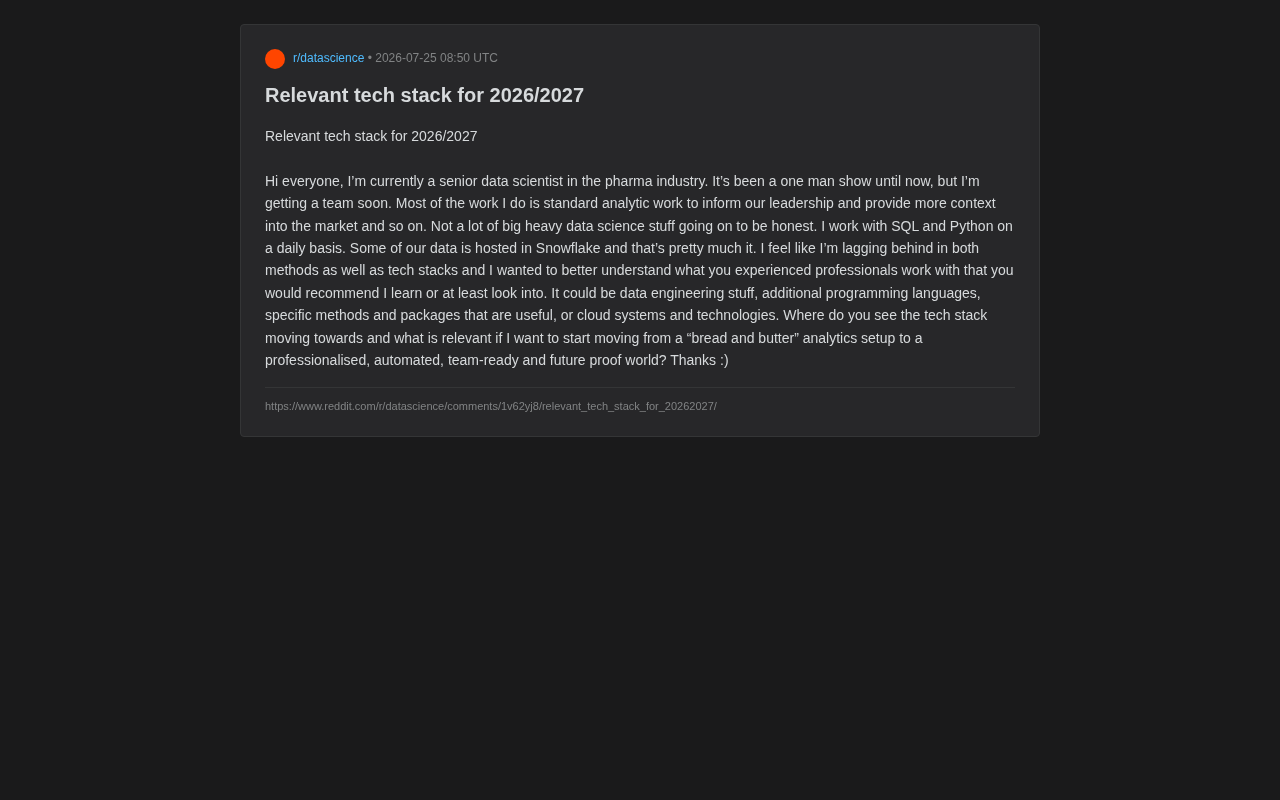
From Solo Analyst to Team Data Platform: A Practical Guide to Leveling Up Your Tech Stack
How should a data scientist upgrade their tech stack when transitioning from IC to team lead? A phased roadmap covering Git, dbt, Snowflake, modern data stack, and generative AI.
Read more →
·4 min
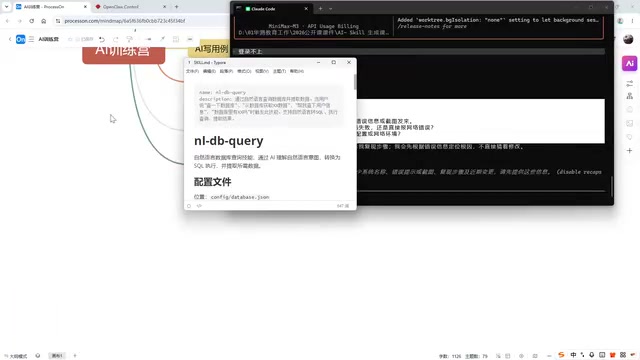
Hands-On Skill Writing and Agent Testing: A Guide to AI Testing Transformation
An in-depth look at AI testing challenges. Learn to write reusable Skill packs and master Agent testing and LLM evaluation—covering the SKILL.md six-dimensional rule, skill-creator, EvalScope, and dataset selection.
Read more →

·3 min
Cursor + Claude in Action: Building a Python Student Management System from Scratch with AI
A step-by-step guide to building a Python student management system from scratch using the AI editor Cursor with Claude. Covers Agent, Ask, and Manual modes, model selection, and the full workflow.
Read more →

·2 min
Agent Skills Explained: Giving AI Plug-and-Play Capability Packs
Agent Skills is a lightweight open-source format that lets AI agents extend professional capabilities on demand, like loading plugins. Learn what Agent Skills are, the problems they solve, and their modular advantages.
Read more →

·2 min
From Zero to AI Career: A Complete Breakdown of a 3-Month Self-Study Roadmap
Want to break into AI from scratch? This article breaks down an efficient self-study roadmap: from Python, math, and machine learning basics to PyTorch, then to CV, NLP, and data mining—reaching entry-level career-switching intensity in 3 months.
Read more →

·2 min
Can You Make Money Taking Freelance AI Coding Gigs? The Truth About Monetizing with Zero Experience
Can you really earn over 10K a month through AI freelance gigs with zero experience? This article breaks down the real barriers to monetizing AI coding, what AI tools can and can't do, and the traffic-driving playbook behind it.
Read more →
·3 min
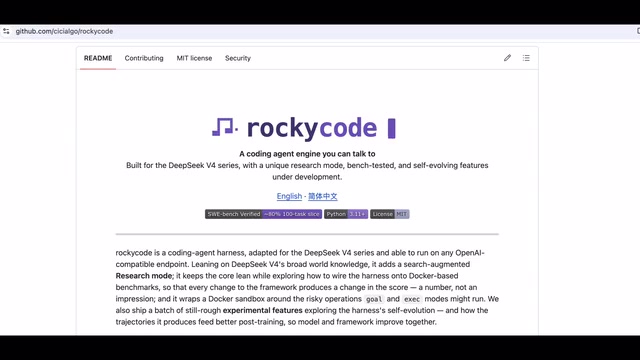
Rocky: An Open-Source Coding Agent with Minimal Architecture and Native DeepSeek Integration
Rocky is a minimal, transparent open-source coding agent with a core loop under a few hundred lines of Python, native DeepSeek search, Research mode, and built-in SWE benchmarking for reproducible agent experiments.
Read more →

·8 min
A Complete Guide to Agent Testing: Five Core Dimensions and Automation in Practice
In-depth analysis of the five core dimensions of AI Agent testing: command safety, tool-calling accuracy, task planning, output consistency, and error self-repair. Master automated testing and the transition path for test engineers.
Read more →