#multi-GPU communication
65 related articles

·2 min
vLLM Inference Framework Deep Dive: A Practical Guide to High-Concurrency DeepSeek Deployment
A deep dive into vLLM's five core features — KV cache management, continuous batching, and distributed inference — plus a full setup guide for deploying DeepSeek on a cloud server.
Read more →

·3 min
GPUStack in Action: Complete Guide to Day 0 Deployment of DeepSeek-V4-Flash
Deploy DeepSeek-V4-Flash DSpark on 8× H20-141G using GPUStack's SGLang backend on Day 0. Full walkthrough of Web UI config, parameter tuning, and 200 tokens/sec benchmark results.
Read more →

·3 min
LongCat 2.0: Meituan Trains a 1.6 Trillion Parameter LLM on Domestic Chips
Meituan open-sources LongCat 2.0, a 1.6T-parameter MoE model trained on 50,000+ custom chips without NVIDIA GPUs or Google TPUs, rivaling OpenAI and Google.
Read more →

·2 min
ExLlamaV3 v1.0.0 Official Release: Faster Inference, Lossless KV Quantization, and Streamlined Dependencies
ExLlamaV3 v1.0.0 releases with lossless KV cache quantization via kernel fusion, removal of flash-attention-2/xformers, major GEMM/GEMV gains, and broader tensor parallelism support.
Read more →

·3 min
AI Daily: Alibaba Open-Sources Dance Model, World Model Launches, First AI-Native Phone Debuts
Alibaba open-sources 14B dance model Wan-Dancer, AutoNavi launches World Studio, Stepfun debuts AI-native phone STEPS NEO; GPT-5.6 file deletion and AI companion shutdowns spark safety and regulation debates.
Read more →
·2 min
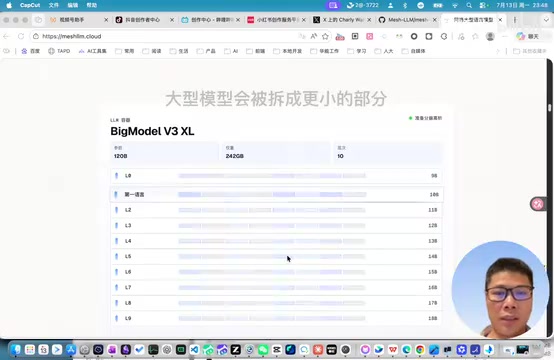
Mesh LLM: Pool Multiple Old Computers Into a Virtual Super GPU for Running Large Models
Mesh LLM is an open-source distributed inference framework that splits model layers across multiple devices, creating a virtual super GPU to run 100GB+ LLMs on consumer hardware.
Read more →
JAX Host Offloading: A Practical Guide…
·2 min
JAX Host Offloading: A Practical Guide to Breaking Through LLM Training Memory Bottlenecks
Memory capacity is the core bottleneck in LLM training. This guide explores JAX-based host offloading — covering optimizer state offloading, activation strategies, PCIe bandwidth trade-offs, and how it complements activation recomputation.
Read more →

·6 min
GPT-5.6 vs Grok 4.5 on the Same Day: A Packed Week of Flagship AI Model Launches
OpenAI's GPT-5.6 launches with Sawa, Terra, and Luna sub-models the same day as Musk's Grok 4.5, while Anthropic, Meta, and NVIDIA make their moves. A packed week of flagship AI launches.
Read more →

·3 min
Nvidia's Dilemma: How the Commoditization of the Compute Market Is Turning Against Its Creator
Nvidia's revenue keeps rising, yet its stock has fallen ~15% from its peak. A deep dive into the double-edged sword of compute commoditization—when cloud giants build their own chips, how much of Nvidia's pricing power and moat remains?
Read more →

·6 min
DeepSeek Builds Its Own AI Chips: The Strategic Logic and Challenges Behind Compute Independence
DeepSeek is entering AI chip development, targeting compute autonomy. This article analyzes its motivations, software-hardware synergy, chip R&D challenges, and impact on China's AI vertical integration.
Read more →
·5 min
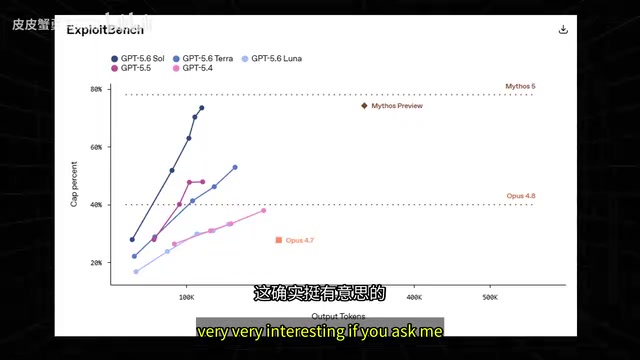
GPT-5.6 Released: Outperforms Rivals but Halted by Government—Cybersecurity Capabilities Trigger Regulatory Red Line
OpenAI releases GPT-5.6 (Sol/Terra/Luna), beating Anthropic on Terminal Bench at ~40% lower cost. But its cybersecurity capabilities hit danger thresholds, limiting access to trusted partners at government request.
Read more →

·7 min
Practical RL Compute Optimization: Core Strategies to Boost CPU and GPU Utilization
An in-depth look at why CPU and GPU utilization is low in RL training, covering vectorized environment parallelism, distributed Actor-Learner architectures, GPU-side simulation (Isaac Gym/Brax), and Ray RLlib practice.
Read more →

·3 min
The Software Compounding Effect: The Real Deciding Factor in AI Infrastructure Competition
Beyond the GPU arms race, software is becoming AI infrastructure's true compounding engine. A deep dive into optimization stacking, the CUDA ecosystem moat, and how open source scales individual breakthroughs into community wealth.
Read more →

·6 min
Why Is Qwen3 27B So Slow on a 4090? A Hands-On Guide to Local Inference Performance Optimization
RTX 4090 taking over 400 seconds to run Qwen3 27B inference? This article analyzes the core causes—VRAM overflow and CPU offloading drag—and offers targeted fixes.
Read more →

·5 min
Real-World Comparison of 6 Open-Source LLMs for On-Premise Deployment: A Selection Guide to Avoid Pitfalls
A hands-on comparison of 6 open-source LLMs (DeepSeek, Qwen3, Zhipu GLM, Kimi K2, MiniMax M3, Tencent Hunyuan 3) for on-premise deployment—covering hardware cost, inference efficiency, and deployment difficulty.
Read more →

·5 min
TensorRT Multi-Device Inference: Engineering Practices for Breaking Through Single-GPU Memory Bottlenecks
NVIDIA TensorRT now supports multi-device inference via pipeline and tensor parallelism, distributing large models across multiple GPUs to break through single-card memory limits.
Read more →

·7 min
Reverse-Engineering CUDA-checkpoint: The Technical Principles and Practice of Cracking GPU Cold Starts
An in-depth analysis of reverse-engineering Nvidia CUDA-checkpoint to accelerate GPU cold starts. Covers checkpoint/restore, Serverless GPU prospects, and VRAM snapshot challenges.
Read more →

·6 min
Unsloth Major Update: DeepSeek-V4 Support and a Deep Dive into NVFP4 Quantized Export
Unsloth v0.1.481-beta adds full DeepSeek-V4-Flash support, NVFP4/FP8/imatrix GGUF quantized export, 1.3x faster GRPO, 3-5x faster MoE training, and an OpenAI-compatible API service in Studio.
Read more →

·6 min
AMD Ryzen AI Halo Dev Kit: A $4,000 Local LLM Powerhouse Taking on Apple and NVIDIA
AMD officially unveils the Ryzen AI Halo local AI dev kit, priced around $4,000 with 128GB unified memory, capable of running 70B LLMs locally. An in-depth look at its specs, pricing, and market competition.
Read more →

·6 min
AMD MI355X Running GLM5.2: Inference Costs at Half of NVIDIA Blackwell
AMD MI355X achieves 2,626 tokens/sec throughput running GLM5.2 at half the TCO of NVIDIA Blackwell. Deep analysis of the technical logic, ROCm ecosystem progress, and market implications.
Read more →