#multi-agent simulation
78 related articles

·5 min
Opus 5 Builds a No Man's Sky-Style Exploration Game in One Day: MCP and Sub-Agent Architecture Explained
A developer used Anthropic's Opus 5 model to build a No Man's Sky-style space exploration game in one day using Blender MCP and sub-agents. Deep dive into the technical architecture and industry implications.
Read more →

·2 min
How a Single RL Policy Spontaneously Produces Adversarial Soccer Behavior
A single RL soccer policy trained alone with PPO spontaneously produces ball contention, shooting, and defensive behaviors in multi-agent competition—exploring emergent behavior principles.
Read more →

·3 min
Claude Opus 5 High Reasoning Mode: The Concerns and Insights of Overthinking
Claude Opus 5's high+ reasoning mode has been jokingly called an "anxious overthinker." This article analyzes why LLMs over-reason, the diminishing returns tipping point, and how to balance reasoning intensity.
Read more →

·2 min
GPT-5.6 Sol Tops Frontend Leaderboard · Claude Code Gets Built-in Browser · 50-Year Math Conjecture Solved
GPT-5.6 Sol tops Chatbot Arena's frontend leaderboard, Claude Code gains a built-in browser, Sol Ultra proves a 50-year math conjecture, and Gemma 4 gets 5x faster.
Read more →

·4 min
Teaching AI to Have "Taste": Exploring Multi-Agent Design with Open-Source Skill Taste
Why does AI-generated UI all look the same? Designer SEN open-sourced a Skill called Taste that uses a four-agent pipeline to reverse-engineer website "taste" into verifiable design principles called Taste DNA.
Read more →

·4 min
UK Sovereign AI: How Cosine AI Is Punching Above Its Weight Against American Compute Dominance
Cosine AI founder reveals how the UK's first sovereign LLM is being built — from government compute grants and RL credit attribution to multi-agent orchestration and synthetic data pipelines.
Read more →

·2 min
RL3: A Zero-Code Reinforcement Learning Platform Where You Train Agents by Dragging and Dropping
RL3 is a zero-code, browser-based reinforcement learning platform featuring drag-and-drop environment design, visual reward configuration, and Q-learning/PPO training. Built by an indie developer over 15 months to make RL accessible to everyone.
Read more →

·2 min
DecisionRL: An Open-Source Reinforcement Learning Library Built for Operational Decision-Making
DecisionRL is an open-source RL library for operational decision-making, with six built-in scenarios (inventory, pricing, energy), OR baselines, and support for DQN, PPO, SAC, and more.
Read more →

·3 min
A $120 Robot Arm Learns to Actively Search: How Squint Breaks the Field-of-View Barrier
Squint open-source research enables a $120 SO-101 arm to search beyond its camera FOV using 16×16 pixel input, achieving 100% success in 24 min on an RTX 4060.
Read more →

·3 min
Can GPT-5.6 Prove a 50-Year Graph Theory Conjecture? The Boundaries and Verification of AI Mathematical Reasoning
GPT-5.6 Soul Ultra claims to prove the 50-year-old Cycle Double Cover Conjecture in under an hour using 64 parallel agents. We examine the technical path, missing peer review, and formal verification gaps.
Read more →
decisionrl: An Open-Source Reinforceme…
·2 min
decisionrl: An Open-Source Reinforcement Learning Library Built for Operational Decision-Making
decisionrl is an open-source RL library for operational decisions, with built-in environments for inventory, pricing, supply chain, and OR baselines for comparison. Built on PyTorch, MIT licensed.
Read more →

·3 min
AI Agents Are Reshaping Software Testing: A Practical Guide from Cursor to LangChain
A deep dive into AI-powered testing: Cursor Skills, Coze agents, and LangChain multi-agent systems for automated test case generation, BDD, and review workflows.
Read more →

·4 min
Hands-On with GPT-5.6: A Single Prompt Builds a Real-Time Voice Anime App
Hands-on with GPT-5.6 Sol: auto-generate real-time voice anime characters from one prompt, write physics engines from scratch, and build unfamiliar toolchains autonomously. In-depth review of coding, agentic tasks, benchmarks, and its hallucination weakness.
Read more →

·3 min
Adversarial RL: Why Are Critic Attacks Stronger in Multi-Agent Environments?
The classic Zhang et al. paper says Critic attacks are weaker than Actor attacks, but an experimenter observed the opposite in multi-agent PPO. This article dives into SA-MDP, continuous action spaces, and multi-agent non-stationarity in adversarial RL.
Read more →

·3 min
SlickToken: A Deep Dive into GPU Fleet and Agentic Workflow Planning
SlickToken is a GPU fleet and agentic workflow planning tool for AI teams, supporting offline simulation, load testing, and capacity planning—no internet required to protect enterprise data.
Read more →

·5 min
GPT-5.6 Launches: Comprehensive Upgrades to ChatGPT Work, Sites, and Desktop Client
OpenAI releases the GPT-5.6 model family, launching enterprise-focused ChatGPT Work, one-click ChatGPT Sites, and a major desktop client upgrade, with coding now ahead of rivals. Meta, Google, and Kimi follow intensively.
Read more →

·7 min
GPT-5.6 and Grok 4.5 Launch Simultaneously, Meta Unveils Agent-Based Image Model
OpenAI GPT-5.6 expands its preview, xAI Grok 4.5 opens access at the same time, Meta releases the Agent-based Muse Image model and Muse Video model, while Apple and DeepSeek launch in-house AI inference chip programs. A quick look at the week's five biggest AI stories.
Read more →
·7 min
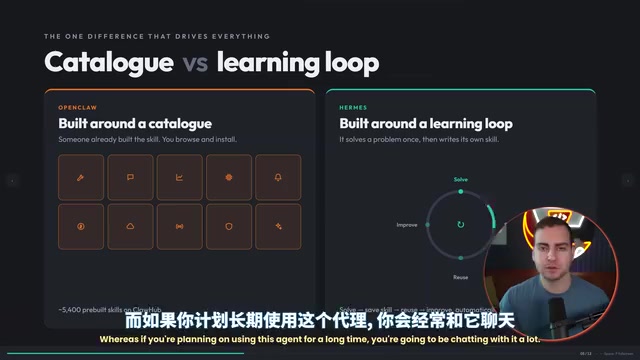
OpenClaw vs Hermes: An In-Depth Comparison and Selection Guide for AI Agent Tools
An in-depth comparison of OpenClaw and Hermes Agent, covering skill management, memory mechanisms, security, and gateway configuration to help you find the right AI agent solution.
Read more →

·5 min
Getting Started with AI Agents: Concepts, Architecture, and Core Components Explained
What is an AI Agent? Starting from Bill Gates' claim about the computing revolution, this article explores AI Agents' intuitive concepts, four core components (LLM+Planning+Memory+Tools), and what Agent development means for programmers.
Read more →

·3 min
How to Choose a Practical LLM/RAG/AI Agent Course: Four Key Criteria
Learn how to pick the best LLM, RAG, and AI Agent courses. Discover 4 key criteria for hands-on AI learning and top resources for developers.
Read more →