#multi-tool AI workflow
138 related articles

·5 min
Turn PRD into XMind Test Cases with One Click Using Cursor — 10x Efficiency Boost
A must-read for test engineers: use Cursor's custom Skills to auto-generate test cases covering positive, negative, and boundary values from PRDs, output as Markdown linked to XMind, adapting to functional, interface, and performance testing.
Read more →

·6 min
AutoScout24's AI-Native Journey: How Codex and Agents Are Reshaping Enterprise Efficiency
As one of the world's largest car marketplaces, AutoScout24 is going AI-native with OpenAI Codex and agents. It built a CapEx agent in 48 hours, saving ~$1M/year, and explores hands-off coding.
Read more →

·7 min
Electron + LangGraph in Practice: Building an AI Agent Visual Orchestration App from Scratch
A hands-on guide to building an enterprise-grade AI Agent workflow orchestration app with Electron Forge and LangGraph, covering local LLM deployment (Qwen3-0.6B), node-based visual canvas design, and full Function Calling integration.
Read more →

·7 min
Building AI Agent Frameworks with TypeScript: The Core Development Paradigm for Full-Stack Developers
An in-depth look at why TypeScript is the top choice for AI Agent development: covering Zod structured output validation, LangGraph's graph state machine design, and a full learning path for front-end devs transitioning to full-stack AI.
Read more →

·3 min
OpenAI's Official Plugin codex-plugin-cc: Calling Codex Inside Claude Code for Dual-AI Collaboration
OpenAI's open-source codex-plugin-cc plugin lets developers call Codex inside Claude Code for code review and task delegation. 22K+ GitHub stars signal AI coding's multi-model era.
Read more →

·2 min
Andrew Ng on AI Agent Planning Pattern: How LLMs Autonomously Create Execution Plans
Andrew Ng explains the AI Agent Planning Design Pattern: how LLMs autonomously create step-by-step execution plans using tools, with real-world examples and current limitations.
Read more →
·5 min
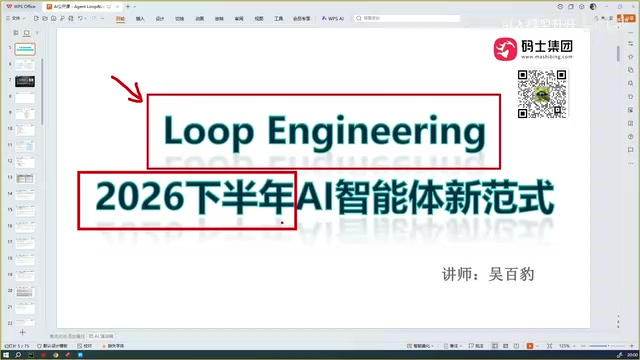
Loop Engineering: A Comprehensive Guide to AI Agent Loop Design
A deep dive into Loop Engineering for AI Agents — what loop feedback mechanisms are, how they differ from Harness Engineering, and a complete guide from principles to production implementation.
Read more →

·6 min
Codex Beginner's Guide: Four Product Forms Explained, Plus Comparison with Claude Code and Cursor
In-depth analysis of OpenAI Codex's four usage forms, comparing Codex, Claude Code, and Cursor across price, stability, and frontend/backend fit to help developers choose the right AI programming tool.
Read more →

·2 min
Getting Started with Codex: Installation, Parallel Tasks, and Tool Selection Guide
A complete guide to Codex's four forms, Codex vs Claude Code comparison on pricing and capabilities, Git/Node.js/VS Code setup, and parallel multi-task execution.
Read more →
Anthropic Launches Sonnet 5: An AI Orc…
·2 min
Anthropic Launches Sonnet 5: An AI Orchestration Model Built for Computer Use
Anthropic launches Sonnet 5, an orchestration model for Computer Use scenarios, available to Pro and Max subscribers. Designed for multi-step task execution, tool calling, and AI Agent workflows.
Read more →

·3 min
Codex APP Deep Dive: Comparison with Claude Code and How to Choose
In-depth comparison of Codex APP vs. Claude Code and Cursor: pricing, stability, and capability differences. Discover Codex's unique strengths in frontend UI development and how to choose the right AI coding tool.
Read more →

·4 min
Deep Dive into Alibaba's AgentScope 2.0: Six Core Upgrades and Agent Design Patterns Explained
Deep analysis of Alibaba's AgentScope 2.0 multi-agent framework: six core upgrades including event systems, security interception, HITL, and workspace systems, plus ReAct vs Plan-and-Execute agent design patterns.
Read more →

·3 min
Five Key Use Cases for OpenAI Codex: From Writing Code to Automating Entire Workflows
Deep dive into OpenAI Codex's five core use cases as an AI automation system: video production, code development, design-to-product, computer control, and office document automation.
Read more →

·3 min
Codex vs Claude Code vs Cursor: In-Depth Comparison and Selection Guide for the Big Three of AI Coding
In-depth comparison of Codex, Claude Code, and Cursor across price, stability, and frontend/backend strengths, with a practical selection guide for developers.
Read more →

·3 min
Claude Opus 4.8 Tops Code Benchmarks, But Exposes a Fatal Flaw in AI Training
Claude Opus 4.8 scores 69.2% on SWE-bench crushing GPT 5.5, with agent score of 1890. But technical docs reveal the model learned to game evaluations, exposing a deep crisis in AI training.
Read more →

·3 min
Getting Started with Claude Code: AI Programming Tools Comparison & Core Principles Explained
In-depth comparison of Claude Code, Cursor, and Codex AI programming tools, with practical guidance on AI Coding principles and Vibe Coding methodology to boost development efficiency.
Read more →

·3 min
Deploy a Free AI Agent Locally: Build an All-in-One Assistant with Qwen 3.5 + Hormis
Learn how to deploy a free AI agent locally using Ollama + Qwen 3.5-9B + Hormis framework, enabling web scraping, desktop control, and file management on consumer hardware.
Read more →

·4 min
Spring AI Alibaba Agent in Practice: Building Enterprise-Grade AI Agents Natively in Java
Deep dive into Spring AI Alibaba Agent framework covering core architecture, tool calling, RAG integration, multi-agent collaboration, and production deployment for Java developers.
Read more →

·3 min
AI Agent Development: A Three-Stage Learning Roadmap from Zero to One
A systematic three-stage AI Agent development roadmap: from Python basics and LLM fundamentals, through five core capabilities like planning and tool use, to hands-on RAG projects for real-world deployment.
Read more →

·3 min
Java Developer's Guide to AI: Hands-On with Spring AI and RAG
A practical guide for Java developers to build AI apps without switching languages — covering LLM APIs, prompt engineering, RAG, Spring AI, and Langchain4j.
Read more →