#open-source AI agent builder
124 related articles

·4 min
Using MCP Protocol to Give AI Agents Full Visibility into SQL Server
Learn how to connect AI agents to SQL Server via MCP protocol — wrapping DMV queries, managing multi-instance fleets, and enabling natural language ops with layered safety guardrails. Includes Docker deployment.
Read more →

·3 min
Coze Deep Dive: Multi-Agent Collaboration Platform Architecture and Usage Guide
Deep dive into Coze's three core capabilities: multi-person multi-AI collaboration, customizable agents, and cross-platform project management. Covers credits, Dify comparison, and a practical learning path.
Read more →

·3 min
One-Prompt Apps: Demos Are Easy, Shipping Is the Real Test
Is one-prompt app generation really that powerful? We break down three tiers of AI dev tools, expose the gap between demo and production, and compare top domestic platforms including Baidu Miaoda and Ant Lingguan.
Read more →

·2 min
Text-Only Models Controlling a Linux Desktop: Inside PawFlow's Dual-Model Architecture
PawFlow decouples vision and reasoning into two models, letting a text-only LLM reliably control a Linux desktop. A deep dive into its dual-model architecture, pre-click guard, and caching strategy.
Read more →
·3 min
Claude Opus 4 + RAG + Knowledge Graph: A Real-World Architecture for AI Novel Writing
Microsoft MVP Michael shares how AI Story Builders uses Claude Opus 4, RAG, and Knowledge Graphs to solve consistency in long-form AI fiction writing.
Read more →
PlanWright: A Control Plane and Multi-…
·2 min
PlanWright: A Control Plane and Multi-Agent Orchestration Layer for AI Coding Agents
PlanWright is a control plane for AI coding agents, drawing on Kubernetes orchestration principles to tackle multi-agent task assignment, state tracking, and collaboration conflicts.
Read more →

·6 min
OpenAI Merges ChatGPT and Codex: The Super App for the AI Agent Era Is Here
OpenAI merges ChatGPT and Codex into a super app and releases three new GPT-5.6 models: Sol, Terra, and Luna. A deep dive into four hands-on workflows—Computer Use, Loops, and multi-threading—for the AI agent era.
Read more →

·3 min
The Deterministic Factual Substrate for Multi-Agent AI: A Deep Dive into Knowledge Kernel's Reproducible Grounding Design
A deep dive into how Knowledge Kernel builds a deterministic factual substrate for multi-agent AI through layered decoupling of reality, evidence, facts, and reasoning — with dataset_hash fingerprinting, atomic reloads, and observable telemetry.
Read more →

·2 min
Pylva: An Open-Source Usage Billing Platform Built for AI Agents
Pylva is an open-source, self-hosted AI Agent billing engine with full usage tracking, flexible per-customer billing rules, and automated invoicing. A deep dive into its features and the economics of the Agent era.
Read more →

·6 min
A Beginner's Guide to Claude Code: Why Is It More Powerful Than Cursor and Trae?
Claude Code is Anthropic's local AI programming assistant that reads your entire codebase, auto-debugs, and delivers far higher accuracy than Cursor and Trae. Here's why it's the strongest AI coding tool today.
Read more →

·4 min
AI + Automated Testing: Building an Engine-Agnostic Quality System with Skill + CLI
An in-depth analysis of the AI-driven software testing paradigm: with Skill and CLI as the core hub, supporting both platformized management and digital employees, helping testing teams transform from script writers into capability builders.
Read more →

·3 min
AI Agent Builder: A Complete Hands-On Guide from Zero to Enterprise-Grade Delivery
AI Agents are becoming the core form for deploying large models. This article explores the AI Agent Builder profession, revealing the SME deployment gap and a complete path from fundamentals to delivery.
Read more →
·6 min
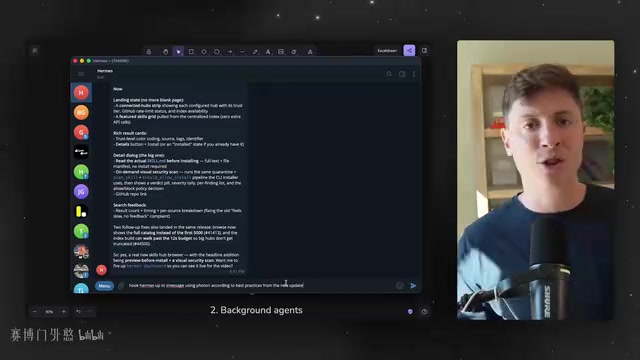
Hands-On With Hermes Agent's Eight Major Updates: A Complete Guide to AI Automation and Self-Evolution
The Hermes Agent gets a major upgrade with eight new features: native iMessage, parallel background sub-agents, Unreal Engine MCP support, a self-evolving Skill Hub, and more. A hands-on breakdown of the core changes and their real impact on personal AI automation workflows.
Read more →

·7 min
50 AI Research Job Applications to FAANG, 0 Replies? Unpacking the Truth Behind the Job Search Struggle
An AI research engineer with 3 years of experience sent 50 applications to FAANG with zero replies. This article breaks down the hidden barriers of top-tech AI roles, the truth about LinkedIn ghost jobs, and the MLE vs. Research Engineer divide.
Read more →

·6 min
GPT-5.6 Released: Codex Officially Integrated into ChatGPT, Ushering in a New Era of AI Programming
OpenAI releases GPT-5.6 and integrates Codex directly into ChatGPT, letting developers invoke code generation and debugging within conversations. A deep dive into the product logic and ecosystem impact.
Read more →

·4 min
OpenAI Build Week Kicks Off: Turning Your Ideas Into Reality with Codex
OpenAI launches Build Week, a global developer event centered on Codex AI coding tool, featuring live sessions and community events to help developers ship ideas fast.
Read more →

·4 min
OpenAI Sites: Turn Ideas into Published Websites Instantly — No Coding Required
OpenAI's new Sites tool lets anyone describe an idea and instantly generate a live, shareable website or lightweight app — no coding skills needed.
Read more →

·6 min
Getting Started with Coze Agents: Core Concepts, Platform Positioning, and a Practical Implementation Guide
A systematic guide to Coze's core positioning, its differences from Dify/n8n, and its full capability system covering agents, workflows, and multi-agent modes—helping beginners get started fast.
Read more →

·7 min
GLM-5.2 Released: Open-Source Coding Capability Approaches Closed-Source Flagships for the First Time
GLM-5.2 tops open-weight models in coding with a 74.4 Frontiers-WE score, beating GPT-5.5. Its MIT license enables local deployment, and the gap with closed-source flagships is closing fast.
Read more →

·7 min
Previewing the AI Engineer Summit: Industry Signals of AI Engineering Reaching Maturity
An exclusive look at the AI Engineer Summit dress rehearsals, decoding the paradigm shift from research to production. A deep dive into AI Engineer challenges, RAG, agent systems, and AI engineering as a distinct discipline.
Read more →