#operator fusion
146 related articles

·3 min
From IT Support to AI Engineer: A Real NCA-GENL Certification Journey and Lessons Learned
A real NCA-GENL study journal from an IT-support-turned-AI-engineer: 50+ scenario questions, 7-week prep, and a brutal 40% on Trustworthy AI. Covers Transformer concepts, NVIDIA tools, and what actually works.
Read more →

·7 min
Getting Started with AI Agents: A Deep Dive into the Perception-Decision-Action Loop
A clear, in-depth guide to how AI Agents work: the paradigm shift from traditional programs, the perception-decision-action loop, and the four pillars—LLMs, tool calling, memory, and RAG.
Read more →

·5 min
TensorRT Multi-Device Inference: Engineering Practices for Breaking Through Single-GPU Memory Bottlenecks
NVIDIA TensorRT now supports multi-device inference via pipeline and tensor parallelism, distributing large models across multiple GPUs to break through single-card memory limits.
Read more →

·7 min
DIY Four-Wheel Skid-Steer Off-Road Robot: A Full Hands-On Log of a Hoverboard Motor Build
A Reddit hobbyist builds a four-wheel skid-steer off-road robot using hoverboard hub motors, ODrive boards, and a Raspberry Pi 5. A deep dive into hardware, 4G teleop, ground friction challenges, and the road to ROS2 autonomous navigation.
Read more →

·4 min
AI Weekly: GPT-5.6 Launches in Three Tiers, Open-Source Inference Frameworks and Robot Safety Break Through Across the Board
This week in AI: OpenAI launches GPT-5.6 in three tiers (Sol/Terra/Luna) hitting 91.9% on coding benchmarks; DeepSeek and PKU open-source DSpark for 85% faster inference; Prime Intellect trains trillion-param models on just 28 H200s; Anthropic Claude enters Slack.
Read more →

·4 min
Unsloth v0.1.463-beta: Fixes Studio Crash and llama-server Permission Issue
Unsloth v0.1.463-beta fixes a Studio crash caused by access-denied errors during llama-server service discovery. Improves stability for multi-user servers and Windows environments.
Read more →

·5 min
Embedded Linux vs. AI Agent Development: A Comprehensive Comparison of Salary, Job Availability, and Career Stability
Embedded Linux or AI Agent development? This in-depth comparison covers salary, job availability, and career stability to help developers pick the right path.
Read more →

·6 min
AMD Ryzen AI Halo Dev Kit: A $4,000 Local LLM Powerhouse Taking on Apple and NVIDIA
AMD officially unveils the Ryzen AI Halo local AI dev kit, priced around $4,000 with 128GB unified memory, capable of running 70B LLMs locally. An in-depth look at its specs, pricing, and market competition.
Read more →

·7 min
Gemini Meets Google Business Profile: How AI Becomes a Dedicated Business Partner for Small Businesses
Google lets businesses connect their Google Business Profile to Gemini, so the AI can read operating info, reviews, and business data to offer targeted marketing advice—lowering AI barriers for SMBs.
Read more →

·7 min
Zero-Basis Learning Path for AI Agents: A Three-Stage Journey from Beginner to Deployment
A systematic zero-basis learning path for AI Agent development, covering Python and LLM fundamentals, five core capabilities like task planning and RAG, and LangChain hands-on practice.
Read more →
·6 min
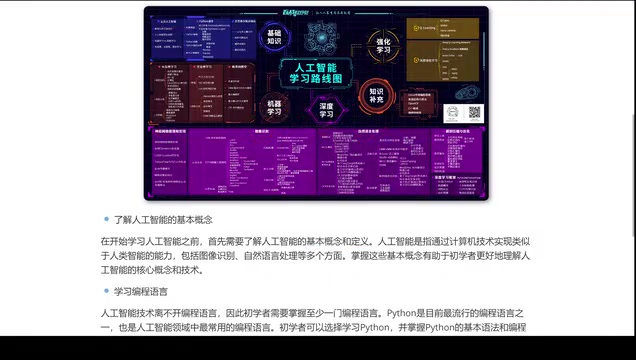
AI for Beginners: A Five-Step Practical Path That Skips the Math and Python Syntax Traps
Struggling with math and Python when learning AI from scratch? This article lays out a five-step entry path: grasp the concepts, learn Python lightly, master ML and deep learning principles, get hands-on with PyTorch, then deepen understanding through real projects.
Read more →
·5 min
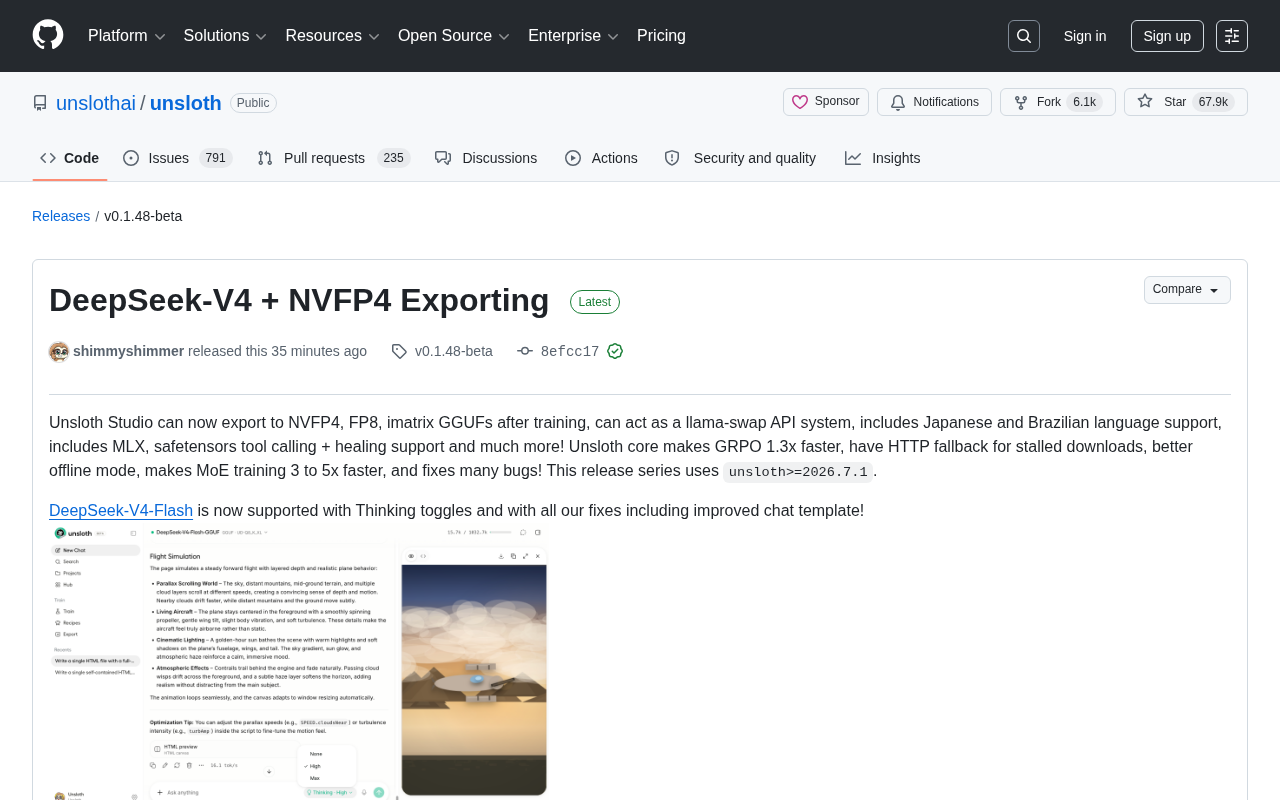
Major Unsloth Update: NVFP4 Quantization Export and DeepSeek-V4 Training Support
Unsloth v0.1.48-beta released, adding NVFP4/FP8 quantization export, OpenAI-compatible API hot-swapping, 3-5x faster MoE training, and 1.3x faster GRPO, covering the full LLM fine-tuning, quantization, and local deployment pipeline.
Read more →

·2 min
Harvard's Open-Source Textbook cs249r: A Complete Guide to Machine Learning Systems Engineering
Harvard's open-source textbook cs249r (Machine Learning Systems) has 25,600+ GitHub stars. It covers ML systems engineering, TinyML, and MLOps — free for everyone.
Read more →

·4 min
Google UK Report: How AI Can Solve the Productivity Puzzle and Build a Nation of AI Trailblazers
Google UK's Economic Impact Report argues AI could be the key to breaking the UK's productivity puzzle, focusing on skills access, SME enablement, and public-private collaboration.
Read more →
Google Drops Two New Models: 4-Second …
·4 min
Google Drops Two New Models: 4-Second Image Generation + Real-Time Video Creation Explained
Google launches Imagen 3 Nano (Flash) for 4-second text-to-image generation and Veo 3 Flash for conversational video editing — now available via Gemini API and Google AI Studio.
Read more →

·3 min
Unsloth v0.1.46-beta Update: DiffusionGemma Tool Calling Disabled and Artifacts Canvas Enabled by Default
Unsloth v0.1.46-beta is out with key DiffusionGemma changes: tool calling disabled by default, artifacts canvas enabled. A deep dive for LLM fine-tuning devs.
Read more →

·2 min
Unsloth v0.1.461-beta: Fix for Local GGUF Vision Model Loading
Unsloth v0.1.461-beta fixes local GGUF vision model loading on llama-server in Studio, adds variant directory companion file lookup for stable multimodal deployment.
Read more →

·3 min
Unsloth v0.1.45-beta Released: 2x Faster LLM Fine-Tuning with 70% Less VRAM
Unsloth v0.1.45-beta (PyPI: 2026.6.2) delivers 2x faster LLM fine-tuning and up to 70% VRAM reduction. Now at 67.9k GitHub stars, upgrade via pip install.
Read more →
·7 min
How Quantum Computing + AI Supercomputing Could Crack Fusion's Fuel Dilemma
One of the biggest bottlenecks to fusion commercialization is the tritium fuel breeding and cycling problem. This article explores how quantum computing and AI supercomputers can jointly tackle fusion's fuel challenge.
Read more →

·6 min
GLM 5.2 Arrives: Industry Upheaval on the Eve of AI Margin Collapse
The rise of Zhipu's GLM 5.2 is accelerating the democratization of LLM capabilities. This article analyzes the commoditization of foundation models, the logic behind margin collapse, and the opportunities and challenges facing application-layer and foundation model firms.
Read more →