#personalized AI evaluation
110 related articles

·3 min
Is Gemini Getting Worse? A Deep Dive into the 'Model Degradation' Phenomenon
Reddit users report Gemini feeling "worse over time." This deep dive explains the real causes—silent updates, safety over-alignment, and compute throttling—plus how to rationally evaluate AI model performance.
Read more →

·5 min
DeepSeek V4 Enters Grayscale Testing, Grok 5.0 Ready to Launch | Latest AI Model Developments
This AI Daily covers five sectors: DeepSeek V4 reportedly enters grayscale testing with improved chain-of-thought; Musk previews Grok 4.6 and 5.0 with 2T parameters; Intern-S2 open-source model beats Claude Opus 4.8; xAI builds 2000MW Colossus cluster; NVIDIA RoboTTT breaks long-horizon robotics barriers.
Read more →
Cognee: The Open-Source Knowledge Grap…
·2 min
Cognee: The Open-Source Knowledge Graph Engine for Persistent AI Agent Memory
Cognee is an open-source AI memory platform using knowledge graphs to give AI agents persistent cross-session memory. Self-hosted, graph + vector hybrid retrieval. 28K+ GitHub stars.
Read more →

·7 min
Claude Code Practical Tutorial: A Complete Beginner's Guide to Automating Your Entire Workflow
No coding required! This guide breaks down the complete Claude workflow: custom Projects, batch SEO content, one-sentence tool building with Artifacts, and Claude Code terminal ops—with real traffic-growth cases.
Read more →
GitHub Daily · July 19: The Dual Advan…
·3 min
GitHub Daily · July 19: The Dual Advance of Heterogeneous Inference and Agent Toolchains
GitHub Trending July 19: ktransformers tops the list with heterogeneous inference optimization, while jcode, cua, and AstrBot signal a maturing Agent ecosystem.
Read more →

·1 min
The Rise of Synthetic Datasets: How ML Researchers Are Solving the Data Shortage with Free Samples
Synthetic data is reshaping ML research. This guide covers generation methods, key applications in finance and healthcare, and critical pitfalls like synthetic bias.
Read more →
Bonsai 27B: The First 1-bit LLM That R…
·3 min
Bonsai 27B: The First 1-bit LLM That Runs on Your Phone — A New Milestone for On-Device AI
Bonsai 27B is the first 27B-parameter LLM that runs on smartphones via 1-bit quantization, compressing to 3–4GB. We break down the tech, privacy benefits, and community debate.
Read more →

·5 min
Rebuilding Education for the AI Era: A Manifesto for Tearing Down and Starting Over
Microsoft Research's Manohar proposes a disruptive education reform framework: abolish grading, allow AI in exams, and enable lifelong micro-credentials. Facing a global youth employment crisis, he calls for rebuilding education, not patching a broken system with AI.
Read more →
YouTrackDB Deep Dive: Core Features an…
·3 min
YouTrackDB Deep Dive: Core Features and Use Cases of an Object-Oriented Graph Database
YouTrackDB is a general-purpose object-oriented graph database combining OOP paradigms with graph data models, supporting classes, inheritance, and polymorphism for knowledge graphs, social networks, and recommendation systems.
Read more →
MailFlow Open Source Email Client: A D…
·2 min
MailFlow Open Source Email Client: A Developer's Guide to Contribution and Value
MailFlow is an open source email client project built for developers, prioritizing privacy, self-hosting, and extensibility. Here's why it matters and how to evaluate whether to contribute.
Read more →

·3 min
31 Companies Sign Agent Privacy Pact: Industry Self-Regulation Framework Goes into Effect
31 companies sign China's first AI agent privacy pact covering screen-reading authorization, training data restrictions, and payment caps. Plus: domestic LLM tops OpenRouter, Meta's $40B compute bet, and agent commercialization challenges.
Read more →
From Love to Disappointment: The Deepe…
·3 min
From Love to Disappointment: The Deeper Reasons Behind Claude's Declining User Experience
Why did a veteran user go from loving Claude to feeling disappointed? A deep dive into over-alignment, style drift, and how model upgrades can protect longtime users.
Read more →

·6 min
OraAgent Hands-On Review: End-to-End Automation of Foreign Trade Prospecting Emails — From Finding Customers to Sending Emails in One Click
A hands-on review of how OraAgent (AI assistant Aura) automates the entire foreign trade prospecting email workflow: auto-searching customers, prioritizing quality leads, batch-generating personalized emails, and one-click sending to cut acquisition costs.
Read more →

·4 min
Baidu AI Automation System: Trigger Skill Chains with a Single Sentence, Say Goodbye to Manual Workflows
The Baidu AI Automation System uses departmentalized skill libraries and Agent-style orchestration to let managers trigger multi-skill workflows with one sentence—no tech background needed.
Read more →

·4 min
Running Out of Codex Quota? An In-Depth Review of HeyRoute's GPT-5.5 Integration
Codex quota running out too fast, or API costs too high? HeyRoute offers a low-cost AI coding relay via GPT-5.5, with ~1.08s first response and 99.95% success rate. This in-depth review covers its selling points, pricing, and caveats.
Read more →

·5 min
ChatGPT Work Officially Launches: How GPT-5.6 Is Reshaping the Way You Work
OpenAI launches the GPT-5.6 model family (Sol/Terra/Luna) and ChatGPT Work, enabling automated financial analysis, local file operations, Codex coding, and cross-app workflows—AI officially becomes a real work partner.
Read more →

·5 min
In-Depth Comparison of AI Image Generation Tools: How to Choose Between Flux, Midjourney, and Gemini?
A comprehensive comparison of mainstream AI image generation tools: Flux, Midjourney, Grok, Gemini, and Stable Diffusion. Dissecting their pros and cons across quality, freedom, and usability to help you find the right AI drawing solution.
Read more →

·6 min
Getting Started with AI Agents: Principles, Frameworks, and a Guide to Building Enterprise-Grade Agents
In-depth analysis of AI Agent core principles: why LLMs need Agent technology, the evolution from Prompt to RAG to Agent, Agent Tuning methods, and enterprise cost evaluation to help you build enterprise-grade agent applications.
Read more →
·7 min
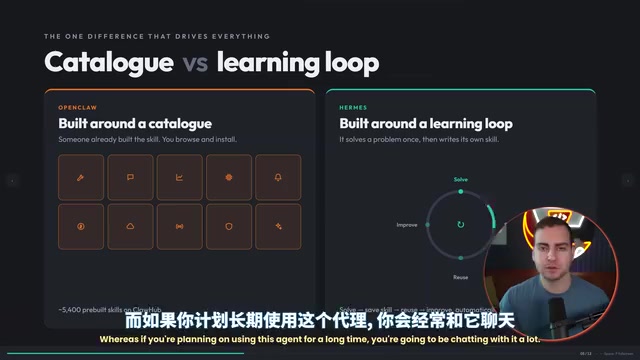
OpenClaw vs Hermes: An In-Depth Comparison and Selection Guide for AI Agent Tools
An in-depth comparison of OpenClaw and Hermes Agent, covering skill management, memory mechanisms, security, and gateway configuration to help you find the right AI agent solution.
Read more →

·4 min
AI Persistent Memory Three-Layer Architecture Explained: In-Depth Comparison of Mem0, Zep, and ContextNest
Deep dive into the three-layer architecture of AI persistent memory systems—storage, management, and retrieval—with an in-depth comparison of Mem0, Zep, and ContextNest to help developers choose the right memory solution for AI Agents.
Read more →