#production feedback loop
922 related articles

·2 min
Why AI Coding Assistants Stop at the PR: The Missing Production Feedback Loop Is the Key Bottleneck
AI coding tools like Copilot and Cursor generate code efficiently but lose awareness after PR merge. This article analyzes why the production feedback loop is missing and explores solutions.
Read more →

·3 min
Robotics & RL Control Code Verification: Decision-Making Methods from Simulation to Deployment
How do robotics and RL engineers verify control code updates? A deep dive into statistical aggregation, layered verification, Sim-to-Real gap strategies, and deployment decision-making.
Read more →

·3 min
Three Costly Lessons from Building AI Agents: Schema Validation, Circuit Breakers, and Retry Strategies in Practice
Three real-world lessons from building AI Agents: schema leniency over strict validation, consecutive-failure circuit breakers, and smart retry strategies to prevent double billing.
Read more →

·2 min
GLM-5.3 Open Weights: Zhipu AI's Open Strategy and Developer Ecosystem Explained
Zhipu AI's GLM-5.3 model goes open-weight, trending on Hacker News. Explore what open weights mean for developers, licensing nuances, and China's AI open-source wave.
Read more →

·3 min
The Automated Agent Improvement Loop: A Deep Dive into Evaluation and Environment Engineering
A deep dive into the Agent improvement loop: automated evaluation (Eval) and environment engineering, covering LLM-as-a-Judge, trajectory evaluation, and simulation environments for scalable Agent deployment.
Read more →

·3 min
OpenViking: A Self-Evolving Context Database Unifying Memory, Knowledge, and Skills for AI Agents
Deep dive into Volcengine's open-source OpenViking — a self-evolving context database unifying Agent Memory, Knowledge RAG, and Skills, with nearly 29K GitHub Stars.
Read more →

·4 min
GreenTech ML Project Selection: An In-Depth Comparison of Energy Forecasting, Optimization, and Anomaly Detection
In-depth comparison of three end-to-end ML projects in GreenTech: smart energy forecasting, building energy optimization, and energy prediction with anomaly detection—analyzed by technical difficulty, business value, and MLOps completeness.
Read more →

·4 min
WorldCloud: An Agentic Framework for Generating Explorable 3D Open Worlds from a Single Sentence
Deep dive into WorldCloud's technical architecture: how multi-agent collaboration generates large-scale, editable, explorable 3D open worlds from a single natural language description.
Read more →

·3 min
One Decorator to Solve the Duplicate Tool Execution Problem in AI Agents
The idempotent-tools Python library prevents duplicate tool execution in AI Agents with a single @idempotent decorator, supporting SQLite, Redis, LangGraph, and CrewAI.
Read more →
·4 min
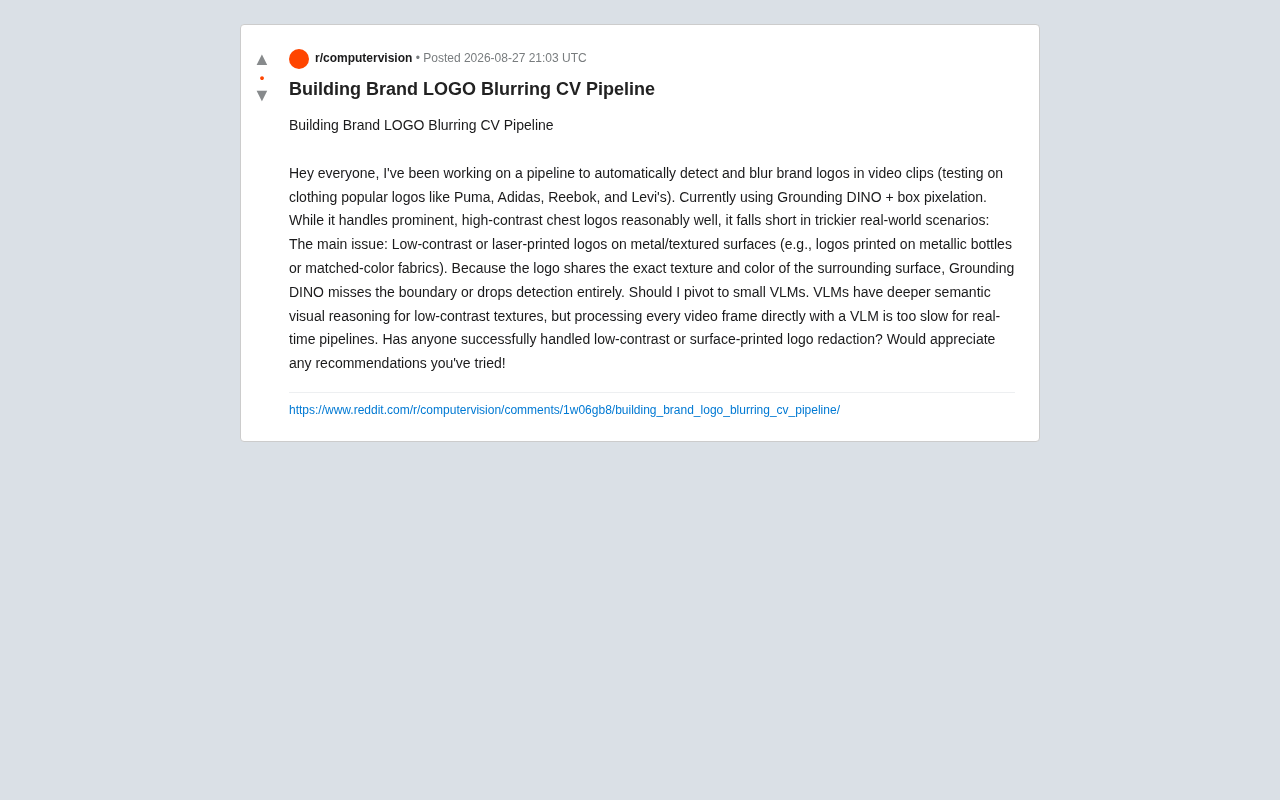
Automatic Brand LOGO Blurring in Video: The Low-Contrast Detection Challenge and Engineering Solutions
Analyzing the low-contrast detection challenge in brand LOGO auto-blurring CV pipelines, exploring Grounding DINO's limits and engineering solutions like VLM cascades and temporal tracking.
Read more →

·3 min
A Guide to Optimizing LLM Tail Latency: Request Hedging and Other Low-Cost Fixes Explained
Learn how to fix LLM tail latency (P99/P99.9) using request hedging, dynamic timeouts, and scheduling optimizations — practical low-cost solutions for production LLM apps.
Read more →

·3 min
Harness Multi-Agent Framework: A Deep Dive into Planner→Builder→Evaluator Three-Agent Collaboration
Deep dive into the Harness multi-agent framework's three-agent paradigm (Planner, Builder, Evaluator), covering Agent Loop design, circular invocation prevention, Sandbox isolation, and A2A vs SubAgent selection strategies.
Read more →

·3 min
GitHub Copilot Canvas Explained: Five Practical Use Cases Showcasing Visual AI Collaboration
Explore GitHub Copilot Canvas through five practical use cases—issue triage, architecture diagrams, session management & more—upgrading from chat-based AI to visual collaboration.
Read more →

·4 min
Transitioning to AI Agent Development: A Complete Three-Stage Learning Path for Programmers
Why do programmers keep failing at AI Agent development? This guide breaks down a 3-stage learning path: ReAct & Tool Calling fundamentals, LangChain engineering, and production-grade project delivery.
Read more →

·2 min
The Complete Guide to AI Software Factories: Rebuilding the Entire Development Workflow with Agents
A deep dive into AI Software Factory concepts and practices — from manual tickets to automated PRs, learn how to build development pipelines with AI agents.
Read more →

·3 min
PostHog Desktop Deep Dive: An AI Agent-Powered Product Collaboration Workbench
PostHog Desktop integrates product data, AI agents, and code building into a unified workbench. This deep dive covers its multi-agent collaboration, GitHub integration, and how AI-native platforms reshape product iteration.
Read more →
·4 min
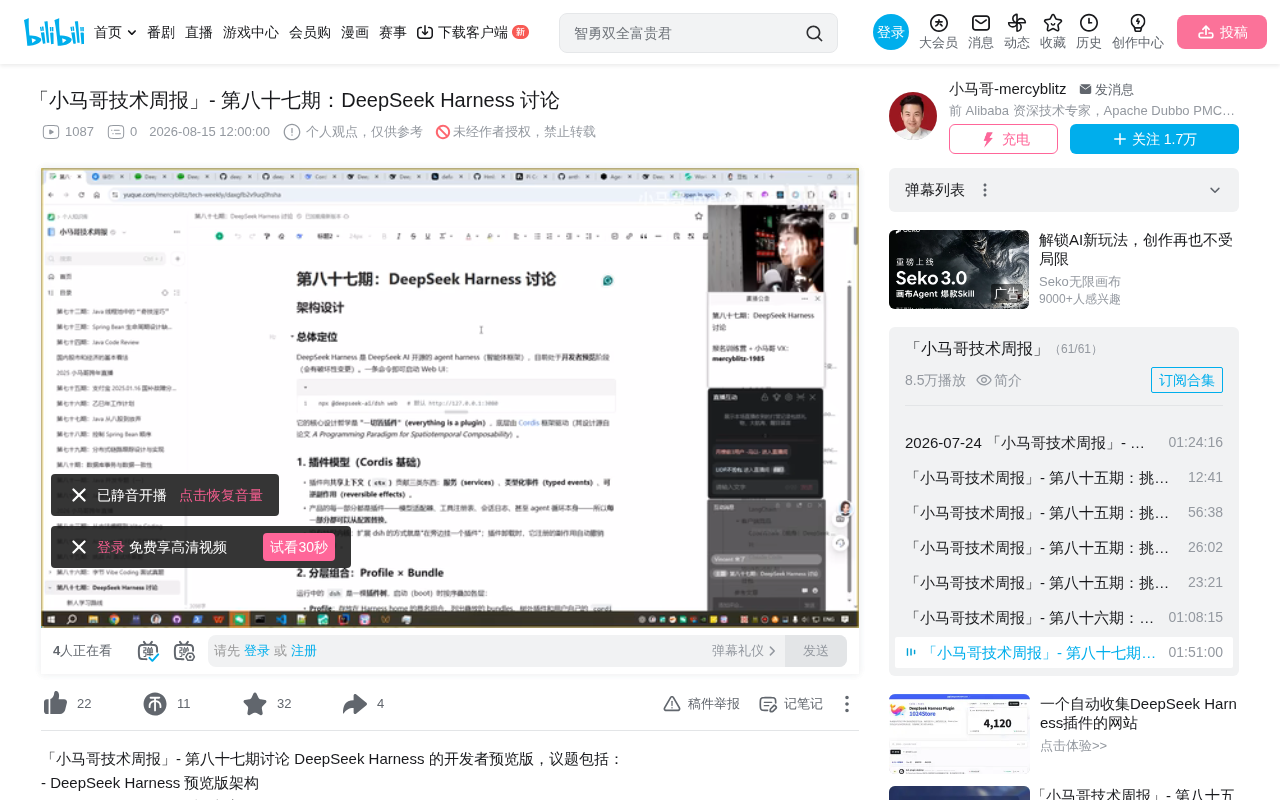
Deep Dive into DeepSeek Harness: Old Patterns, New Ecosystem
A deep analysis of DeepSeek Harness Agent framework from a software engineering perspective, comparing it with Claude Code and Pi, revealing its server-side Agent positioning and TypeScript ecosystem advantages.
Read more →
·2 min
Warren: Isolated Runtime Infrastructure Built for AI Coding Agents
Warren is an open-source infrastructure project providing isolated workspaces, resource limits, real-time observability, and Git delivery for AI coding agents running securely in your own environment.
Read more →

·4 min
Training a Production-Grade Image Classifier at Home: Feasibility and Practical Roadmap
Explore the feasibility of training a production-grade image classifier on personal hardware, with detailed guidance on transfer learning, open datasets, and fine-tuning strategies.
Read more →

·2 min
Gemini 3.7 Flash Deep Dive: Major Upgrades in Coding, Debugging, and Agent Capabilities
Deep dive into Google Gemini 3.7 Flash: enhanced coding and debugging, more stable multi-step agent execution, and high-fidelity design-to-code generation for developers.
Read more →