#project-level AI programming
215 related articles

·2 min
ChatGPT Sites: Build and Deploy Web Apps Directly from the Chat Window
OpenAI's ChatGPT Sites plugin lets users generate code, iterate visually, and publish complete web apps without leaving the chat window. Zero-config hosting included.
Read more →

·3 min
Coze Deep Dive: Core Capabilities and Tips for a Multi-Agent Collaboration Platform
A deep dive into Coze 3.0's multi-agent collaboration, covering project workspace architecture, credit economics, local tool integration, and a Dify comparison.
Read more →

·3 min
AI Coding Agents in Practice: An Efficient Configuration Guide for Cursor and Codex
How to configure Cursor, Codex, Devin, and other AI coding agents for context management, code quality, and cross-tool collaboration. Practical tips on rule files, TDD, and structured context storage.
Read more →
Capn-hook: Breaking the Cycle of Repet…
·2 min
Capn-hook: Breaking the Cycle of Repetitive Exploration for Coding Agents
Capn-hook is an open-source hook-based tool that helps coding agents retain knowledge across sessions—eliminating redundant exploration and turning one-time discoveries into reusable engineering assets.
Read more →
·3 min
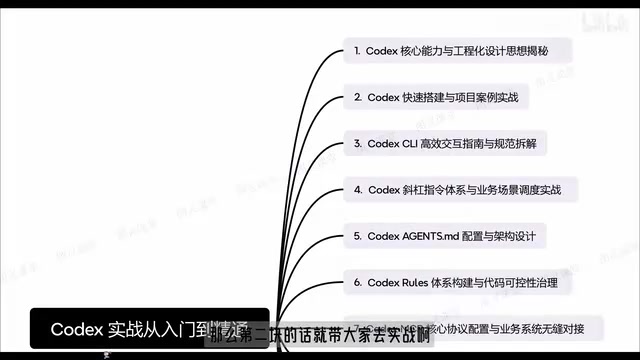
The Complete OpenAI Codex Practical Guide: From Installation to Enterprise Deployment
A complete guide to OpenAI Codex: CLI setup, slash commands, AGENTS.md, MCP integration, multi-agent collaboration, and a RAG customer service project walkthrough.
Read more →

·3 min
Multi-Repo Microservice Development: The Workspace-Level Configuration Gap in AI Agents
Explore why AI agent tools (Codex, Claude Code, Gemini) lack workspace-level config for multi-repo microservice dev, and discover practical solutions like symlinks, custom paths, and cascading config.
Read more →

·3 min
Code Written for Humans: Maintainability Is the Core of Software Development
Code is read far more than it's written. This article explores the core principles of maintainability — clarity, naming, consistency, and how to evaluate AI-generated code quality.
Read more →

·3 min
Getting Started with Claude Code: Full Project Context Understanding and Why It Beats Cursor and Trae
Claude Code is Anthropic's local AI coding assistant that reads your entire project context, auto-debugs, and outperforms Cursor and Trae on accuracy. Learn why.
Read more →

·7 min
Building a Published App with Zero Code in Four Days: A Complete HarmonyOS Development Journey
A tech blogger with zero programming knowledge built a retro DV app in four days using AI tools like Cursor and Codex, and got it published on Huawei App Gallery. A full vibe coding walkthrough.
Read more →

·2 min
Mastering Cursor in Depth: Multi-File Editing, Rules Configuration, and Efficient Practice Guide
Go beyond basic prompt usage and systematically master Cursor's core features: Composer multi-file editing, Codebase semantic search, and Rules configuration.
Read more →

·2 min
GPT-5.6 Real-World Test: Nearly 1,000 Lines of Code, Done in One Shot
A Snorkel AI senior research scientist tested an early GPT-5.6 build on a ~1,000-line coding task — completed in one shot, no repeated prompting needed.
Read more →

·5 min
ECC: An Agent Enhancement Framework for AI Coding Assistants — Five Core Capabilities Explained
ECC is an agent optimization framework for AI coding assistants like Claude Code, Cursor, and Codex, enhancing them with skills, memory, security, and research-first development capabilities.
Read more →

·7 min
AI Coding in Practice: Generating a Minecraft Clone in 90 Minutes as LLMs Enter Project-Level Development
A major breakthrough in AI coding! Hands-on tests show new LLMs generating a Minecraft clone in 90 minutes and a TMNT game in 30 minutes, building 3D scenes, animation, and game logic in one shot.
Read more →

·8 min
OpenAI Merges Codex with ChatGPT: A Deep Dive into the Unified Desktop App Overhaul
OpenAI officially merges its coding agent Codex with ChatGPT into a unified desktop app, adding new coding workflows, a Chrome extension, a built-in browser, and GPT-5.6-powered Computer Use capabilities.
Read more →

·4 min
OpenAI Build Week Kicks Off: Turning Your Ideas Into Reality with Codex
OpenAI launches Build Week, a global developer event centered on Codex AI coding tool, featuring live sessions and community events to help developers ship ideas fast.
Read more →

·4 min
DeepSeek Coder Deep Dive: How This Open-Source Code LLM Outperforms GPT-4
A deep dive into DeepSeek Coder V1 to V2: MoE architecture, 128K context, 90.2% HumanEval pass rate, and how it became the first open-source model to beat GPT-4 Turbo.
Read more →

·6 min
The Complete Beginner's Guide to Claude Code: From Installation to Advanced Usage
Claude Code is one of the most powerful AI coding agents, running in the terminal to write code, batch operations, build web projects, and more. This guide covers installation, connecting local models via CC Switch, permission modes, CLAUDE.md, Skills, MCP, Subagents, and more.
Read more →

·4 min
OpenWiki: A CLI Tool That Automatically Generates AI Agent Documentation for Codebases
OpenWiki is an open-source CLI tool that automatically generates and maintains structured documentation for AI agents. It addresses the context gap in AI coding assistants like Claude Code and Cursor, helping teams build effective context engineering workflows.
Read more →

·5 min
Advanced Vibe Coding: How SuperPowers and GStack Make AI Coding Truly Converge
In the age of AI-assisted programming, how do you make tools like Codex and Claude Code output more stably? This article deeply analyzes SuperPowers and GStack, covering project-level orchestration and module-level code layering to help developers master AI coding.
Read more →

·4 min
From Claude Code to Claude Tag: How AI Programming Tools Break Out of Engineering Teams
Anthropic's Boris Cherny and Cat Wu discuss how Claude Code expanded from engineering teams company-wide, the Claude Tag platform strategy, and the launch of Claude Fable 5.
Read more →