#read-only agent
133 related articles

·3 min
OpenCode In-Depth Review: Can This Open-Source Coding Agent Replace Claude Code?
OpenCode is an open-source terminal coding agent with 180K+ GitHub stars, supporting hundreds of models and a dual-layer agent architecture — completely free. See how it compares to Claude Code.
Read more →

·2 min
Waveloom: An Open-Source Terminal AI Coding Agent Deeply Optimized for DeepSeek
Waveloom is an open-source terminal coding Agent deeply optimized for DeepSeek, with cache hit rates near 99% to drastically cut token costs. Supports Linux, Windows, macOS, and Claude Code Skills.
Read more →
·3 min
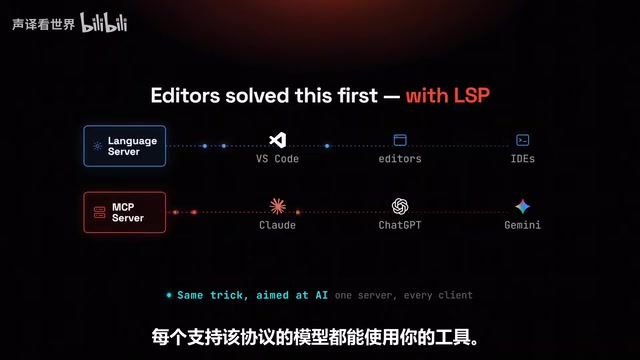
Build an MCP Server in 10 Minutes: Let AI Call Your Code Directly
MCP (Model Context Protocol) is the open standard for AI tool integration. Build your own MCP server with ~20 lines of Python. Learn tools, resources, prompts, and both local and remote deployment.
Read more →

·2 min
Testing AI Scientific Engineering with the Three-Body Problem: From Numerical Integration to Chaos Visualization
A developer tasked GPT-5.6 Sol with building a three-body problem simulation site covering four integrators, chaos detection, and independent review. An in-depth look at AI's real scientific computing capabilities.
Read more →
The Grepathy Incident: The Risks of AI…
·2 min
The Grepathy Incident: The Risks of AI Acting Unilaterally and Where to Draw the Line
The Grepathy incident on Hacker News reveals the risks of AI agents acting without approval. A deep dive into autonomous AI decision-making, Human-in-the-Loop design, and where to draw the line.
Read more →

·2 min
Why I Gave Up on Claude Code's Full-Auto Mode: Real-World AI Agent Experience and Safety Reflections
Real-world insights on Claude Code vs. OpenCode, practical tool combinations, and security risks of full AI Agent automation — with strategies for safe, stable workflows.
Read more →

·3 min
Core Iron Rules for Deploying AI Agents in Production
What are the critical runtime rules for AI Agents in production? This deep dive covers independent verification for state changes, least privilege, observability, and more.
Read more →
Cross-Platform MicroVM Sandbox: Runnin…
·3 min
Cross-Platform MicroVM Sandbox: Running AI-Generated Code Safely in Isolated Environments
Explore cross-platform MicroVM sandbox technology supporting Windows/Mac/Linux with a built-in policy engine for fine-grained access control in AI Agent and multi-tenant code execution scenarios.
Read more →
AI Agent Human-in-the-Loop (HITL) Desi…
·3 min
AI Agent Human-in-the-Loop (HITL) Design: Risk Classification and Best Practices
A deep dive into AI Agent Human-in-the-Loop design: balancing automation with oversight using risk tiers, async approval, and confidence thresholds.
Read more →

·4 min
Claude Code vs. Codex vs. Cursor: A Deep Comparison of Three AI Coding Tools
Claude Code, Codex, or Cursor? This in-depth comparison covers each tool's positioning, ideal users, and how to combine them for maximum productivity in your AI coding workflow.
Read more →

·4 min
MCP Protocol Deep Dive: Its Relationship with Function Calling and Agents, Plus a Practical Guide
Deep dive into MCP (Model Context Protocol): clarifying the three-layer relationship between MCP, Function Calling, and Agents, covering protocol roles, call flows, transport choices, and production security for AI developers.
Read more →

·5 min
Hands-On with PageAgent: Add AI Agent Capabilities to Web Pages with a Single Line of Code
In-depth hands-on review of Alibaba's open-source web automation tool PageAgent: three integration methods, script execution analysis, and a full breakdown of current limitations. Add AI Agent capabilities to web pages with one line of JS.
Read more →
·5 min
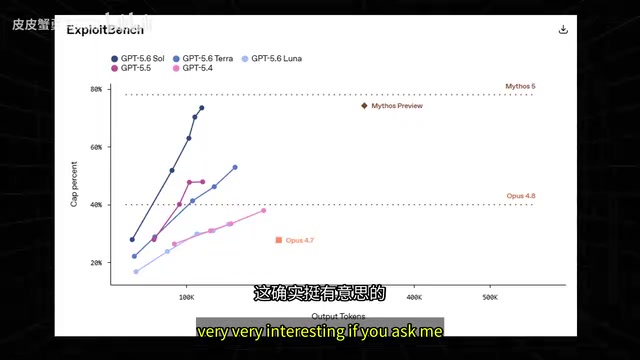
GPT-5.6 Released: Outperforms Rivals but Halted by Government—Cybersecurity Capabilities Trigger Regulatory Red Line
OpenAI releases GPT-5.6 (Sol/Terra/Luna), beating Anthropic on Terminal Bench at ~40% lower cost. But its cybersecurity capabilities hit danger thresholds, limiting access to trusted partners at government request.
Read more →
·5 min
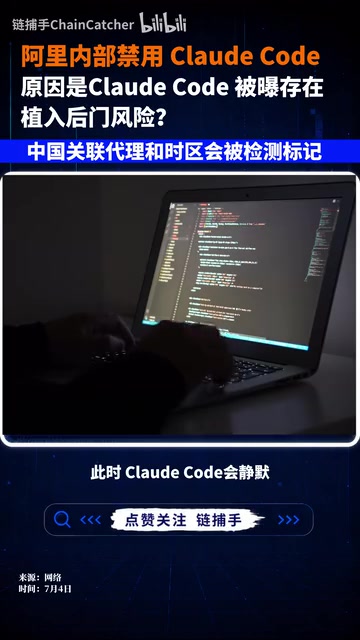
Alibaba Bans Claude Code: Invisible Fingerprints and the AI Tool Trust Crisis
Alibaba has banned Claude Code as high-risk software. Reverse engineering revealed a covert environment-identification mechanism hiding user fingerprints in punctuation via prompt steganography. A deep dive into the incident and AI tool trust.
Read more →

·6 min
AI Agent Development in Go: A Hands-On Guide to ByteDance's Eino Framework and Its Seven Core Capabilities
Build production-grade AI Agents with a pure Go stack using ByteDance's Eino framework. A deep dive into seven core capabilities: multi-Agent orchestration, long-task execution, command approval, RAG, MCP, Skills, and database reporting.
Read more →

·4 min
How Background AI Agents Can Automatically Maintain All Your Repositories on a Schedule
OpenInspect's Multi-Repo Automations lets AI coding agents maintain up to 10 repositories on a schedule simultaneously — isolated sessions, independent PRs, and fault-tolerant execution for security sweeps, dependency upgrades, and framework migrations.
Read more →

·3 min
OpenAI Codex in the Cloud: Exploring Codebases, Auto-Coding, and Generating PRs End-to-End
A deep dive into OpenAI Codex's cloud workflow: using a Next.js project to demo Ask/Code modes, auto-generating Pull Requests, and locally verifying merges for AI-assisted development.
Read more →

·4 min
Proactive AI Agent Monitoring: Stop Fighting Fires, Catch Bugs Before Your Customers Do
A real case study: team builds AI Agent "Oogway" to auto-patrol after every job, investigate anomalies, create tickets, and update a knowledge Wiki — catching bugs before customers do.
Read more →

·6 min
Dify Local Deployment in Practice: A Complete Guide to Building an AI Application Platform with Docker
A complete guide to Dify local deployment: from Docker environment setup, source code pulling, and container startup to first access. Build a private AI app development platform across Linux, Windows, and Mac for fast enterprise AI deployment.
Read more →

·7 min
Dify 1.8.0 in Practice: A Complete Guide to Building Enterprise-Grade AI Workflows with Zero Code
An in-depth walkthrough of deploying Dify 1.8.0 and building applications: three-step Docker deployment, five app types compared, and Workflow vs Chatflow use cases—build enterprise AI apps with zero code.
Read more →