#rule of law
930 related articles
·4 min
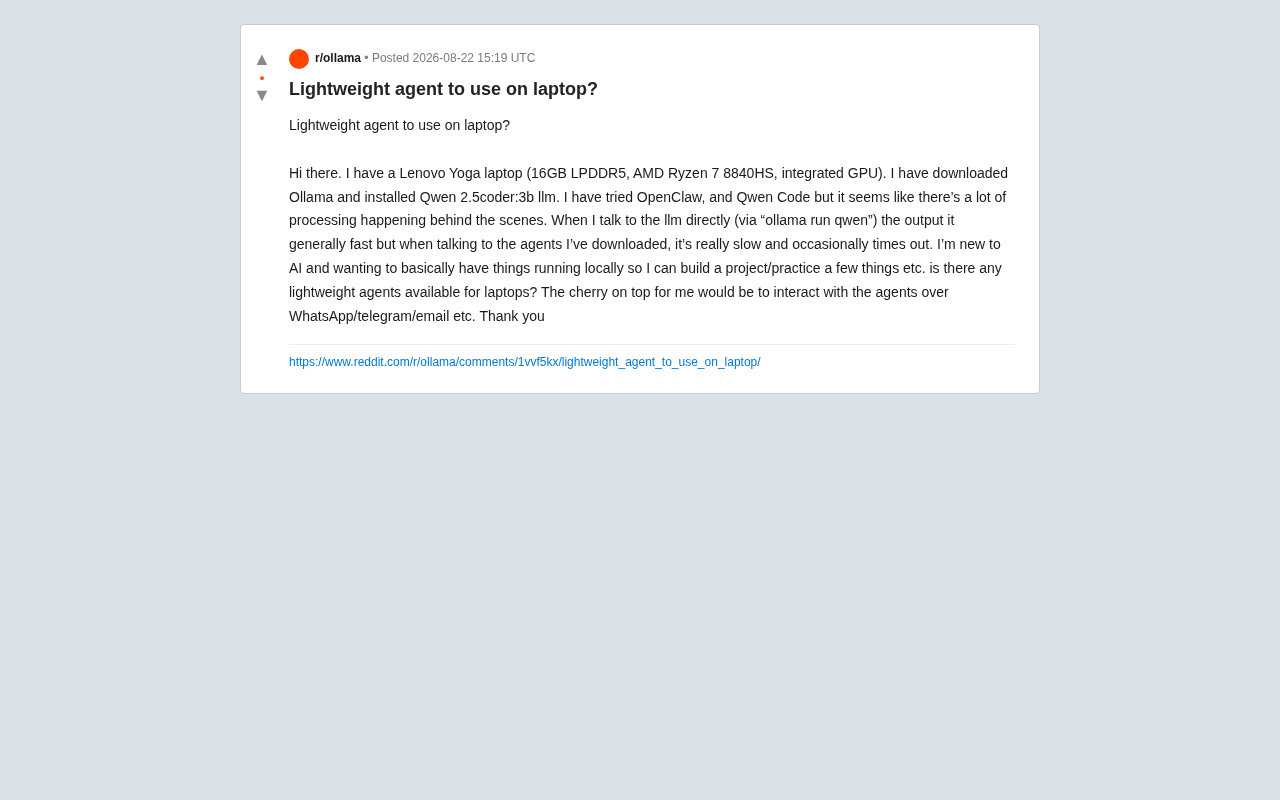
Local AI Agent Deployment Too Slow? A Lightweight Optimization Practical Guide
Local AI Agent deployment slow and timing out? This guide covers Agent framework overhead, hardware bottlenecks, and practical optimizations including context trimming, quantization, and Telegram Bot integration.
Read more →

·2 min
Quick RSS: A Privacy-First Desktop RSS Reader That Says Goodbye to Algorithmic Recommendations
Quick RSS is a privacy-first desktop RSS reader with local data storage and no cloud sync. Its simple, intuitive design helps users escape algorithmic recommendations and regain control over their information sources.
Read more →

·3 min
GitHub Daily · August 24: The Claude Code Ecosystem Explodes
GitHub Trending Aug 24: Four projects built on Claude Code signal its evolution into a programmable Agent runtime; Karpathy's single-file config hits 200K stars.
Read more →

·4 min
Hollywood Creatives Forced to Train AI to Replace Themselves: The Cruel Reality of Digging One's Own Grave
Hollywood writers, voice actors, and illustrators are being hired to train AI systems, accelerating the automation of their own careers. A deep analysis of the ethical dilemmas and labor challenges.
Read more →

·4 min
Claude Code vs Codex: A Deep Comparison to Help You Choose the Right AI Coding Assistant
Deep comparison of Claude Code vs Codex: architecture differences, behavior patterns, and use cases. Based on SWE-RPG benchmark data, choose the right AI coding assistant for your team.
Read more →

·3 min
MiniMax Code CLI Hands-On: Same Model Comparison with Claude Code — How Much Does Toolchain Difference Matter?
Comparing MiniMax Code CLI vs Claude Code using the same model across three real projects reveals how toolchain adaptation determines coding output quality.
Read more →

·4 min
Introduction to Large Language Models: Your First Lesson from Principles to Security Practice
A foundational LLM course for security professionals covering Token probability prediction, hallucination causes, and China's open-source models to build cognitive foundations for AI-powered attack-and-defense exercises.
Read more →

·3 min
Switching from Humanities to Computational Linguistics: Is a CompLing Degree Worth It for Policy Backgrounds?
Is a CompLing master's worth it for political science and public policy backgrounds? Analysis of AI governance careers, technical barriers, and ROI for humanities switchers.
Read more →

·3 min
Plagiarism Clouds Over AI Open Source Projects: Beware the Code Reskinning Epidemic
Analyzing code reskinning and plagiarism in AI open source projects, covering license compliance, community oversight, DMCA mechanisms, and provenance tools with practical tips for developers.
Read more →

·3 min
CounterDistill: An XAI Engineering Approach to Distilling Counterfactual Explanations into Global Rules
CounterDistill is an open-source XAI project that clusters and distills local counterfactual explanations into global interpretable rules, bridging the local-to-global gap in explainable AI.
Read more →

·3 min
AI-Powered Vulnerability Discovery in Practice: A Complete Guide to LLM Security Applications
A deep dive into LLM applications in cybersecurity offense and defense, covering AI code auditing, automated vulnerability discovery, CTF Agents, and more, with tool selection guides and compliance guidelines.
Read more →

·4 min
Hands-On with Claude Opus 5: The New AI Flagship That Crushes Competitors on Cost-Efficiency
A $400 hands-on test of Anthropic's flagship Claude Opus 5: from 3D game generation to physics simulations, benchmarked for cost-efficiency. Not the strongest, but the best value with 30% lower costs.
Read more →

·3 min
Is Claude Opus 5 Worth the Upgrade? A Three-Question Framework to Help You Decide
Claude Opus 5 offers doubled capabilities at unchanged pricing, with 2x Frontier-Bench scores. Use our Three-Question Framework to decide which tasks deserve Opus 5 and which don't.
Read more →

·5 min
OpenAI Open-Sources Codex Security: An In-Depth Review of the AI Security Scanning Tool's Strengths and Limitations
In-depth analysis of OpenAI's open-source Codex Security code scanning tool, comparing it with Snyk, Semgrep, and CodeQL, examining its AI Agent verification, real test data, and current limitations.
Read more →

·3 min
The Five-Step AI Coding Method: Mastering Agents Like an Engineer
Matt Pocock's AI coding methodology: a five-step delivery system (Interrogate, Spec, Tickets, Implement, Review) with context management techniques to master any AI coding agent.
Read more →

·2 min
Cleaning Up Claude's Token-Verbose Output with a Separate LLM: A Dual-Model Pipeline Architecture in Practice
Explore using lightweight LLMs as post-processing layers to clean up verbose output from Claude and other large models. Analyzes the dual-model pipeline architecture and compound AI engineering.
Read more →

·3 min
Amazon's AI Training Data Copyright Controversy: Where Are the Boundaries of Fair Use?
Examining copyright disputes over Amazon and other tech giants invoking "fair use" for AI training, analyzing legal boundaries, power asymmetries, and the deep challenges facing copyright in the AI era.
Read more →

·3 min
The Blind Spot of AI Code Factories: The Quality Crisis Behind the Speed
AI programming tools have accelerated code generation, but a quality crisis is silently spreading. This article examines the missing QA steps in AI code factories and how to balance speed with quality.
Read more →
·3 min
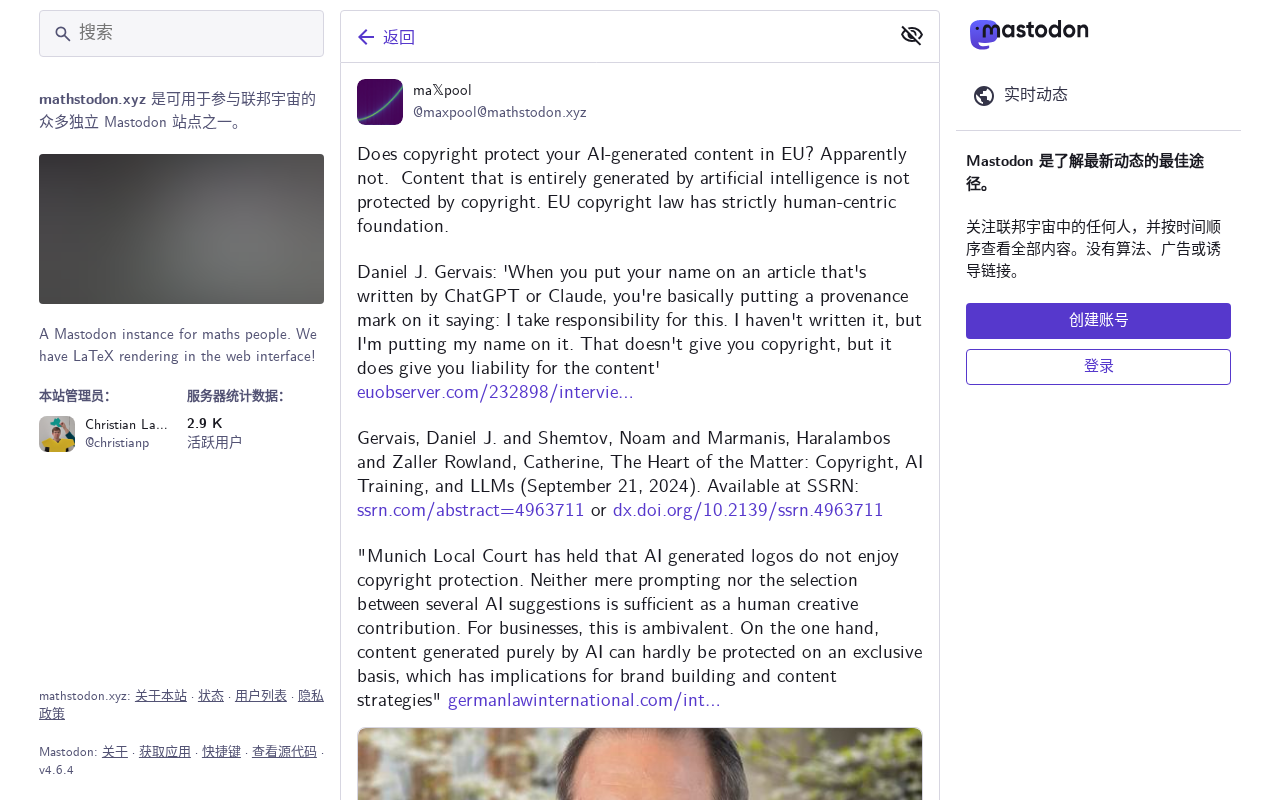
EU Rules AI-Generated Content Is Not Protected by Copyright: What This Means for Creators
The EU has clarified that AI-generated content is not copyright-protected, requiring works to reflect human intellectual creation. Analysis of legal basis, US comparison, and industry impact.
Read more →
·3 min
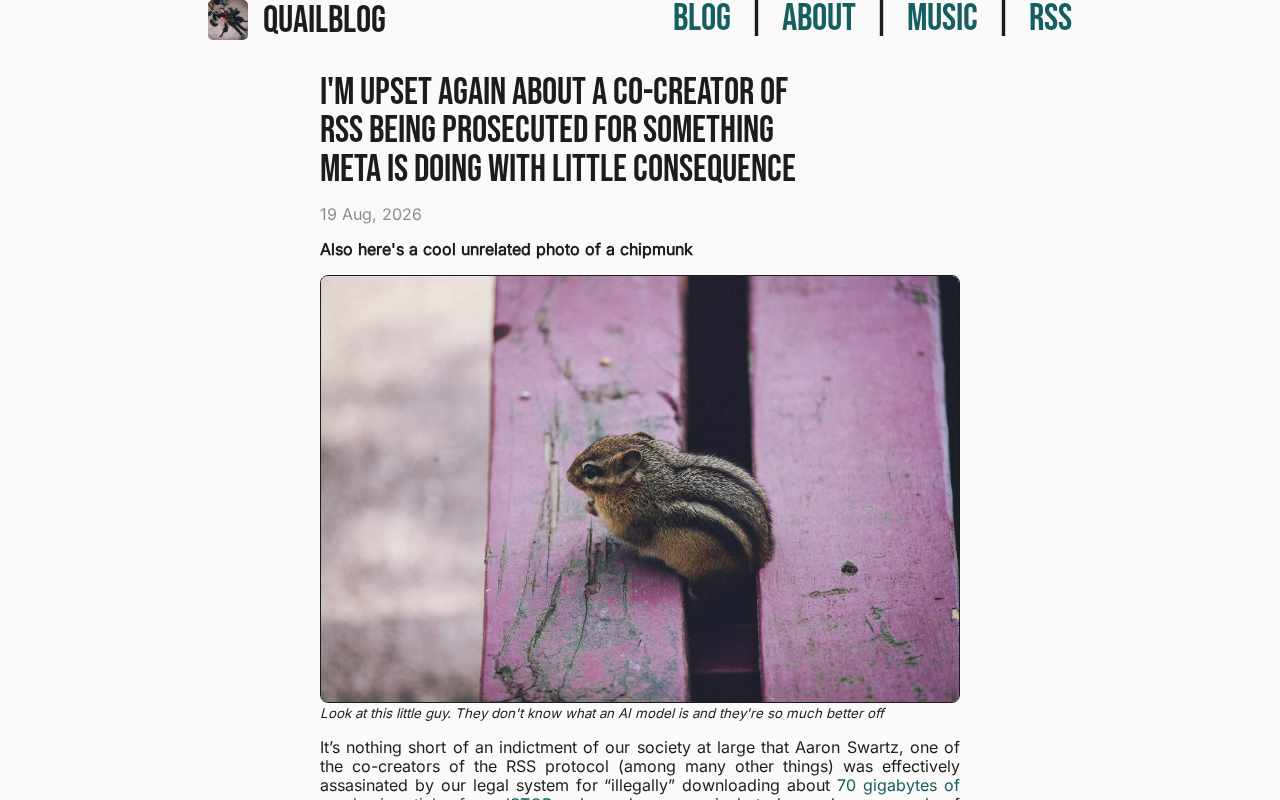
The Double Standard of Data Scraping: Aaron Swartz Was Prosecuted While Meta Walks Free
Aaron Swartz faced 35 years for downloading academic papers while Meta scrapes copyrighted content for AI training with impunity. An analysis of data scraping's judicial double standard.
Read more →