#self-hosted SSO
114 related articles

·4 min
How Background AI Agents Can Automatically Maintain All Your Repositories on a Schedule
OpenInspect's Multi-Repo Automations lets AI coding agents maintain up to 10 repositories on a schedule simultaneously — isolated sessions, independent PRs, and fault-tolerant execution for security sweeps, dependency upgrades, and framework migrations.
Read more →
·2 min
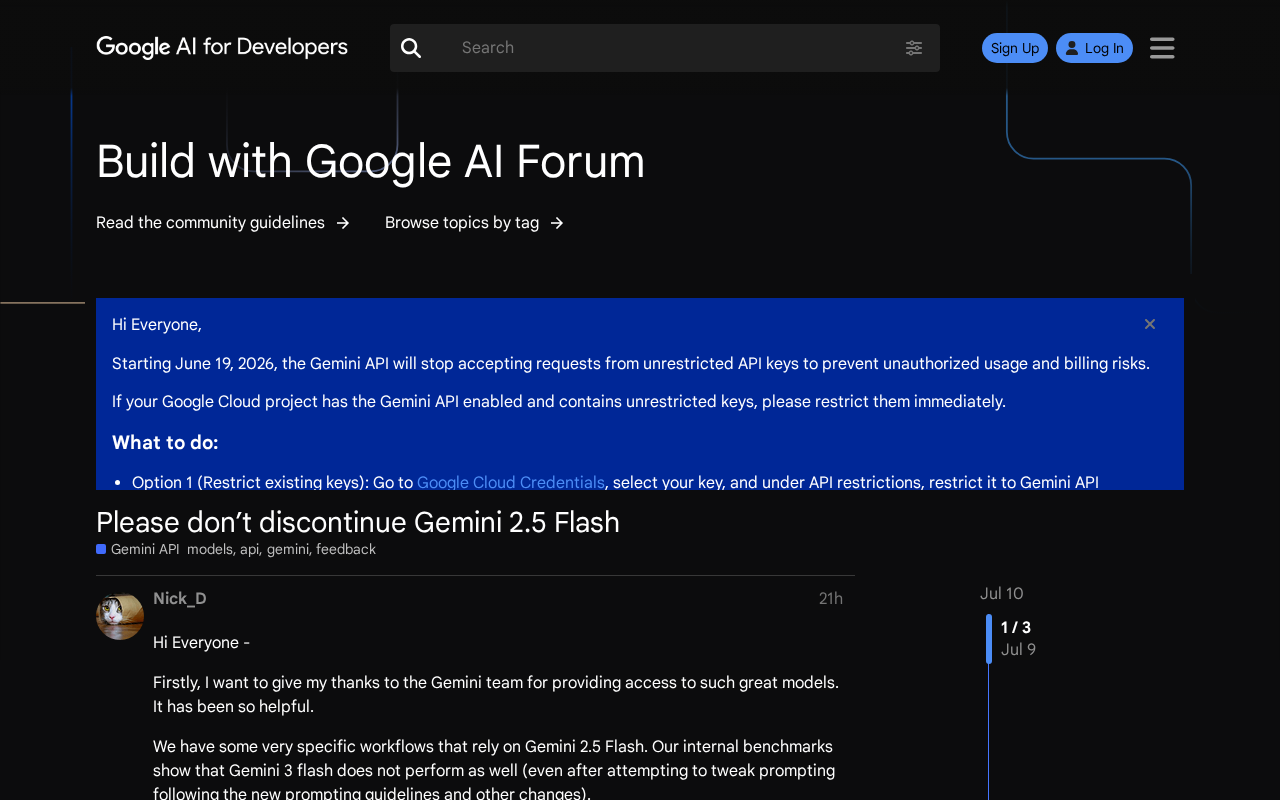
Developers Petition to Keep Gemini 2.5 Flash: The Production Crisis Behind Model Deprecations
Developers on Hacker News push back against Gemini 2.5 Flash's deprecation. We explore why stable, low-cost AI models are critical for production and how to build defensive strategies against cloud model churn.
Read more →

·2 min
Tailscale: Build a Secure Private Network Effortlessly with WireGuard
Tailscale is a modern networking tool built on WireGuard that automates key exchange, node discovery, and routing. Supports SSO and 2FA. Perfect for remote work, self-hosting, and multi-cloud setups.
Read more →

·6 min
GPT-5.6 Now Widely Available: The Era of Three-Tier Models and Multi-Agent Orchestration Arrives
OpenAI releases GPT-5.6 (SOUL/TERRA/LUNA), with Ultra mode running four agents in parallel; Meta launches Muse Spark 1.1 with million-token context; ChatGPT desktop unifies Chat, Work, and Codex.
Read more →

·2 min
Databricks Tests Coding Agents in Production: The Truth About Cost, Performance, and Tool Selection
Databricks tested leading coding agents on a production codebase of millions of lines. Key findings: token price misleads cost estimates, open-source GLM 5.2 handles hard tasks, and harness design determines real-world performance.
Read more →

·5 min
A €35 IKEA Coffee Table Hides an Entire Home Server: Where Aesthetics Meets Function
A Reddit user hid a NAS, hard drive array, and modem inside a €35 IKEA Gillersberg coffee table, winning his partner's approval. Here's how this high-WAF home server solution works.
Read more →

·4 min
Switching Careers to LLM Development: The Four Core Competency Layers Companies Actually Need
Want to break into LLM development but not sure where to start? This guide breaks the core skills into four progressive layers — from basic knowledge to RAG, fine-tuning, Agents, and multimodal — so you can align with real enterprise needs and land the job.
Read more →

·3 min
JellyDisk: Burn Your Jellyfin Media Library to Physical DVD Discs with One Click
JellyDisk is an open-source tool that connects directly to Jellyfin, auto-generates DVD menus, and burns your digital media into playable physical discs.
Read more →

·7 min
GLM-5.2 Released: Open-Source Coding Capability Approaches Closed-Source Flagships for the First Time
GLM-5.2 tops open-weight models in coding with a 74.4 Frontiers-WE score, beating GPT-5.5. Its MIT license enables local deployment, and the gap with closed-source flagships is closing fast.
Read more →

·6 min
Unsloth Major Update: DeepSeek-V4 Support and a Deep Dive into NVFP4 Quantized Export
Unsloth v0.1.481-beta adds full DeepSeek-V4-Flash support, NVFP4/FP8/imatrix GGUF quantized export, 1.3x faster GRPO, 3-5x faster MoE training, and an OpenAI-compatible API service in Studio.
Read more →

·5 min
OSWorld 2.0 Benchmark: Top AI Agent Achieves Only 20% Completion Rate — Long-Horizon Tasks Are the Achilles' Heel
OSWorld 2.0 benchmark tests 108 long-horizon computer tasks. Claude Opus tops at only 20.6% completion, exposing critical AI weaknesses in state tracking and error self-correction.
Read more →
·5 min
OSWorld 2.0 Benchmark: Top AI Agents Achieve Only 20% Completion Rate — Long-Horizon Tasks Are the Fatal Weakness
OSWorld 2.0 benchmark tests 108 long-horizon computer tasks (median 1.6 hrs for humans). Claude Opus tops out at 20.6% completion, exposing critical AI Agent weaknesses in state maintenance and self-correction.
Read more →

·4 min
Complete Guide to Connecting External Models in Codex: Two Methods to Unlock Full Capabilities
Two methods for connecting external models to Codex: manually configure keys via relay services, or use the CC Tool to auto-bridge GPT, DeepSeek, and more. Covers auth/config files, CC Tool usage, and multi-model switching.
Read more →

·7 min
PP-OCRv6 Deployment Deep Dive: Invoice Recognition Results and the Font-Missing Pitfall Explained
PP-OCRv6 is PaddlePaddle's SOTA-level OCR model. This article covers Docker deployment, invoice recognition testing, and the critical font-missing pitfall causing entire regions to be skipped.
Read more →

·3 min
200KB Minimalist CI/CD Tool: A Lightweight Deployment Solution for Indie Developers to Ditch Jenkins
A minimalist CI/CD tool built with Python+Flask — just 200KB, event-driven, and decentralized. Deploy automatically without Jenkins or GitHub Actions in 5 minutes.
Read more →

·6 min
Dify Self-Hosted Deployment in Practice: Building an Enterprise-Grade AI Application Platform from Scratch
A complete guide to self-hosting Dify, the open-source AI platform: environment setup, Docker Compose deployment, LLM integration, and app building. Runs on just 2 cores and 4GB RAM.
Read more →

·2 min
Deep Dive into n8n Workflow Platform: Core Capabilities and Suitability Assessment for China
Deep dive into n8n's core capabilities including 500+ nodes, AI Agent building, and RAG integration, with an objective analysis of its limitations and suitability for use in China.
Read more →

·4 min
Deep Dive into Cursor Refill Plugins: Pay-Per-Use Billing and Account Pool Scheduling Mechanisms
Deep analysis of Cursor refill plugin architecture: how clean account pool scheduling replaces cracking tools, the business logic of 35% pay-per-use pricing, and compliance risks developers should consider.
Read more →

·4 min
Git Tutorial for Beginners: Essential Version Control Skills for AI-Assisted Programming
Learn Git from scratch and master the 6 most essential commands for AI-assisted programming. Solve the pain of AI breaking your code with proper version control.
Read more →

·2 min
Connecting Cursor to Third-Party APIs for the Latest Models? An In-Depth Analysis of Risks and Alternatives
Analyzing the risks of using third-party API proxies in Cursor for GPT-5.5 and Claude Opus 4, covering data security, stability, and ban risks, plus safer alternatives.
Read more →