#skill chaining
76 related articles

·3 min
Driven: A Deep Dive into the AI Investment Agent That Connects the Entire Research-to-Execution Pipeline
Deep dive into Driven, the AI investment agent that connects the entire research-to-execution pipeline through 260+ API integrations, custom Skills, and Playbooks.
Read more →

·6 min
qsa.sh: Complete an External Server Security Scan with a Single curl Command
qsa.sh is a minimalist external server security scanning tool. Just run curl qsa.sh to get a port exposure and vulnerability report for your public IP in 30 seconds. Learn its technical architecture and pricing.
Read more →

·3 min
GitHub Daily · July 28: From Claude Code Skill-ification to AI Agent Governance, the Toolchain Matures
GitHub Trending July 28: Microsoft's agent-governance-toolkit covers OWASP Agentic Top 10, book-to-skill gains 366 stars showing Claude Code skill ecosystem potential, plus browser-based 3D and GIS tools.
Read more →

·3 min
Backend Developer Transition to AI/LLM: 4 Core Skills and a Practical Learning Roadmap
Complete guide for backend developers transitioning to AI/LLM engineering. Covers the 4 core skills—Python, RAG, Fine-tuning, and Agents—with a phased learning roadmap and practical project advice.
Read more →

·4 min
Gemini API in Practice: Building AI Agents with Files
Google's official hands-on: how to go from idea to production fast with AI Studio and build AI Agents using the now-GA Interactions API. The core idea—Agents are just combinations of files.
Read more →

·5 min
Gemini API in Practice: Building AI Agents with Files
Official Google hands-on: go from idea to production fast with AI Studio, and build AI Agents with the now-GA Interactions API. The core idea: an Agent is just a composition of files—Markdown plus a few scripts, no complex Python loops needed.
Read more →

·4 min
Java Developer to AI Architect: A Three-Layer Capability Upgrade Roadmap
How can Java engineers transition to AI Architect? This article breaks down three core capability layers — AI app development, production RAG, and AI Agent orchestration — using Spring AI Alibaba and LangChain4j to turn your Java foundation into a competitive edge.
Read more →

·3 min
Claude Code + Skill: A Complete Walkthrough of Auto-Generating Functional Test Cases in 10 Minutes
Learn how Claude Code and its Skill mechanism can automatically convert a requirements document into production-ready test cases in under 10 minutes with a 3-stage pipeline.
Read more →

·3 min
Zero-Code Cinematic Websites: A Complete Guide Using GPT Image 2 + Claude Code
No coding needed: use GPT Image 2 for assets, Claude Code for development, and Vercel for free deployment to build a cinematic scroll-driven brand website.
Read more →
·3 min
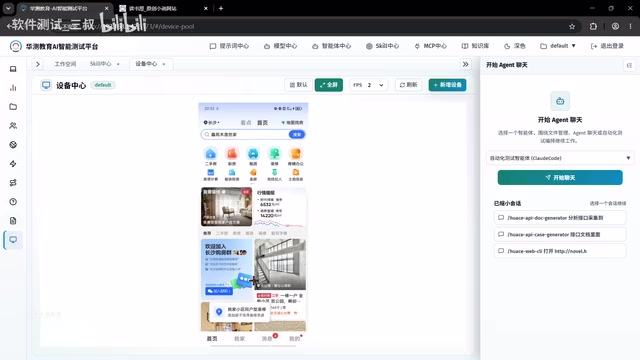
AI Testing in a Closed Loop: Full Pipeline from API Collection and Test Case Generation to Agent-Driven Execution
Full breakdown of a real AI testing pipeline: API collection, doc enrichment, AI test case generation, Agent-driven execution, and test reports — with Skills, RAG, and Harness engineering.
Read more →

·4 min
From Tokens to Agents: A Complete Guide to Core AI Concepts
Master 8 core AI concepts — LLM, Token, Context Window, Prompt, Tool, Agent, MCP, and Agent Skill — and understand the complete logic chain behind AI's evolution.
Read more →

·2 min
GPT Live Real-Time Translation Tested: What Does It Mean for Simultaneous Interpreters?
OpenAI's GPT Live achieves true full-duplex real-time translation, with English output streaming before Chinese input finishes. We analyze the tech, its limits, and what it means for simultaneous interpreters.
Read more →

·2 min
AI Agent Development for Beginners: A Complete Three-Stage Learning Roadmap
A complete AI Agent development learning roadmap covering three stages: Fundamentals (environment setup, tool use, memory), Advanced (multi-agent systems, RAG, ReAct), and Practical Projects (enterprise chatbots, automation tools).
Read more →

·3 min
AI-Powered OSINT in Practice: A Learning Path and Tool Guide for CS Professionals
How can OSINT practitioners with a CS background automate intelligence with AI? This guide covers computer vision, VLMs, and Agent frameworks including YOLO, SAM, and Grounding DINO.
Read more →

·3 min
Building a Real-Time AI Tutor for 5-Year-Olds: Technical Challenges and the Educational Balance
Exploring the core challenges of building real-time AI tutors for preschoolers: low-latency voice interaction, children's ASR, content safety guardrails, and AI as a guide rather than an answer machine.
Read more →

·4 min
Baidu AI Automation System: Trigger Skill Chains with a Single Sentence, Say Goodbye to Manual Workflows
The Baidu AI Automation System uses departmentalized skill libraries and Agent-style orchestration to let managers trigger multi-skill workflows with one sentence—no tech background needed.
Read more →

·3 min
Langchain.js Agent Development: A Guide to Deconstructing the OpenClaw Engine Architecture
An in-depth analysis of AI agent development based on Langchain.js—comparing workflow agents and Agent Loops, deconstructing the TypeScript implementation path of an OpenClaw-like engine, covering structured output, MCP, and LangGraph.
Read more →

·4 min
Coze in Practice: A Complete Guide to Building Multi-Agent Collaboration Teams
A systematic guide to Coze's positioning and capabilities, covering Agent-building platform categories, Skill modules, workflow orchestration, and multi-Agent team building.
Read more →

·6 min
An Efficient Learning Guide for Data Science: Study Partnerships and Hands-On ML in Practice
Struggling to learn data science alone? This article explores the value of study partnerships and pairs them with the classic Hands-On ML textbook to offer a phased learning plan from math foundations to deep learning.
Read more →
·4 min
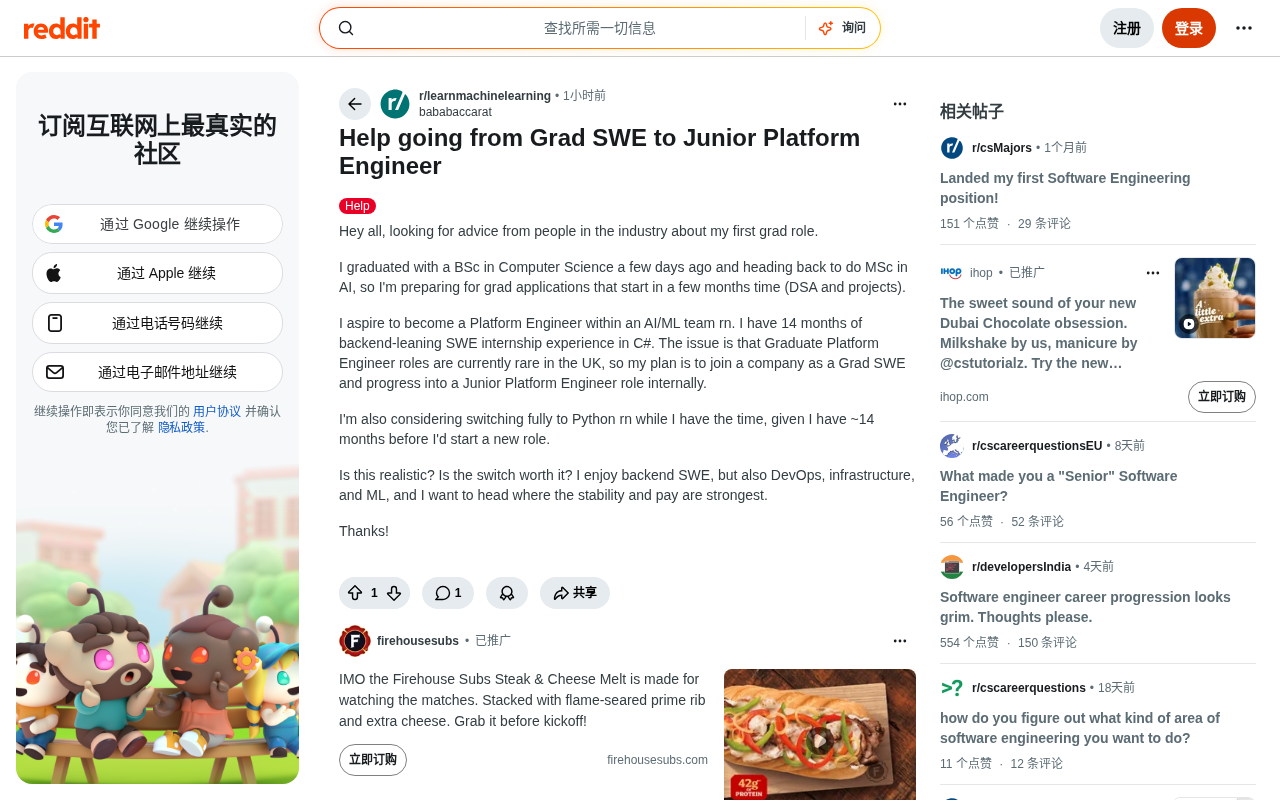
From New Grad SWE to Platform Engineer: Career Paths and Tech Stack Choices in the AI Era
How can new graduates transition from software engineer to platform engineer? This article breaks down the path of joining as a Grad SWE first, then transferring internally, analyzes C# vs Python trade-offs, and offers a 14-month prep plan for AI/ML infrastructure.
Read more →