#smartphone history
121 related articles

·4 min
Pebble Time 2 In-Depth Review: Is This Minimalist Smartwatch with 30-Day Battery Life Worth It?
Pebble Time 2 review: always-on e-ink display, 26% battery left after 19 days, minimalist notification system. A deep dive into battery life, health tracking, and notification experience.
Read more →

·3 min
IBM Simon: The Original Smartphone Born in 1994, 13 Years Before the iPhone
IBM Simon, launched in 1994, was the world's first smartphone with a touchscreen, handwriting input, and email—13 years before the iPhone revolutionized mobile.
Read more →

·4 min
AI Agents Activate the Edge Device Market: A $15 Trillion New Blue Ocean
AI evolves from tool to productivity core as inference compute outpaces training. AMD and Galaxy Securities experts decode the $15T AI terminal market opportunity across agent hosts, AI glasses, and robots.
Read more →

·3 min
Mochi: A Chrome Extension That Puts a Pixel Cat in Your Browser Tabs
Mochi is a minimalist Chrome extension that displays an animated cat on every tab. 20 cat designs, fully local, zero data collection, open source — quiet emotional companionship for your digital life.
Read more →

·2 min
Roveri: A Minimalist Cycling Journal App That Paints Every Ride on a Map
Roveri is an iPhone cycling journal app focused on recording rather than navigation. One tap records route, speed, elevation, and weather, painting every ride as a personal exploration atlas on a map.
Read more →
·3 min
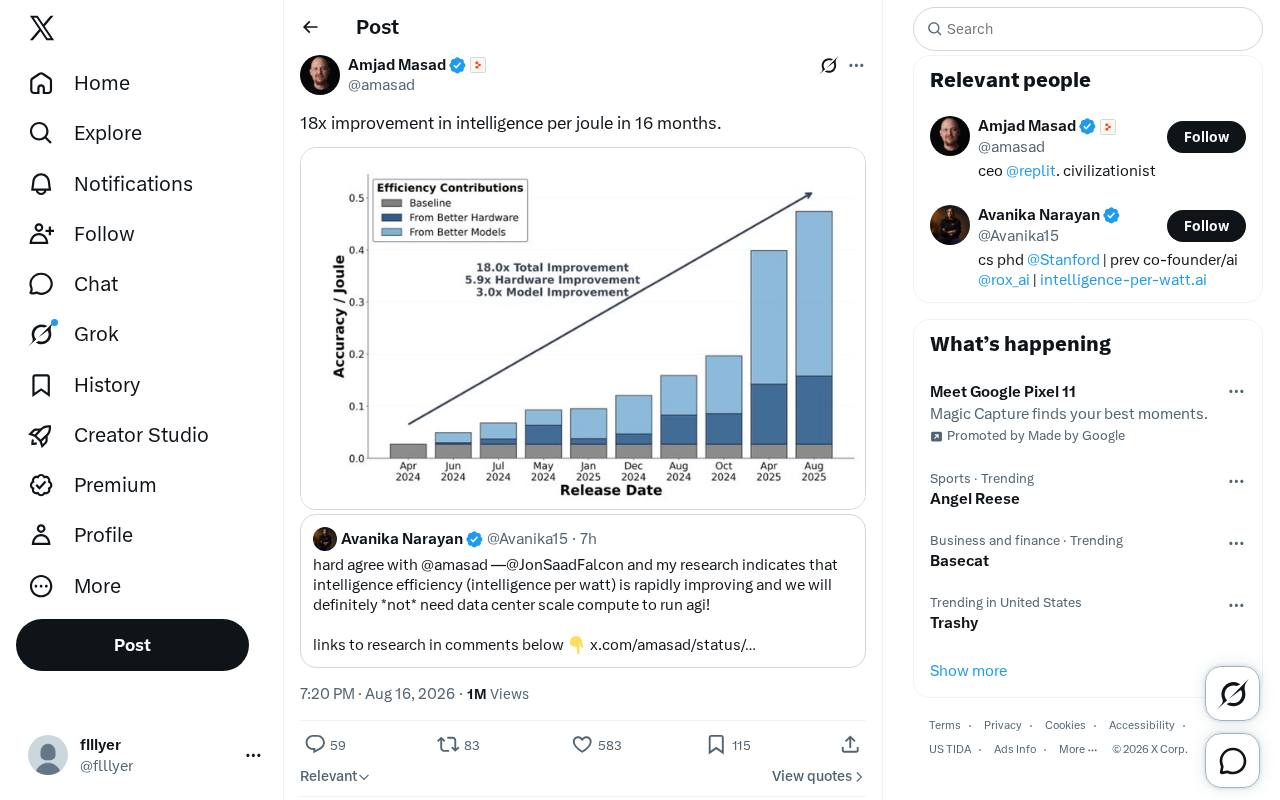
The AI Energy Efficiency Revolution: What an 18x Improvement in 16 Months Really Means
AI intelligence per joule has improved 18x in 16 months, far outpacing Moore's Law. This article analyzes the drivers behind this efficiency revolution and its implications for AI adoption and energy.
Read more →

·3 min
Hermes Agent from Beginner to Practitioner: A Complete Module-by-Module Learning Guide
A complete learning guide for the Hermes Agent personal AI framework, covering Linux deployment, configuration, tool/Skill extensions, memory mechanisms, voice, Web UI, and multi-platform integration.
Read more →

·3 min
Cursor Beginner's Guide: A Complete Breakdown of Core Features and Use Cases for This AI-Native Coding Tool
A deep dive into Cursor, the AI-native coding tool: intelligent code generation, context awareness, multi-model support, and how it compares to traditional IDEs for developers at every level.
Read more →

·2 min
Samsung Ballie Home Robot Deep Dive: Is a Mobile, Projecting AI Assistant Worth the Hype?
Deep dive into Samsung's Ballie spherical home robot: autonomous movement, built-in projector, Google Gemini integration, and the practical value vs. privacy challenges of home robots.
Read more →

·3 min
Samuel's Checkers Program: The True Starting Point of Machine Learning
Arthur Samuel's 1950s checkers program first defined machine learning, pioneering evaluation functions, self-play, and parameter optimization—techniques that shaped AI from Deep Blue to AlphaGo.
Read more →

·5 min
Harness: The Operating System That Takes LLM Agents from Demo to Production
Deep dive into Harness technology: how context engineering, memory management, and multi-agent architecture transform LLM agents from stochastic demos into stable production systems.
Read more →

·2 min
The Key to AI Agent Adoption: Making Virtual Machines as Simple as Clicking a Folder
AI Agent adoption faces a hidden barrier: VM configuration is too complex for non-developers. This article explores simplifying VM operations to Finder-level intuition and why abstraction layer design is key to mainstream AI Agent adoption.
Read more →

·4 min
Why Are Meta's Smart Glasses Called "Pervert Glasses"? A Full Analysis of the Privacy Controversy
Meta's smart glasses have been labeled "Pervert Glasses" due to covert recording capabilities. This article analyzes the privacy controversy—from hidden cameras and AI facial recognition to Meta's trust crisis.
Read more →

·4 min
The Age of AI Billionaires: Reigniting a Century-Old Debate Over Private Power
The AI wave is creating a new generation of tech billionaires. Concentration of compute and technological control is reigniting the antitrust debate from a century ago.
Read more →

·3 min
OpenAI's First Hardware Revealed: A Hockey Puck-Sized AI Device Priced Over $300
OpenAI partners with Jony Ive on its first AI hardware: a screenless hockey puck-sized device priced over $300. Analysis of design, pricing strategy, and AI hardware outlook.
Read more →

·4 min
The Shape and Trajectory of Technological Evolution: How to Understand and Predict Future Tech Trends
Deep analysis of the underlying logic and key trends in technological evolution, covering AI infrastructure, computing paradigm shifts, and human-machine collaboration, with frameworks for developers and entrepreneurs.
Read more →

·2 min
OpenAI's First AI Hardware Revealed: Hockey Puck-Sized Disk Device Priced Over $300
OpenAI's first consumer AI hardware device leaked: a hockey puck-sized disk priced over $300, possibly co-designed with Jony Ive, featuring voice-first interaction as a screen-free AI entry point.
Read more →

·2 min
The AI Parenting Controversy: When Technology Begins to Replace Parent-Child Bonding
From a viral Reddit debate to AI parenting ethics: Is AI becoming the new electronic babysitter? Exploring the boundaries of generative AI in childcare and why parent-child bonding can't be outsourced.
Read more →

·2 min
Why Does Apple Keep Getting AI Wrong? A Deep Dive into the Apple Intelligence Predicament
Deep analysis of Apple's strategic predicament in the generative AI era: Apple Intelligence falling short, Siri upgrades lagging, and how its privacy-first approach conflicts with AI capabilities.
Read more →

·2 min
MOTHER: A Native macOS Terminal App Built Specifically for Claude Code
MOTHER is a native macOS terminal designed for Claude Code, offering one-click session resume, project launcher, and menu-bar alerts for $9.99 one-time purchase.
Read more →