#speculative execution
89 related articles

·3 min
The Rise of General AI: Breakthroughs in Mathematical Reasoning and Competitive Programming
Frontier AI is going general: costs are dropping, general models are beating specialized ones in math and competitive programming, and multi-agent workflows are maturing fast.
Read more →
·7 min
Auditing Cryptographic Libraries with AI: What We Found in Cloudflare's CIRCL
An in-depth look at using AI LLMs to audit Cloudflare's open-source cryptographic library CIRCL, covering constant-time detection, side-channel vulnerabilities, and human-AI collaboration.
Read more →

·7 min
AI Daily: T-Head Open-Sources SAIL Software Stack at WAIC, Flurry of Large Model Releases
T-Head open-sources AI software stack T-Head SAIL at WAIC to lower the barrier for domestic chip development; Kimi K3 tops the WebDev leaderboard; Qwen 3.8 Max Preview cuts prices aggressively; Moonshot prepares a Hong Kong IPO; and Oracle switches its data center to a fuel cell microgrid.
Read more →
Microsoft's Two-Track AI Coding Strate…
·3 min
Microsoft's Two-Track AI Coding Strategy: A Deep Dive into Claude Code and GitHub Copilot CLI
Microsoft plans to launch Claude Code and GitHub Copilot CLI, making the terminal the new frontier for AI coding. A deep dive into Microsoft's multi-model strategy and its impact on developer workflows.
Read more →
Can LLMs Really Understand Computer Ar…
·3 min
Can LLMs Really Understand Computer Architecture Papers? A Deep Dive into Comprehension Capabilities
Can LLMs truly understand computer architecture papers? This article analyzes core challenges—from surface pattern matching to deep reasoning—and defines their capability limits for researchers.
Read more →

·3 min
LongCat 2.0: Meituan Trains a 1.6 Trillion Parameter LLM on Domestic Chips
Meituan open-sources LongCat 2.0, a 1.6T-parameter MoE model trained on 50,000+ custom chips without NVIDIA GPUs or Google TPUs, rivaling OpenAI and Google.
Read more →

·4 min
Two Paths to Better AI Reasoning: Test-Time Scaling and Formal Verification
This article synthesizes two MSR India Summit talks, exploring two key paths to better AI reasoning: test-time scaling with variable granularity search, and a formal verification framework for trustworthy agent execution.
Read more →

·1 min
Cursor Forcing Fast Mode? A Deep Dive into the 6x Cost Overrun Problem
A Cursor user found Composer 2.5 running in Fast Mode despite disabling it, causing 6x usage overruns. We analyze the causes, cost impact, and how to protect your budget.
Read more →

·3 min
Distributed AI Systems in Practice: A Complete Guide to Training, Inference, and Production Deployment
A deep dive into Distributed AI Systems: a new book distilling 10 years of AI engineering experience covering distributed training, inference optimization, and production model serving.
Read more →

·2 min
P2P Student GPU Sharing Network: A Full Breakdown of Technical Feasibility and Real-World Challenges
A deep dive into the technical feasibility and real-world challenges of P2P student GPU sharing networks, covering distributed computing, latency, security, and incentive design.
Read more →

·2 min
SGLang Integrates DSpark: How Confidence-Driven Speculative Decoding Cracks the High-Concurrency Failure Problem
SGLang officially integrates DSpark, solving the core pain point of speculative decoding failure under high-concurrency batches via confidence-driven variable-length verification. Supports Qwen3 and DeepSeek-V4, hitting 383.7 tok/s on B300.
Read more →

·4 min
OpenAI GPT-Live Voice Model: How Full-Duplex Interaction Reshapes Human-AI Conversation
OpenAI unveils the GPT-Live voice model family, with full-duplex interaction enabling AI to listen and speak simultaneously and delegate complex reasoning to GPT-5.5. GPQA benchmark jumps from 45% to 80%.
Read more →
·5 min
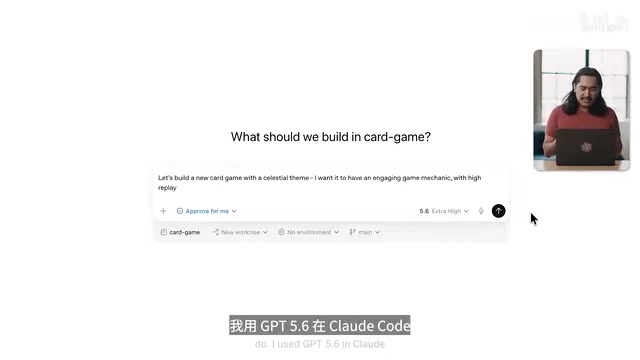
GPT-5.6 Released: Hands-On Analysis of Programmatic Tool Calling and Autonomous Agents
GPT-5.6 is officially released with core upgrades including programmatic tool calling, autonomous subagent delegation, and higher token information density. A hands-on card game build reveals its Agentic power.
Read more →
Local Coding Agents in Practice: A Com…
·6 min
Local Coding Agents in Practice: A Complete Guide to Replacing Your Claude Subscription with Open-Source Models
An in-depth look at local coding agents—core concepts, advantages, and real challenges. Compare against Claude Code and learn to build a zero-subscription, private AI coding workflow with open-weight models.
Read more →

·7 min
Grok 4.5 Launch: Coding AI Market Reshuffle, Anthropic Claims Half the Territory
Grok 4.5 launches at just $0.49 per task, 90% cheaper than rivals. Anthropic's Claude Code claims 50% of the AI coding market. SambaNova raises $1B. Read the latest AI market shifts.
Read more →

·6 min
GPT Live Full-Duplex, Grok 4.5 Coding, Seedream 5.0 Images: AI Accelerates Across Three Tracks Simultaneously
OpenAI's GPT Live full-duplex voice model, Grok 4.5 coding model with Cursor, and ByteDance's Seedream 5.0 Pro image generation launched together. A deep dive into three AI releases.
Read more →

·2 min
Deep Dive into Tencent Hunyuan Hy3: How a 295B MoE Model Cracks the Agent Deployment Challenge
Tencent Hunyuan Hy3 launches with a 295B MoE architecture activating just 21B params and 256K context. Hallucination cut from 12.5% to 5.4%, MRCR nearly doubled, with MTP and EAGLE decoding and Day-0 SGLang support.
Read more →

·6 min
Cursor Meets Grok 4.5: A Hands-On Test of an AI Coding Assistant That's 5x Faster with Cleaner Output
A developer deeply tests Grok 4.5 High Fast in Cursor, finding it rivals Claude Opus in quality but runs 5x faster with cleaner, filler-free output. Full hands-on review and analysis.
Read more →

·7 min
GPT-5.6 Becomes Microsoft Copilot 365's Preferred Model: An In-Depth Look at the OpenAI-Microsoft Partnership
OpenAI confirms GPT-5.6 as the preferred model for Microsoft Copilot 365, responding to "breakup rumors." A deep dive into the strategy, multi-model trends, and AI productivity commercialization.
Read more →

·5 min
GPT-5.6 Trio Released: A Deep Dive into Sol/Terra/Luna and the Breakthrough in Design Judgment
OpenAI officially releases the GPT-5.6 series with three models: flagship Sol, balanced Terra, and economy Luna. A deep dive into its core breakthroughs—a step change in design judgment and enhanced computer-use capabilities.
Read more →