#sub-agent isolation
93 related articles

·4 min
Grok 4.6 Deep Dive: The Cost of Catching Up to the GPT and Claude Top Tier
Grok 4.6 matches GPT 5.6 Sol on intelligence benchmarks with Deep Suite jumping from 54% to 66%, but at the cost of 30% lower token efficiency, doubled pricing, and slower speed. Full analysis inside.
Read more →

·5 min
Harness: The Operating System That Takes LLM Agents from Demo to Production
Deep dive into Harness technology: how context engineering, memory management, and multi-agent architecture transform LLM agents from stochastic demos into stable production systems.
Read more →

·4 min
6 Must-Do Tasks Before Deploying Enterprise AI Agents: A Complete Guide to Observability + Evaluation
A detailed guide to 6 critical engineering challenges for enterprise AI Agents before production, covering Langfuse-based tracing, observability, evaluation stages, prompt governance, and high-concurrency architecture.
Read more →

·2 min
Dynamic Workflows: A New Paradigm for AI-Driven Quantitative Strategies
Explore how dynamic workflows are transforming quantitative strategy development. From agent orchestration to adaptive strategy iteration, discover the potential and challenges of AI-driven workflows.
Read more →

·3 min
DeerFlow: Deep Dive into ByteDance's Open-Source Long-Horizon SuperAgent Framework
Deep analysis of ByteDance's open-source DeerFlow long-horizon SuperAgent framework, covering six core components, architecture design, use cases, and industry significance.
Read more →

·4 min
GPT-5.6 Value Maxing Practical Guide: From Token Stacking to Output Optimization Methodology
Deep dive into OpenAI GPT-5.6 Value Maxing strategies covering Sol/Terra/Luna model selection, KV cache optimization, Prompt compression, and programmatic tool calling to help developers achieve more output with fewer Tokens.
Read more →

·2 min
DeepAgents in Practice: A Deep Dive into Sandbox Backends and Agent Skills
A deep dive into DeepAgents' sandbox backend and Agent Skills: why Agents need sandbox isolation to run code, how Skills enable modular capability reuse, and how the two combine to build reliable AI Agent systems.
Read more →

·2 min
DeepAgents in Practice: A Deep Dive into Sandbox Backends and Agent Skills
A deep dive into DeepAgents' sandbox backend and Agent Skills: why Agents need sandboxes to isolate code execution, how Skills enable modular capability reuse, and how the two work together to build reliable AI Agent systems.
Read more →

·8 min
LangChain Crash Course: A Complete Roadmap from Zero to Agent Development
A systematic roadmap from LangChain and LangGraph to multi-agent development, covering RAG, Tool Calling, MCP, and more, helping developers break into AI app development.
Read more →

·3 min
Claude Code Getting Started: Installation, Switching to Chinese LLMs, and Git Workflow Guide
A complete guide to Claude Code: CLI installation, switching to DeepSeek and other Chinese LLMs via CC Switch, and conversational Git workflows for developers.
Read more →

·3 min
LangChain v1.3 Hands-On Tutorial: Deep Dive into Agents, RAG, and Local Model Deployment
Deep dive into LangChain v1.3: compare LangChain, LangGraph, and DeepAgent paradigms, explore RAG pipelines, multi-agent systems, and local LLM deployment for enterprise AI apps.
Read more →

·4 min
Codex Major Upgrade: GPT-5.6 Powers Full-Stack Development from Idea to Deployment
OpenAI Codex gets a major upgrade with GPT-5.6: extended reasoning, multi-agent parallelism, browser control, one-click Sites deployment, task orchestration, and mobile dev support.
Read more →

·4 min
GPT-5.6 & OpenAI Super App Deep Dive: Loop Engineering as the New Paradigm Replacing Prompt Engineering
Deep dive into GPT-5.6 (Sol/Terra/Luna) and OpenAI's Super App: Loop Engineering, Parallel Agents, and Computer Use — unpacking the shift from prompt to loop engineering with real test cases and a startup framework.
Read more →

·3 min
OpenClaw Multi-Agent AI Programming Workflow in Practice: From Coder to Manager
Deep dive into OpenClaw multi-agent AI programming workflows: context layering, CMUX parallel terminal management, work trees, and manager-perspective debiasing for scalable AI dev automation.
Read more →

·3 min
Codex Practical Guide: A Complete Roadmap from Beginner to Advanced AI Programming
Master Codex AI programming assistant with this complete guide: CLI setup, slash commands, agents.md governance, MCP protocol, multi-agent systems, and enterprise plugin development.
Read more →
·3 min
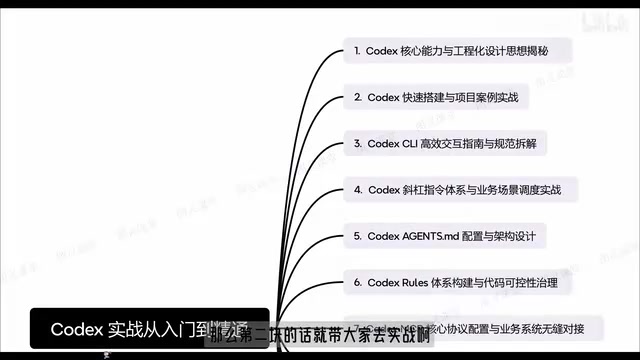
The Complete OpenAI Codex Practical Guide: From Installation to Enterprise Deployment
A complete guide to OpenAI Codex: CLI setup, slash commands, AGENTS.md, MCP integration, multi-agent collaboration, and a RAG customer service project walkthrough.
Read more →

·2 min
GPT-5.6 Used 64 Sub-Agents to Tackle a Graph Theory Conjecture — How Far Are We from a Real Proof?
GPT-5.6 Soul Ultra used 64 parallel sub-agents to generate a proof draft for the Cycle Double Cover Conjecture in one hour. We break down the multi-agent pipeline and explain what's still missing before this counts as a real mathematical result.
Read more →

·4 min
Agent Loop in Practice: A Guide to Building Self-Improving Automation with Guardrails
A deep dive into building verifiable, self-evolving Agent automation loops with Claude Code and Codex — covering Loop Contracts, four trigger types, three-phase execution architecture, and Evolve Loops.
Read more →

·4 min
From 50% to 92%: A Practical Methodology for Teaching AI Agents to Master Spreadsheets
An engineering team spent four months raising an AI coding agent's spreadsheet accuracy from 50% to 92%. Deep dive into REPL architecture, validation loops, and domain knowledge injection.
Read more →

·3 min
Complete Codex Practical Guide: From Getting Started to Enterprise-Grade AI Programming
Master OpenAI Codex end-to-end: CLI setup, slash commands, AGENTS.md design, MCP protocol, multi-agent coordination, and enterprise plugin development.
Read more →