#zero-cost AI agent
135 related articles

·3 min
OpenAI Bets $600K on Rust: Why AI Giants Are Collectively Pivoting to Systems Programming
OpenAI joins the Rust Foundation as a Platinum Member with $600K. xAI and Anthropic are also building Rust infrastructure. Here's why AI giants are betting big on Rust.
Read more →

·2 min
Agent A1 Open Source: 35B MoE Local Inference Speed Test & Deployment Guide
Agent A1 is a 35B MoE open-source model from Shanghai's Intern Science, activating only 3B params. Hits 95 tok/s on M4 Mac Studio. Supports 256K context, tool calling, and free local deployment via Ollama.
Read more →
GitHub Daily · July 22: Financial Foun…
·3 min
GitHub Daily · July 22: Financial Foundation Model Kronos Leads, Architecture Visualization and the Claude Skills Ecosystem Soar
GitHub Trending July 22: Kronos brings the foundation model paradigm to finance, awesome-claude-skills tops with 70K stars, plus LikeC4 architecture-as-code and Rust-based Pumpkin.
Read more →

·2 min
WebMCP: The New Standard for AI Agents to Precisely Interact with Web Pages
WebMCP is a proposed web standard that lets pages proactively expose tool interfaces to AI agents via declarative and imperative APIs, eliminating browser automation guesswork. Now in Chrome 149 Origin Trial.
Read more →
Moonshine: A Low-Latency Speech Engine…
·2 min
Moonshine: A Low-Latency Speech Engine and Open-Source Powerhouse for Building Voice Agents
Moonshine is an open-source, C++-based low-latency speech engine combining STT, intent recognition, and TTS for building voice agents. 9,400+ GitHub Stars.
Read more →
DCG: A Rust-Powered Safety Guard That …
·2 min
DCG: A Rust-Powered Safety Guard That Intercepts Dangerous AI Agent Commands
DCG is an open-source Rust tool that intercepts dangerous shell and git commands for AI agents like Claude Code and Cursor, enabling zero-trust execution environments.
Read more →

·3 min
LangGraph Production Template in Practice: A Complete Guide to Budget Control and Canary Routing
Deep dive into langgraph-agent-stack: per-run dollar budget control, canary traffic routing, Mock testing mode, and 800+ test cases to safely deploy AI Agents from demo to production.
Read more →
Open Interpreter: A Local Coding Agent…
·2 min
Open Interpreter: A Local Coding Agent Built for Low-Cost Models
Open Interpreter is an open-source coding agent optimized for low-cost and local models like Llama and Qwen. 65K+ GitHub Stars, privacy-first, no expensive APIs required.
Read more →

·3 min
Zero-Code Cinematic Websites: A Complete Guide Using GPT Image 2 + Claude Code
No coding needed: use GPT Image 2 for assets, Claude Code for development, and Vercel for free deployment to build a cinematic scroll-driven brand website.
Read more →

·2 min
Kimi K3 Leads the Charge: Inside the AI Coding Agent Framework Transparency Race
Kimi K3 sets a new open-weight record at 2.8T params, GrokBuild pivots to local-first after a privacy crisis, Open Interpreter rewrites in Rust — a deep dive into five major AI coding agent developments and the shift toward harness transparency.
Read more →

·2 min
RL3: A Zero-Code Reinforcement Learning Platform Where You Train Agents by Dragging and Dropping
RL3 is a zero-code, browser-based reinforcement learning platform featuring drag-and-drop environment design, visual reward configuration, and Q-learning/PPO training. Built by an indie developer over 15 months to make RL accessible to everyone.
Read more →

·3 min
LangChain V1.3 in Practice: Mastering AI Engineering Mindset — From Tool User to Tool Master
Why do AI results vary so dramatically? LangChain V1.3 reveals the answer: engineering mindset. Covers LangGraph, Deep Agent, RAG, Time Travel, and more.
Read more →

·3 min
Spring AI 2.0 Deep Dive: A Java Developer's Guide to LLM Application Development
A deep dive into Spring AI 2.0: provider-agnostic APIs, RAG with vector databases, and how Java developers can build LLM apps using the Spring ecosystem.
Read more →

·3 min
Local Gemma 3 12B as an AI Agent: A Practical Guide to Tool Calling and Framework Selection
Running Gemma 3 12B locally via Ollama and want to build an AI Agent? This guide covers tool calling, n8n/LangChain/CrewAI comparisons, context limits, and more.
Read more →

·2 min
Local AI Agent Reads arXiv So You Don't Have To: Only the Papers That Actually Matter
Research Radar is an open-source local AI agent that fetches arXiv papers daily, scores and filters them in batches, deep-reads summaries, and pushes truly relevant content via Telegram. Supports local models, keeps data on your machine, free and self-hostable.
Read more →

·7 min
Building AI Agents in Rust: The GAIA Benchmark Reveals the Capability Ceiling of Large Models
A Rust-based AI Agent evaluation framework uses the GAIA benchmark to compare GPT, Claude, DeepSeek and other models with no tools. Results show pure LLMs cap at ~25% accuracy, revealing why tool use is decisive for Agents.
Read more →

·3 min
Spending $200K to Test GPT-5.6: Have AI Coding Assistants Reached a Tipping Point?
Developer Theo spent ~$200K over 6 weeks testing GPT-5.6 across 67 projects — from 20-hour autonomous coding runs to fixing boot partitions and Rust rewrites.
Read more →

·3 min
A Physical Status Light for Claude Code: Using ESP32 to Stop Staring at Your Terminal
Tired of staring at a terminal waiting for AI? An ESP32 + RGB light maps Claude Code's states to blue/yellow/green/red physical light effects. See what the AI is doing at a glance.
Read more →

·4 min
AI Weekly: GPT-5.6 Launches in Three Tiers, Open-Source Inference Frameworks and Robot Safety Break Through Across the Board
This week in AI: OpenAI launches GPT-5.6 in three tiers (Sol/Terra/Luna) hitting 91.9% on coding benchmarks; DeepSeek and PKU open-source DSpark for 85% faster inference; Prime Intellect trains trillion-param models on just 28 H200s; Anthropic Claude enters Slack.
Read more →
·7 min
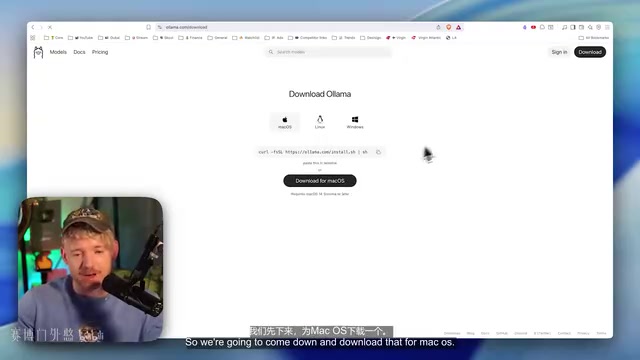
Ollama + Hermes Local AI Deployment: Building a 100% Private Personal AI Operating System
Build a fully private local AI system with Ollama + Hermes: zero cost, no rate limits, data stays local. Learn deployment steps, model selection tips, and private/cloud hybrid workflows.
Read more →