Deep Dives
247 articles
 Deep Dives
Google Agent Platform Deep Dive: Building Production-Grade AI Agents with ADK, MCP, and A2A
Deep dive into Google Cloud Next 2025's Agent Platform: ADK framework, MCP integration, A2A multi-Agent collaboration, context engineering, security governance, and a marathon simulation demo.
 Deep Dives
Hung-yi Lee's 2026 Course Notes: Deep Dive into the Three Core Capabilities of AI Agents
Notes from Hung-yi Lee's 2026 AI Agent course covering AI Agent definition, LLM-driven principles, and three core capabilities: Memory, Function Calling, and Planning with Tree Search.
 Deep Dives
How NVIDIA AI Agents Turn Massive Video Feeds into Searchable, Real-Time Intelligence
Deep analysis of NVIDIA's latest video AI Agent solution, using multimodal LLMs and modular Skills architecture to transform massive surveillance video into searchable real-time intelligence.
 Deep Dives
The MARVIS Project: A Complete Analysis of Embedded AI Agents Empowering Autonomous Space Exploration
Deep dive into how the MARVIS project deploys LLM agents on spacecraft, covering agent architecture, edge hardware token performance benchmarks, expert evaluations, and space AI benchmark planning.
 Deep Dives
AI Model Deployment Pipeline Friction: How TensorRT Systematically Eliminates Inference Optimization Bottlenecks
Deep dive into pipeline friction in AI model deployment from training to production, covering TensorRT automated optimization, ONNX export, and Triton Inference Server best practices.
 Deep Dives
NVIDIA Vera Rubin Platform Deep Dive: Solving the Scalability Challenge of Agentic AI Inference
Deep dive into NVIDIA's Vera Rubin platform Pod-level architecture and next-gen NVLink, revealing how it solves Agentic AI inference scalability bottlenecks and the industry shift from training-first to inference-first.
 Deep Dives
NVIDIA Fleet Intelligence Explained: Real-Time Monitoring and Intelligent Optimization for GPU Clusters
Deep dive into NVIDIA Fleet Intelligence for GPU clusters: real-time visualization, AI anomaly detection, utilization optimization, and energy management to boost large-scale GPU infrastructure efficiency.
 Deep Dives
AI Agent Core Principles Explained: The Decision Loop and Three-Component Architecture
Deep dive into AI Agent core principles: the Sense-Plan-Act-Observe decision loop, and how Planning, Memory, and Tools components transform LLMs into autonomous digital employees.
 Deep Dives
NVIDIA Dynamo Multi-Turn Agentic Interaction: Deep Integration of Streaming Tokens and Tool Calling
Deep dive into NVIDIA Dynamo's multi-turn agentic interaction support, covering streaming token output, structured tool calling, state management, and MoE synergy for production-grade AI agents.
 Deep Dives
The Truth About AI Writing Code: Can It Actually Program? A Complete Breakdown
Can AI really program? This article explains how LLMs generate code through massive training and pattern matching, and analyzes the true capabilities and limitations of AI coding tools.
 Deep Dives
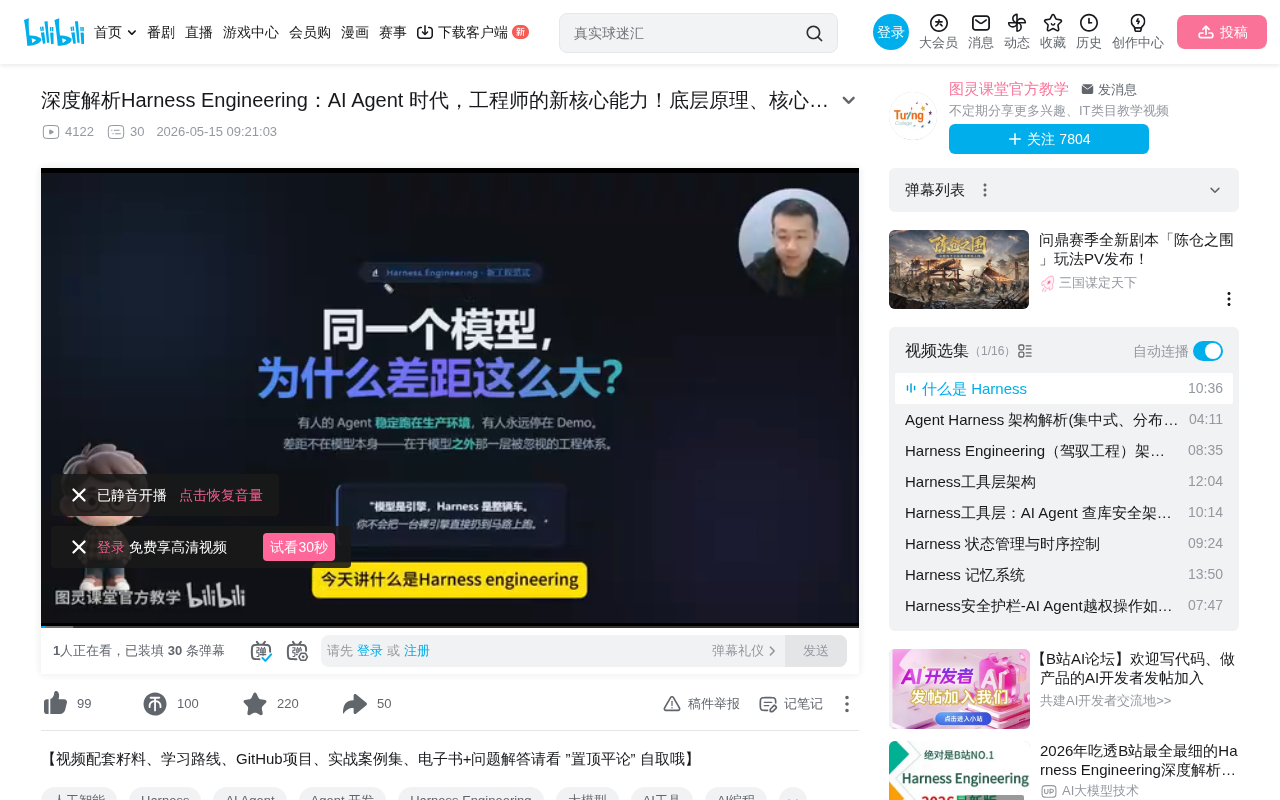
Harness Engineering: The Core Engineering Methodology for Taking AI Agents from Demo to Production
Deep dive into Harness Engineering: its definition, six core components, and production practices. Learn why Prompt and Context Engineering aren't enough for production-grade AI Agent systems.
 Deep Dives
Hugging Face Transformers: A Comprehensive Guide to the 160K-Star Open-Source AI Framework
Comprehensive guide to Hugging Face Transformers, the 160K-star GitHub framework—covering architecture, multimodal support, quantization, and inference optimization for loading, fine-tuning, and deploying pre-trained models.
 Deep Dives
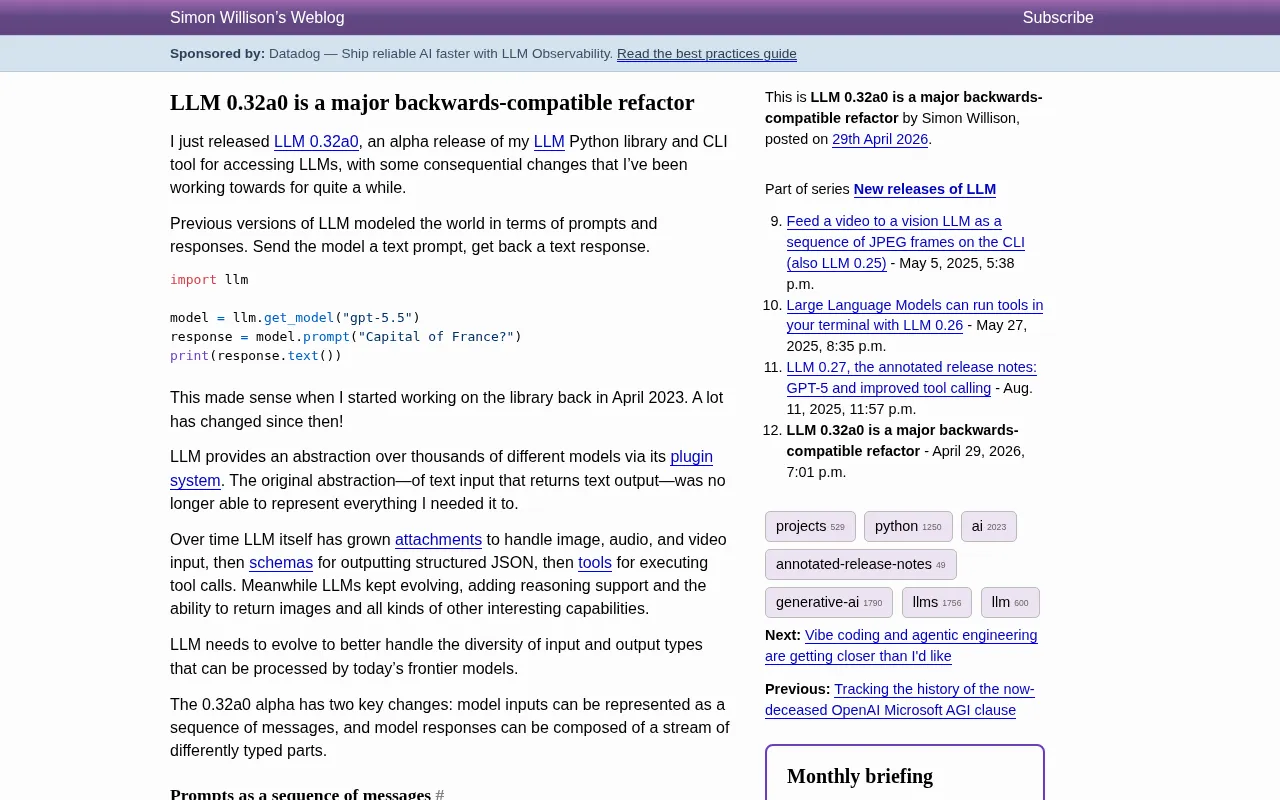
LLM 0.32 Refactor: An Architecture Upgrade from Text Q&A to Multimodal Streaming Interaction
Simon Willison releases LLM 0.32a0 alpha with a major refactor introducing message sequence API, typed streaming output, and flexible serialization while maintaining backward compatibility.
 Deep Dives
Codex Is More Than Code: A Complete Analysis of How OpenAI's Agent Is Reshaping Knowledge Work
OpenAI Codex has evolved from a coding tool into a general-purpose AI agent covering project management, information synthesis, and personal automation. Deep dive into real usage, /goal mode, enterprise security, and tips.
 Deep Dives
The Agentic AI Explosion: A Complete Guide to the Paradigm Shift from Generative to Agentic AI in 2026
In 2026, the AI industry shifts from generative to Agentic AI. Deep dive into GPT-5.5 agent capabilities, Claude's autonomous learning, Physical AI deployment, DeepSeek V4, inference optimization, and the global AI competition landscape.
 Deep Dives
Five Core Concepts of AI Programming: A Complete Guide from Prompt to Harness Engineering
A clear breakdown of five core AI programming concepts — Prompt Engineering, Context Engineering, Agent, Skill, and Harness Engineering — with real-world use cases and advice for indie developers.
 Deep Dives
A2A Protocol Explained: Complementing MCP to Build a Standard Communication Layer for Multi-Agent Collaboration
Deep dive into Google's A2A protocol core mechanisms (Agent Card, Task, Transport), comparing A2A vs MCP roles, and tracing the evolution from tool calling to multi-agent team collaboration.
 Deep Dives
Deep Dive into OpenAI Agent Kit: Can It Really Replace Dify and n8n?
Deep analysis of OpenAI's Agent Kit visual workflow system: feature breakdown, comparison with Dify/n8n, scenario limitations, and the strategic intent behind its launch.
 Deep Dives
Deep Dive into OpenAI Agent Kit: Can It Replace Dify or n8n?
In-depth analysis of OpenAI's Agent Kit visual workflow tool vs Dify, n8n, and Coze—examining its real capabilities, strategic intent, and actual impact on the AI workflow automation ecosystem.
 Deep Dives
ReAct Pattern and Transformer Architecture Explained: High-Frequency AI Interview Topics for Frontend Developers
Deep dive into Agent core logic ReAct (Reasoning + Acting) execution flow, Transformer self-attention mechanism, and essential AI skills for frontend developers including prompt engineering, RAG, and Agent development.