Deep Dives
247 articles
 Deep Dives
·3 min
Two Root Causes of Agent Context Rot: Distraction vs. Poisoning Explained
AI Agent getting dumber over time? Context Rot has two root causes: Distraction (attention dilution) and Poisoning (causal chain contamination). Learn symptoms, mechanisms, and remediation strategies.
Read more →
 Deep Dives
·3 min
What Are Large Language Models? A Deep Dive into Parameters, Models, and the Essence of AI LLMs
What exactly is a large model? This article explains the essence of LLMs from the core concepts of "models" and "parameters," covering GPT parameter scales, vector dimensions, and open-source model selection.
Read more →
 Deep Dives
·3 min
Google TPU v8t and v8i Deep Dive: The New Era of Separated Training and Inference AI Chips
Google Cloud Next unveils TPU v8t (training) and TPU v8i (inference) chips. Deep analysis of their architecture, strategic significance, and impact on AI chip competition.
Read more →
 Deep Dives
·3 min
Decoupled DiLoCo Explained: Making Large-Scale GPU Training Resilient to Failures
Deep dive into Decoupled DiLoCo distributed training: how decoupling training units enables fault tolerance, letting large-scale AI training continue through node failures and reducing downtime loss from 100% to 1%.
Read more →
 Deep Dives
·3 min
20 Years of Google Translate's Technical Evolution: From Trillion Tokens to TPUs to Gemini
Jeff Dean reflects on Google Translate's 20 years and three tech leaps: 2006's trillion-token language model validating Scaling Law, 2016's Seq2Seq+TPU neural translation, and now Gemini integration.
Read more →
 Deep Dives
·4 min
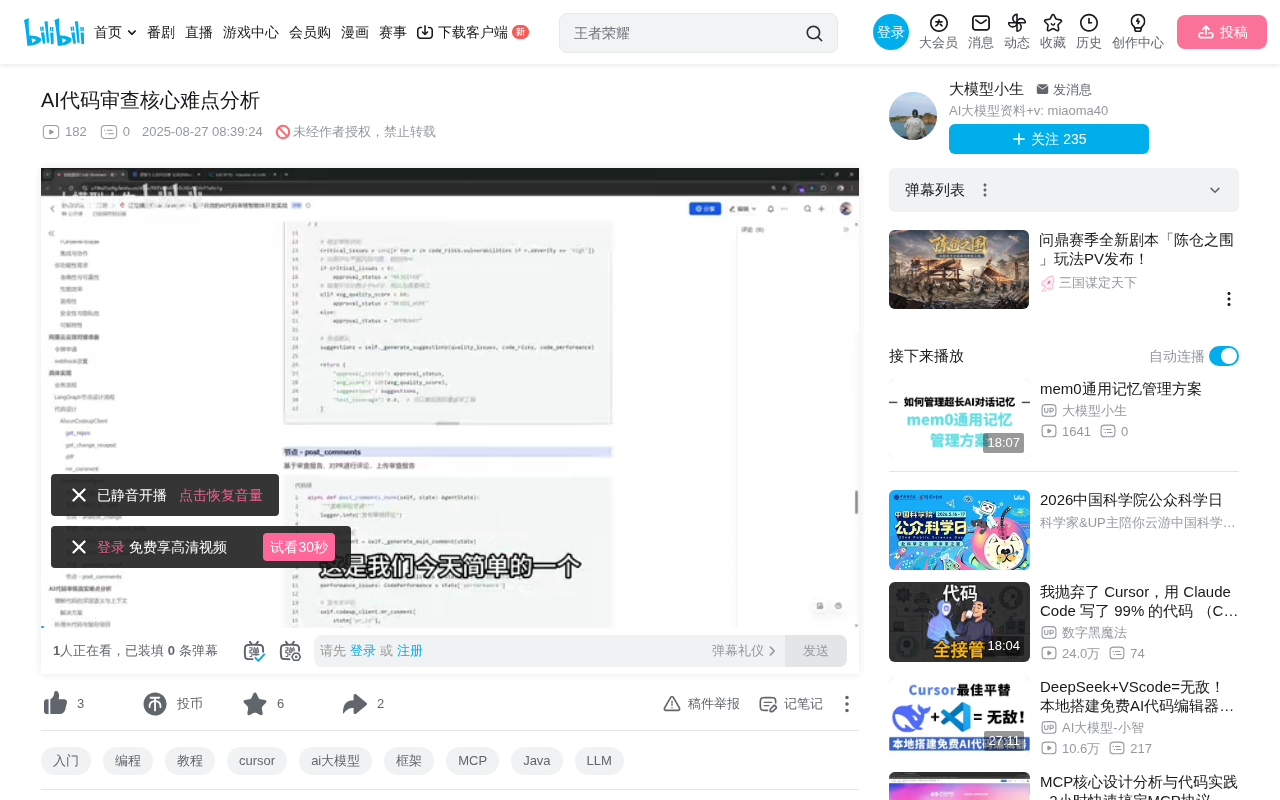
AI Code Review from 30 to 80 Points: A Complete Guide to AST + RAG Architecture Challenges
Deep dive into AI code review system architecture with AST parsing, RAG retrieval, and vector databases. Learn how to boost review effectiveness from 30% to 80%.
Read more →
 Deep Dives
·3 min
Alibaba's QwQ-32B Open-Sourced: How 32B Parameters Rival DeepSeek R1's 671B
Alibaba's open-source reasoning model QwQ-32B achieves performance rivaling DeepSeek R1 (671B) with only 32B parameters through a two-stage reinforcement learning strategy on verifiable tasks.
Read more →
 Deep Dives
·3 min
Reinforcement Learning Drives AI Reasoning Evolution: From Imitator to True Thinker
How RL, Self-Play, and Verifiers work together to evolve LLM reasoning — driving the leap from SFT imitation to true System 2 deep thinking.
Read more →
 Deep Dives
·4 min
MCP Protocol Deep Dive: Core Concepts, Workflow, and Packet Capture Analysis
Deep dive into MCP protocol internals: core concepts of Host, Server, and Tool, complete data flow, Function Calling evolution, and packet capture revealing how Cline actually communicates with LLMs.
Read more →
 Deep Dives
·3 min
How the Single Responsibility Principle Is Revolutionizing Prompt Engineering: A Modular AI Narrative Architecture Explained
Explore how the Singulari-Tea Codex open-source project applies the Single Responsibility Principle (SRP) to Prompt architecture design, building a modular AI narrative system optimized for Gemini 2.5 Pro.
Read more →
 Deep Dives
·3 min
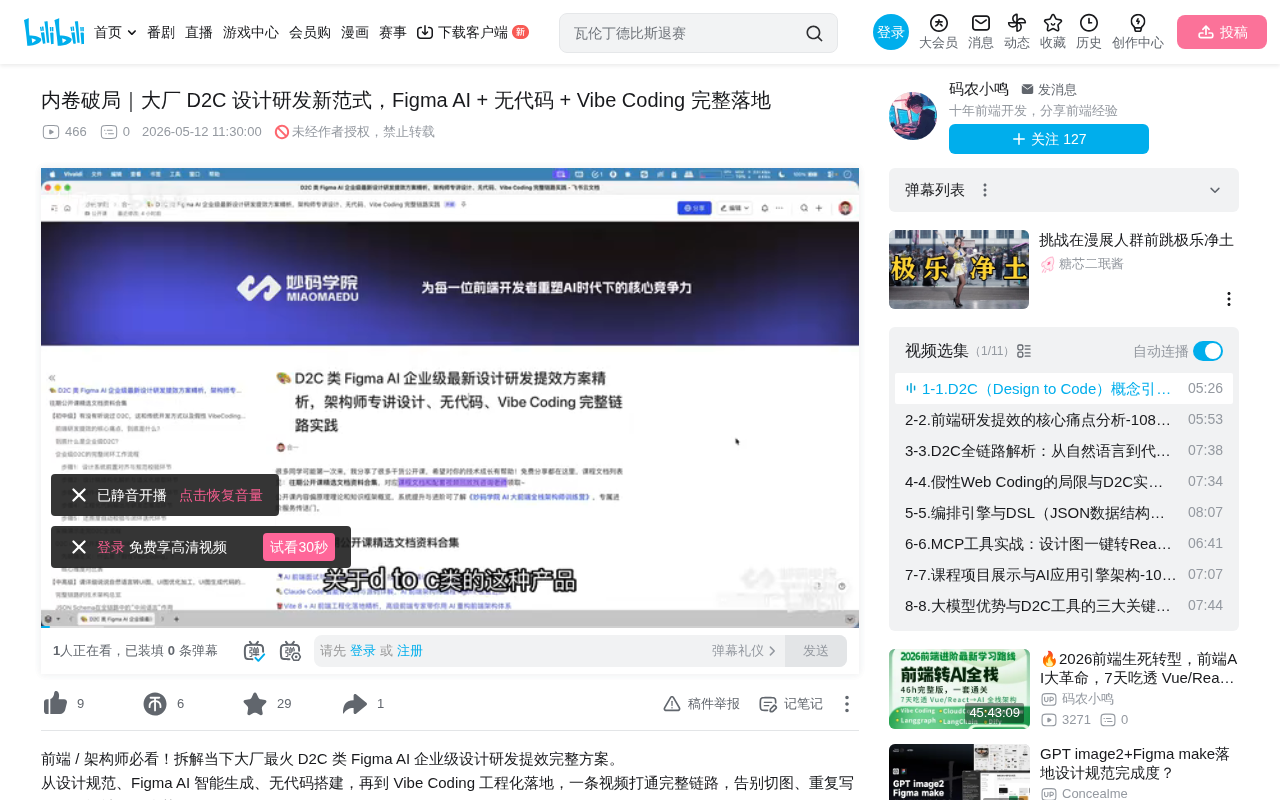
D2C Design-to-Code Full Pipeline Explained: The New Design-Development Paradigm That Top Tech Companies Ask About in Interviews
A deep dive into D2C (Design to Code) technology, comparing it with traditional development and Vibe Coding, covering Figma AI implementation, three-level interview questions, and enterprise architecture design.
Read more →
 Deep Dives
·4 min
The Five-Dimensional Agent Evaluation Framework: A Complete Guide to the Must-Ask AI Product Manager Interview Question
A complete guide to the five-dimensional AI Agent evaluation framework covering task set design, process and result evaluation, and controlled experiments for AI product managers.
Read more →
 Deep Dives
·4 min
Claude Code Auto Mode Fully Explained: Classifier Mechanism, Fault Tolerance Design & Security Protection
Deep dive into Claude Code Auto Mode: how the independent Classifier reviews AI operations, three-level graceful degradation prevents system deadlocks, SubAgent triple review with Prompt Injection protection, plus setup and plan requirements.
Read more →
 Deep Dives
·3 min
MCP Protocol Explained: How AI's Universal USB Port Works
Deep dive into Anthropic's MCP (Model Context Protocol): how Host, Server, and Client work together with JSON-RPC 2.0 to transform AI from chatbot to digital employee.
Read more →
 Deep Dives
·3 min
Cursor Unlimited Refill Plugin: How It Works, Risks, and Better Alternatives
Deep dive into how Cursor's unlimited refill plugin works via multi-account rotation, its security and ban risks, plus compliant alternatives like Cursor Pro, API access, and multi-tool strategies.
Read more →
 Deep Dives
·3 min
MCP Protocol Explained in 3 Minutes: The USB-C Standard for AI
A clear breakdown of MCP (Model Context Protocol): its core concepts, three standard primitives, real-world use cases, and ecosystem status. Learn how Anthropic's open-source unified tool integration standard is changing AI development.
Read more →
 Deep Dives
·3 min
Microsoft Magentic-UI Explained: A Human-AI Collaborative Agent Operating System
Deep dive into Microsoft's open-source Magentic-UI: a human-AI collaborative Agent platform built on AutoGen. Explore its five core capabilities, system architecture, and Human-in-the-Loop design.
Read more →
 Deep Dives
·4 min
The Four Stages of AI Agent Evolution: A Complete Guide from Copilot to Multi-Agent Collaboration
Deep dive into the four stages of AI Agent evolution: Chat, Copilot, Agent, and Agentic AI. Covers ReAct framework, Spring AI stack, and multi-Agent architecture design for 2025.
Read more →
 Deep Dives
·3 min
Claude Code Source Code Leak Revealed: Seven Core Mechanisms of the Harness Architecture Explained
Deep analysis of the Claude Code source code leak, revealing seven core mechanisms of its Harness architecture including context management, tool call orchestration, and state tracking for AI Agent developers.
Read more →
 Deep Dives
·3 min
Hermes Agent Deep Dive: Five-Layer Memory Architecture and Self-Evolution Mechanism Fully Explained
A deep dive into Huawei's open-source Hermes Agent framework: five-layer memory architecture, self-evolution loop, multi-agent collaboration, and comparison with Open Manus.
Read more →