Deep Dives
247 articles
 Deep Dives
Agent Loop Core Mechanism Explained: Building a ReAct Loop from Scratch (With Debugging War Stories)
Deep dive into Agent Loop, the core mechanism of AI Agents, based on ReAct architecture. Covers Tool Call ID handling, context management, assistant message feedback, with full Python code and common bug fixes.
 Deep Dives
MCP Protocol Architecture Deep Dive: Host-Client-Server Three-Layer Design and Three Core Primitives
Deep dive into MCP's Host-Client-Server three-layer architecture and its Resources, Tools, Prompts primitives. Learn how it transforms AI tool integration from M×N to M+N.
 Deep Dives
Ralph Loop: The New AI Programming Paradigm That Beats Multi-Agent Systems Through Iterative Trial and Error
Ralph Loop is a 2025 AI programming paradigm: a memoryless AI Agent repeatedly reads the same Prompt, accumulates experience via file systems, beating multi-agent architectures through iterative loops.
 Deep Dives
Should AI Output Markdown or HTML? Two Dimensions to Help You Choose Quickly
Should AI output Markdown or HTML? This article provides a clear format selection framework using two dimensions—content maintenance lifecycle and reading comprehension efficiency—with practical scenarios and a comparison table.
 Deep Dives
What Are LLMs, Skills, Agents, and OpenClaude? A Complete Guide to Core AI Concepts
A plain-English guide to LLMs, Skills, AI Agents, and OpenClaude — clarifying how AI evolved from "can talk" to "can act" to "can act autonomously," with a comparison table.
 Deep Dives
ChatGPT Financial Management Deep Dive: Opportunities and Risks Behind Connecting Your Bank Accounts
OpenAI launches ChatGPT personal finance tools connecting bank accounts via Plaid for conversational money management. Deep analysis of features, strategy, privacy risks, and industry impact.
 Deep Dives
The Three Stages of AI Training: Pre-training, Post-training, and Alignment Explained
Explore the three key stages of LLM training: pre-training learns language, post-training learns tasks, alignment learns boundaries. Understand why AI hallucinates.
 Deep Dives
Beginner's Guide to AI Agents: Core Principles, Technical Architecture, and Application Scenarios Explained
A systematic guide to AI Agents covering core principles of perception, decision-making, and action, plus the technical stack of LLMs, tool calling, memory systems, and RAG, with real-world use cases.
 Deep Dives
TradingAgents-Astock: In-Depth Analysis of an Open-Source Multi-Agent Investment Research Framework for China's A-Share Market
In-depth analysis of TradingAgents-Astock, an open-source multi-Agent investment research framework for China's A-shares with 7 analysts, quality gates, and zero-cost data sources.
 Deep Dives
LangChain Core Architecture Explained: A Practical Guide to Its Five Key Modules
Deep dive into LangChain's five core modules: Model I/O, Data Connection & Retrieval, Chains, Agents, and Memory. Learn RAG workflows, Agent decision-making, and practical AI app development.
 Deep Dives
DeepSeek V3.2 Deep Dive: Three Major Breakthroughs in DSA Sparse Attention, Reinforcement Learning, and Agent Capabilities
Deep analysis of DeepSeek V3.2 and V3.2 Special: DSA sparse attention for faster long-context processing, RL compute at 10% of pre-training, and Agent task synthesis across 1,800 environments.
 Deep Dives
Hermes Agent: Complete Breakdown of 87 Built-in Skills — 7-Layer Architecture & Priority Guide
Deep dive into Hermes Agent V0.13.0's 87 Built-in Skills reorganized into 7 functional layers with priority guidance. Find the 17 core Skills worth learning first.
 Deep Dives
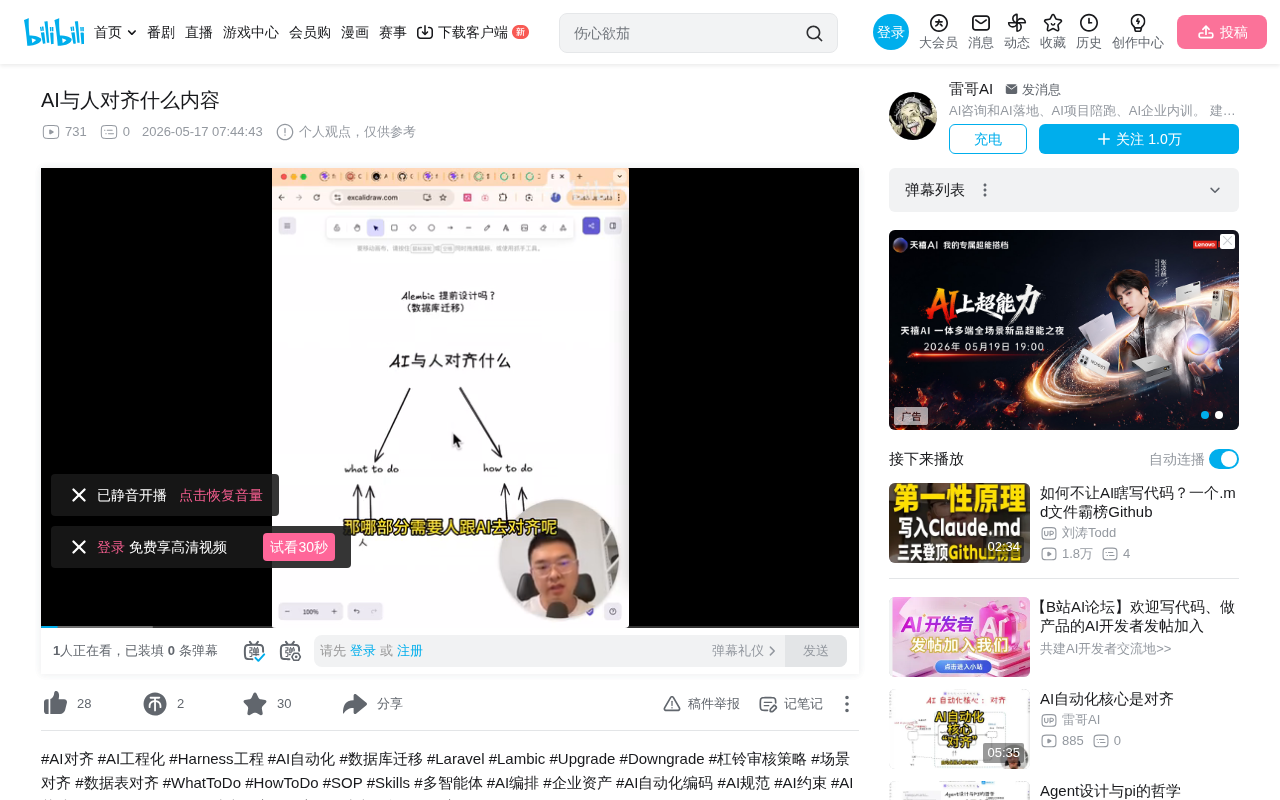
The Essence of AI Alignment: Aligning What to Do, Not How to Do It
The core of AI alignment is aligning What to do, not How to do. Through an Alembic database migration case, learn how Harness engineering crystallizes dev standards into reusable assets for automated programming.
 Deep Dives
What Is Playground Skill? How HTML Interaction Solves the Pain Points of AI Coding Communication
How Playground Skill uses HTML interactive interfaces to solve the pain points of natural language limitations in AI coding. Comparing traditional text-only modes with the new two-way interaction paradigm for Coding Agents.
 Deep Dives
AI Agent Skill Architecture Breakdown: Decision Layer + Encapsulation Layer + Execution Layer Practical Guide
Deep breakdown of AI Agent Skill's three-layer architecture: decision layer dynamic routing, encapsulation layer SOP standardization, and execution layer state machine self-healing, with practical solutions for context explosion, error recovery, and generality balance.
 Deep Dives
Will Frequent Git Commits Fill Up Your Hard Drive? Delta Compression & Packfile Mechanism Explained
Will frequent Git commits fill your hard drive? Deep dive into Git's Delta compression and Packfile mechanism, revealing why pure code commits cost almost nothing and identifying the real culprit — large binary files.
 Deep Dives
How to Read AUC Area Charts: A Complete Guide to ROC Curve Interpretation and Model Evaluation
Learn how to read AUC area charts with this complete guide covering ROC curve interpretation, AUC scoring standards (0.5–1.0), three model comparison scenarios, and PR curve vs ROC curve differences.
 Deep Dives
Confusion Matrix Explained: Precision, Recall, and F1 Score Formulas with Practical Applications
Learn confusion matrix TP, TN, FP, FN concepts, Accuracy, Precision, Recall, and F1 Score formulas. Practical guide for choosing the right classification metric across spam detection, fraud prevention, and cancer screening scenarios.
 Deep Dives
How Dangerous Are Windsurf Account-Switching Plugins? A Deep Dive into Technical Principles and Security Risks
Deep analysis of Windsurf seamless account-switching plugin's technical implementation, revealing risks of account bans, code theft, and legal liability. Four compliant alternatives for developers.
 Deep Dives
XANI: How GPU-Accelerated X-Ray Nanoscale Imaging Is Revolutionizing XFEL Data Analysis
Explore how the XANI project uses NVIDIA GPUs to accelerate XFEL data analysis, compressing nanoscale imaging from days to hours and advancing fusion materials and semiconductor research.