#API collection automation
289 related articles

·3 min
Qwen3.8 Deep Dive: How Does a 2.4 Trillion Parameter MoE Model Claim Second Place?
Alibaba's Qwen3.8 challenges larger models with a 2.4T-parameter MoE architecture, claiming second only to Gemini. A deep dive into MoE mechanics, continuous updates, two-speed release strategy, and real local deployment requirements.
Read more →

·2 min
AI Testing Platform in Action: A Complete Guide to Accelerating Your Testing Workflow
Deep-dive into AI testing platforms: from auto-generating test cases from requirements docs to API testing, performance testing, and log analysis. Prepare for big tech interviews.
Read more →

·3 min
Coze Deep Dive: A Complete Guide to the Agent Building Platform vs. Dify
A deep dive into ByteDance's Coze platform: tool categories, positioning vs. Dify, skill store, multi-agent collaboration, and workflow building — your AI Agent selection guide.
Read more →

·2 min
How to Choose Long-Horizon AI Workflow Tools? A Deep Comparison and Decision Framework for Leading Agent Solutions
Why do chatbots fail at long-horizon workflows? We compare Manus, Perplexity Comet, Claude, ChatGPT and more across task type, total cost, and automation level.
Read more →

·2 min
Python Learning Path for Beginners: A Complete Breakdown of Three Core Modules
A complete Python learning path for beginners covering three modules: Fundamentals, Intermediate, and Hands-On Practice — including web scraping, office automation, and data analysis.
Read more →
GitHub Daily · July 21: The Agent Skil…
·3 min
GitHub Daily · July 21: The Agent Skills Ecosystem Explodes, Intelligence Dashboard Tops the Charts
GitHub Trending July 21: The Agent Skills ecosystem explodes as pluggable skill packs top the charts, MCP becomes the de facto standard, and ai-agent-book surges 4,434 stars in a day.
Read more →

·2 min
Getting Started with ROS2: What Is a Robot Operating System, and How Does It Differ from ROS1?
A beginner's guide to ROS2: what ROS really is (an SDK, not a traditional OS), how ROS1 and ROS2 differ, and how to choose the right version to start robot development.
Read more →

·2 min
AI Skills in Practice: How Test Engineers Can Automate API Testing and Generate Test Cases at Scale
Learn how AI Skills are transforming software testing. This guide covers Skill architecture, learning paths, and real-world applications in API automation and WebApp testing.
Read more →

·4 min
AI-Powered Automated Testing: Using Pytest + MCP to Tackle Non-Determinism
Deep dive into AI-era automated testing: using Pytest + Playwright + MCP for stable automation, constraining code conventions with Skills, avoiding non-determinism and high token costs. Includes real debugging war stories.
Read more →

·3 min
Google Play July Policy Update: Minor Protection, Package Name Registration, and Compliance Guide
A deep dive into Google Play's latest policy updates: mandatory age-gating for anonymous chat apps, automatic package name registration, third-party AI data compliance, and the August 31 Target API Level deadline.
Read more →

·2 min
Heap Code: The Open-Source VS Code AI Coding Assistant That Truly Supports Local Models
Heap Code is an open-source VS Code extension supporting local models via Ollama and LM Studio, plus OpenAI-compatible APIs. Features completions, chat, inline edit, and agent mode — zero telemetry, no account required.
Read more →
·2 min
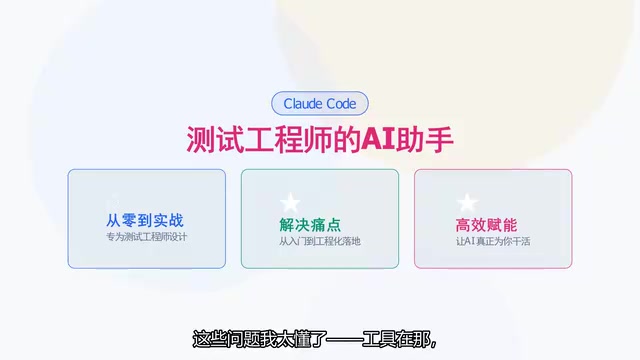
Claude Code for QA Engineers: A Practical Handbook from Basics to Engineering-Level Implementation
A practical Claude Code handbook built for QA engineers — covering environment setup, spec-driven development, Skill encapsulation, MCP integration, and AI test sub-agents across 10 core modules.
Read more →
·4 min
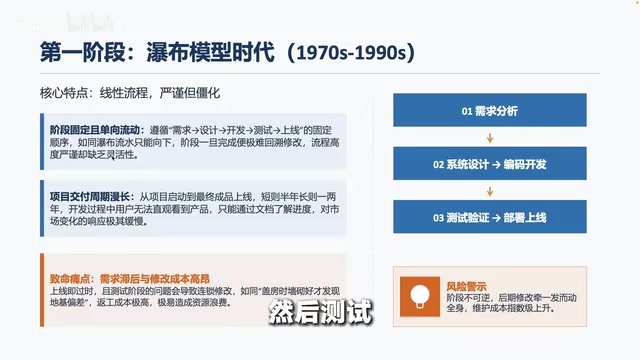
Understanding CI/CD from Scratch: Core Principles and Practical Introduction to Automated Deployment
A clear, practical guide to CI/CD: from Waterfall to DevOps, manual vs. automated deployment, and a full Jenkins + RuoYi hands-on learning path for beginners.
Read more →
·3 min
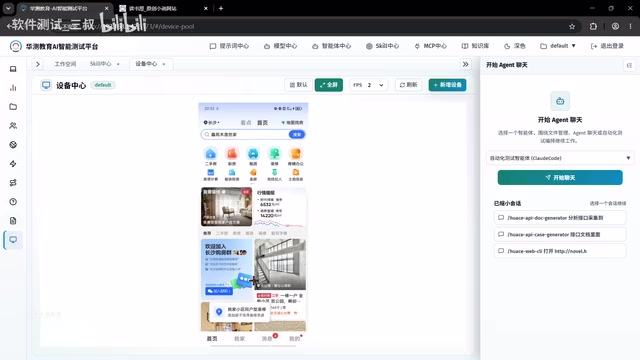
AI Testing in a Closed Loop: Full Pipeline from API Collection and Test Case Generation to Agent-Driven Execution
Full breakdown of a real AI testing pipeline: API collection, doc enrichment, AI test case generation, Agent-driven execution, and test reports — with Skills, RAG, and Harness engineering.
Read more →

·3 min
Cosmonapse: A Decentralized Multi-Agent Framework Built on an Event Bus
Cosmonapse is an open-source multi-agent framework that replaces central orchestrators with peer nodes, using typed signals and an event bus to fully decouple tool calls, memory, and HITL. Supports Python and TypeScript under Apache 2.0.
Read more →

·4 min
AI Agents Automating JS Reverse Engineering: A Deep Dive into the New Paradigm for Web Scraping
AI agents are revolutionizing JS reverse engineering. This deep dive covers built-in tool chains, automation modes, prompt engineering for e-commerce, and full pipeline automation from parameter extraction to database storage.
Read more →

·2 min
Telemetry Guard: An Open-Source Windows Telemetry Blocker Built by a Programmer
Telemetry Guard is an open-source Windows privacy tool built by a software engineer. It uses PowerShell + a lightweight GUI to disable telemetry, ad tracking, and activity history, with backup and rollback support. MIT licensed and free.
Read more →

·3 min
Adversarial Testing of AI Agents in the Terminal via MCP
Learn how to use MCP (Model Context Protocol) to run adversarial tests on AI agents in the terminal, covering prompt injection, privilege escalation, and dangerous command execution scenarios.
Read more →

·3 min
Can Small Local Models Become Software Domain Experts? A RAG Architecture Deep Dive
Can small local models (1.5B–3B) become software domain experts? This article breaks down CPT, SFT, RAG, and Agent architectures, with a layered RAG-centric design for CPU-only local deployment.
Read more →

·3 min
AI/ML Students Lost in Job Search? A Deep Comparison of Four Career Paths and How to Choose
AI/ML students unsure which career path to pursue? Compare AI engineering, SDE, PM, and UI/UX in depth — with honest entry barriers and a practical self-assessment framework.
Read more →