#Agent Builder
151 related articles

·6 min
The AI Builder's Handbook: A Complete Guide to LLM Principles, RAG Architecture, and Agent Design
From the autocomplete nature of LLMs, tokens, and context windows to RAG vector databases, the MCP protocol, and AI agent loop design — this article uses vivid analogies to unpack the reality of AI engineering.
Read more →

·2 min
The Real Moat of AI Agent Builder Platforms: From Demo to Trust on Day 30
One-click deploy is just the beginning. The real value of AI Agent platforms lies in draft-test-publish workflows, version rollback, and permission control. Learn why Day 30 is the true benchmark.
Read more →

·3 min
AI Agent Builder: A Complete Hands-On Guide from Zero to Enterprise-Grade Delivery
AI Agents are becoming the core form for deploying large models. This article explores the AI Agent Builder profession, revealing the SME deployment gap and a complete path from fundamentals to delivery.
Read more →
 Product Reviews
·2 min
ChatGPT Workspace Agent Permission Controls: How Builders and Admins Collaborate on Governance
Deep dive into ChatGPT Enterprise Workspace Agent's layered permission controls, covering builder constraints, admin governance, and Human-in-the-Loop mechanisms for balancing AI automation with security.
Read more →
·3 min
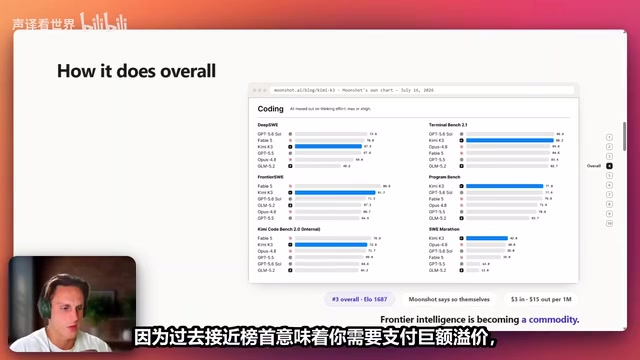
Kimi K3 Hands-On Tutorial: Claude Code Sub-Agent Configuration & GPT-5.6 Comparison Test
Complete guide to configuring Kimi K3 as a Claude Code sub-agent, including API setup, YFlow workflow building, and head-to-head comparison with GPT-5.6 and Claude Fable 5.
Read more →

·5 min
Loop Engineering Explained: The New Programming Paradigm Where AI Prompts Itself
Loop Engineering is a paradigm shift in AI usage. Learn how to build automated loops where agents explore, execute, and verify tasks autonomously, with a hands-on e-commerce case study.
Read more →

·3 min
7 Vibe Coding Agents Tested & Ranked: Which AI Coding Tool Should Beginners Choose?
Hands-on comparison of 7 Vibe Coding agents including Trae, Cursor, Claude Code, Codex, WorkBuddy & CoderWork, ranked by beginner-friendliness and performance.
Read more →

·3 min
7 Vibe Coding Agents Tested & Ranked: Which AI Coding Tool Should Beginners Choose?
Side-by-side review of 7 Vibe Coding agents including Trae, Cursor, Claude Code, Codex, WorkBuddy, and CoderWork, ranked by beginner-friendliness, performance, and ease of use.
Read more →

·2 min
Grimoire Launches Codex Pet Feature: A Gamified Twist on AI Programming Assistants
Grimoire launches its new Codex Pet feature, combining AI code generation with gamified pet interactions to create an engaging programming experience for beginners and creators alike.
Read more →

·4 min
AI Coding Tools in Practice: Which Ones Actually Stuck with the Team?
A 12-person product team shares real-world experiences with Cursor, Codex, Claude Code, and CodeRabbit—exploring efficiency plateaus, scenario matching, and selection criteria for AI coding tools that actually stick.
Read more →

·1 min
Build AI Agents Without Code: A Complete Beginner's Guide to Coze
Coze by ByteDance is a no-code AI agent platform with visual workflows, 60+ plugins, knowledge bases & persistent memory. A complete beginner's guide.
Read more →

·6 min
The Three-Layer GTM Agent Architecture: Enabling AI to Truly Recognize Buyer Intent and Identity
An in-depth analysis of the three-layer GTM Agent architecture—the Signal, Buyer Intelligence, and Action layers—revealing how context graphs identify anonymous visitors and capture purchase intent.
Read more →

·7 min
Claude Code in Action: Building an Embedded Tetris Game with AI in 3 Hours
A hands-on case study: using Claude Code and the LVGL graphics library to build a Tetris game running on an embedded dev board from scratch in under 3 hours.
Read more →
·7 min
Claude Code in Action: Building an Embedded Tetris Game with AI in Under 3 Hours
A hands-on case: using Claude Code and the LVGL graphics library to build a Tetris game running on an embedded board from scratch in under 3 hours.
Read more →

·2 min
Getting Started with LangGraph: Graph Orchestration and State Machines for AI Agents
A comprehensive guide to LangGraph's core concepts: Graph API vs Functional API, three-layer architecture, and workflow visualization methods for building AI Agents.
Read more →

·4 min
Using MCP Protocol to Give AI Agents Full Visibility into SQL Server
Learn how to connect AI agents to SQL Server via MCP protocol — wrapping DMV queries, managing multi-instance fleets, and enabling natural language ops with layered safety guardrails. Includes Docker deployment.
Read more →

·4 min
Stop Shipping Skills Blindly! A Google DeepMind Engineer's Hands-On Guide to Agent Evaluation
Google DeepMind engineer Philip reveals: almost everyone uses coding agent Skills, yet almost no one writes evals for them. A deep dive into Skill evaluation methods, 8 actionable tips, and a real Gemini API case study.
Read more →

·3 min
Coze Deep Dive: Multi-Agent Collaboration Platform Architecture and Usage Guide
Deep dive into Coze's three core capabilities: multi-person multi-AI collaboration, customizable agents, and cross-platform project management. Covers credits, Dify comparison, and a practical learning path.
Read more →

·3 min
AirOps in Practice: Building Enterprise-Grade AI Agents with the Claude Agent SDK
How AirOps replaced traditional workflow builders with the Claude Agent SDK to build an AI agent platform for content marketers — covering three architectural iterations, harness engineering, and sub-agent context management.
Read more →

·3 min
One-Prompt Apps: Demos Are Easy, Shipping Is the Real Test
Is one-prompt app generation really that powerful? We break down three tiers of AI dev tools, expose the gap between demo and production, and compare top domestic platforms including Baidu Miaoda and Ant Lingguan.
Read more →