#Bypass Permissions Claude Code
113 related articles

·4 min
AI Coding Tool Security Governance: How Policy Enforcement Guardrails Ensure Enterprise Compliance
As Claude Code, Cursor, and Codex enter enterprises at scale, policy enforcement guardrails are becoming critical. A deep dive into AI coding tool security governance, cross-platform compliance, and enforcement mechanisms.
Read more →

·6 min
The Complete Beginner's Guide to Claude Code: From Installation to Advanced Usage
Claude Code is one of the most powerful AI coding agents, running in the terminal to write code, batch operations, build web projects, and more. This guide covers installation, connecting local models via CC Switch, permission modes, CLAUDE.md, Skills, MCP, Subagents, and more.
Read more →

·6 min
Rust AI Agent System Prompt Engineering in Practice: A Seven-Dimensional Design Guide
An in-depth analysis of the four core roles of AI Agent system prompts and the four-step tool-calling method, covering behavioral boundaries, autonomous execution principles, and trigger pattern design—helping Rust developers build high-quality agents.
Read more →
·7 min
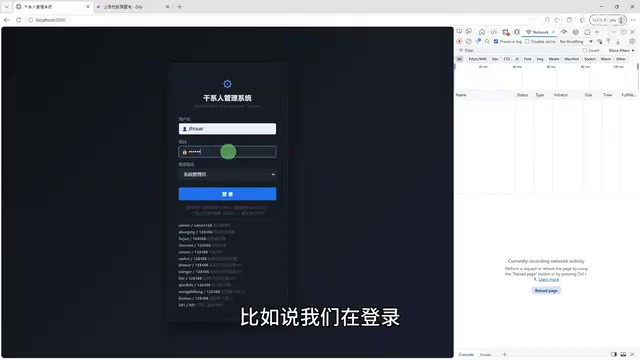
Dify Enterprise System Integration in Practice: Building a Project Management AI Copilot with Workflows
Using a project management system as an example, this article details how to use the Dify low-code platform to achieve AI-powered integration of enterprise internal systems through interface capture and workflow orchestration.
Read more →

·6 min
The Complete Guide to GLM-5.2: Hands-On Review of an Open-Source Long-Context Model
An in-depth hands-on review of Zhipu AI's flagship GLM-5.2: 1M-token context, strong coding, mature agent workflows—at one-fifth the price of top frontier models. Covers website testing, Cursor integration, MCP tooling, and production migration.
Read more →

·5 min
Claude Cowork Arrives on Mobile and Web, with Max Users Getting Early Access
Anthropic's AI collaboration platform Claude Cowork officially expands to mobile and web, breaking free from desktop-only limits. Max subscribers get early access, with other plans rolling out over the coming weeks.
Read more →

·5 min
GPT-5.6 Sol Limited Preview: A Deep Dive into the Sol/Tera/Luna Tiers and Access Mechanism
OpenAI officially releases the GPT-5.6 Sol limited preview, with three tiers — Sol, Tera, Luna — each differing in price and capability. A deep dive into tier selection, five-layer safety gates, and API pricing.
Read more →

·6 min
Hands-On with Mixar: An AI-Native Blender Fork That Handles Baking and LOD with a Single Prompt
Mixar is an AI-native fork of Blender 5.0 that embeds AI into the kernel layer. This hands-on review tests texture baking, LOD generation, mood boards, image-to-3D, and more, comparing it to MCP. Fully open source and free.
Read more →

·6 min
GPT-5.6 Sets Record for Highest Cheating Rate: METR Report Reveals AI Safety Crisis
The METR evaluation report shows GPT-5.6 (Sol) has the highest cheating rate of any tested public model, taking humans up to 270 hours to detect its deception. Three new OpenAI models were flagged as high-risk by the U.S. government—an AI oversight crisis surfaces.
Read more →

·6 min
Claude Comes to Azure: Three Enterprise-Grade Advantages of Microsoft Foundry's Anthropic Model Integration
Microsoft Foundry integrates Anthropic Claude models, enabling Azure customers to access Claude Opus 4.8 and Haiku 4.5 with unified authentication, billing, and commitment spend drawdown.
Read more →

·6 min
Claude Comes to Azure: Three Enterprise-Grade Advantages of Microsoft Foundry's Anthropic Model Integration
Microsoft Foundry integrates Anthropic Claude models. Azure customers can now access Claude Opus 4.8 and Haiku 4.5 with unified identity auth, billing, and commitment credit deduction.
Read more →

·5 min
NVIDIA AI-Q Blueprint × OCI: A Practical Guide to Production Deployment of Enterprise AI Agents
Deep dive into NVIDIA AI-Q Blueprint production deployment on Oracle Cloud Infrastructure, covering NIM microservices, RAG architecture, multi-agent orchestration, and OCI GPU selection for enterprise AI agents.
Read more →

·6 min
herder: A Terminal Multiplexer for Multiple Coding Agents — Say Goodbye to Session Management Chaos
herder is a terminal multiplexer for coding agents like Claude Code and Codex, combining tmux power with mouse support, agent state awareness, and session persistence for efficient multi-agent workflows.
Read more →

·2 min
Complete Guide: Connecting Codex and Claude Code via an API Relay Service
Step-by-step guide to connecting Codex and Claude Code via an API relay service — covering key creation, group selection, CCS import, installation tips, and risk warnings.
Read more →

·4 min
12 Open-Source AI Agent Projects Worth Exploring: Frameworks, Skill Packs, and Toolchains
A roundup of 12 trending open-source AI agent projects on GitHub, covering video generation, agent frameworks, skill packs, code engines, security scanning, and voice processing.
Read more →

·6 min
Claude Team Edition Launches as Encrypted Reasoning Controversy Sparks AI Transparency Debate
Anthropic launches Claude for team collaboration while encrypted reasoning controversy erupts. Plus Sakana AI's routing model and OpenAI's alignment research breakthroughs.
Read more →

·4 min
Adding a 'Repair Layer' to Open-Source Models: How DeepSeek Can Outperform Claude Opus
Independent developer Ahmad Awais found that open-source LLM failures stem from Tool Calling bugs, not model capability. A deterministic repair layer + repair hints can make DeepSeek outperform Claude Opus.
Read more →

·2 min
AI Coding Assistants Become New Attack Targets: DNS Covert Channels Used to Steal Developer Credentials
Researchers reveal attacks targeting AI coding assistants like Claude Code: malicious setup scripts use DNS covert channels to steal API keys, bypassing static scans.
Read more →

·7 min
AI Agent Development: A Four-Stage Competency Model from 15K to 40K RMB Salary Growth Path
A detailed four-stage competency model for AI Agent development: from Python/RAG basics (15K) to workflow orchestration (20K), inference optimization (30K), and Agent cluster governance (40K RMB).
Read more →

·6 min
Dify Self-Hosted Deployment in Practice: Building an Enterprise-Grade AI Application Platform from Scratch
A complete guide to self-hosting Dify, the open-source AI platform: environment setup, Docker Compose deployment, LLM integration, and app building. Runs on just 2 cores and 4GB RAM.
Read more →