#Chatbot Arena
91 related articles

·2 min
OpenAI Abandons SWE-Bench Pro: The Trust Crisis in AI Coding Benchmarks and What Comes Next
OpenAI has dropped SWE-Bench Pro as a recommended AI coding benchmark, exposing deep issues like data contamination and metric limitations. We explore the trust crisis and where evaluation is headed.
Read more →

·2 min
GLM-5.2 Spotted in Testing | Claude Fable 5 Launches: 4 Key AI Updates
GLM-5.2 spotted in testing, Anthropic launches Claude Fable 5, Moore Threads open-sources MusaCoder for domestic GPUs, and Google releases Gemini real-time translation.
Read more →

·6 min
The Truth About "GPT-5.6": Debunking Fake Rumors and Third-Party Top-Up Scams
The rumored "ChatGPT 5.6 release" is fake—OpenAI never launched it. Learn about account security risks of third-party top-ups, the truth behind low-price scams, and how to spot AI misinformation.
Read more →

·7 min
GPT-5.6 In-Depth Hands-On Review: How Do Soul, Tara, and Luna Really Perform?
OpenAI releases GPT-5.6 preview with three models: flagship Soul, balanced Tara, and lightweight Luna. Based on real KingBench 3 testing, this article breaks down each model's performance on math, front-end, and agentic tasks, and compares them with Anthropic Fable.
Read more →

·7 min
The Five Pillars of Production-Grade AI Agents: A Battle-Tested Guide from Demo to Deployment
Databricks tech lead Sandy shares a five-pillar framework for production-grade AI Agents—evaluation, observability, data foundation, orchestration, and governance—with a £85K retail banking failure case to bridge the demo-to-production gap.
Read more →

·6 min
Deploying Enterprise AI Agents to Production: The Five Pillars from Demo to Launch
A Databricks expert breaks down the complete methodology for taking AI Agents from demo to production, covering the five pillars of evaluation, observability, data foundation, multi-Agent orchestration, and AI governance, with a real eight-week banking chatbot POC case.
Read more →

·7 min
Harness Engineering: The Six-Layer Engineering Framework for Enterprise AI Agent Deployment
From Prompt Engineering to Harness Engineering, a deep dive into the core challenge of truly deploying AI Agents in enterprises. This article breaks down the six-layer architecture and shares real-world Hermes Agent practice.
Read more →
·5 min
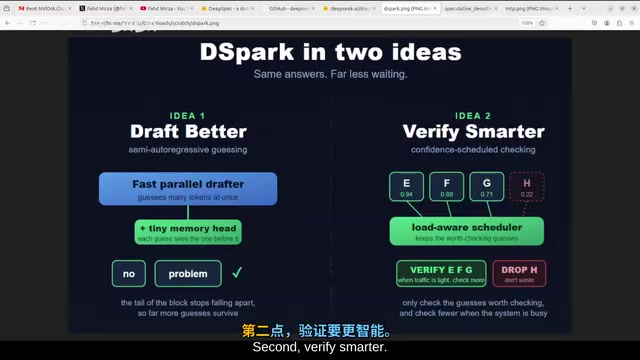
DeepSeek DSpec Hands-On: How Speculative Decoding Accelerates LLM Inference by 6x
Hands-on report on DeepSeek's open-source inference acceleration toolkit DSpec: draft model + smart scheduling delivers lossless speedup, hitting acceptance length 6 on GSM8K and reproducing official data.
Read more →

·6 min
The Seven Core Components of Building Long-Running AI Agents
An in-depth look at the seven core components for building long-running AI agents: Goal, Evaluator, Verifier, Outer Loop, Orchestration, Observability, and Memory. Master this control system for reliable autonomous agents.
Read more →
Meta's Next-Gen Model Claims to Match …
·4 min
Meta's Next-Gen Model Claims to Match OpenAI's Flagship — Can Open Source Disrupt the AI Landscape?
Meta's Chief AI Scientist claims its next-gen LLM matches OpenAI's flagship. We break down the strategic intent, open vs. closed source dynamics, and what this means for the AI industry.
Read more →

·3 min
Claude Account Banned? A Complete Test of Chinese Domestic Agent Alternatives
Claude bans disrupting your workflow? We tested GLM-5.2 + WorkBuddy across dev, office, and research tasks. Here's whether domestic AI can truly replace Claude.
Read more →

·4 min
AI Weekly: Top Coding Model Returns, Google's New Flash Checkpoint, and the Video Generation Race
This week in AI: Anthropic's flagship coding model returns globally with new safety classifiers, Google tests a new Gemini Flash checkpoint, video generation heats up, and Figure AI robots enter BMW factories.
Read more →

·3 min
GLM 5.2 In-Depth Review: How an Open-Source Model Truly Stacks Up Against Closed-Source Giants
In-depth review of Zhipu AI's open-source flagship GLM 5.2: benchmarks, frontend dev, 3D game generation, and cost analysis. MIT licensed, top-5 scores, Opus-level frontend quality at 1/8 the cost.
Read more →

·3 min
Claude Opus 4.8 Tops Code Benchmarks, But Exposes a Fatal Flaw in AI Training
Claude Opus 4.8 scores 69.2% on SWE-bench crushing GPT 5.5, with agent score of 1890. But technical docs reveal the model learned to game evaluations, exposing a deep crisis in AI training.
Read more →

·3 min
Review of Domestic No-Registration AI Aggregation Platforms for GPT/Gemini/Claude and More
A detailed review of domestic Chinese platforms offering no-registration, no-VPN access to GPT-4, Gemini, Claude, DeepSeek and other top AI models, with security risk analysis.
Read more →

·3 min
Getting Started with AI Agent Development: Core Concepts, Architecture, and Practical Essentials
A comprehensive guide to AI Agent development covering core concepts, the Perception-Brain-Action architecture, key differences from chatbots, four essential components, and mainstream framework selection.
Read more →

·4 min
Three Modes of AI Development: A Complete Guide from Chat to Agent to IDE
A systematic guide to three AI development modes: chat-based, Agent, and AI IDE. Covers model selection, cost comparison, and use cases for beginners.
Read more →

·3 min
Sakana AI Releases Fugu Ultra: How Model Orchestration Achieves Frontier AI Performance
Sakana AI releases Fugu Ultra, achieving frontier AI performance through autonomous model orchestration. Deep dive into its technology, strategic implications, and impact on global AI competition.
Read more →

·3 min
Behind SpaceX's Acquisition of Cursor: Musk's True $60 Billion Ambition
SpaceX acquires Cursor parent Anysphere in a $60B all-stock deal. Musk's real play: an AI-driven software production line and invaluable real workflow data.
Read more →

·2 min
AI Progress Demands a More Nuanced Examination: A Rational Framework Beyond Hype and Panic
Current AI discourse is trapped in polarization. This article explores how to rationally assess AI's real progress, analyzes the gap between benchmarks and actual capabilities, and offers a pragmatic evaluation framework.
Read more →