#Chatbot Arena
89 related articles

·3 min
Is Gemini Getting Worse? A Deep Dive into the 'Model Degradation' Phenomenon
Reddit users report Gemini feeling "worse over time." This deep dive explains the real causes—silent updates, safety over-alignment, and compute throttling—plus how to rationally evaluate AI model performance.
Read more →

·3 min
Apple vs. OpenAI: The Full Story Behind Musk and Altman's Public Showdown
Apple sued OpenAI for trade secret theft, triggering a public feud between Musk and Altman on X. Full breakdown of the clash, their contrasting strategies, and what the lawsuit really means for OpenAI's hardware ambitions.
Read more →

·3 min
Qwen3.8 Deep Dive: How Does a 2.4 Trillion Parameter MoE Model Claim Second Place?
Alibaba's Qwen3.8 challenges larger models with a 2.4T-parameter MoE architecture, claiming second only to Gemini. A deep dive into MoE mechanics, continuous updates, two-speed release strategy, and real local deployment requirements.
Read more →

·3 min
Alibaba's 2.4 Trillion Parameter Qwen Model: Separating Technical Substance from Marketing Hype
Alibaba's Qwen releases a 2.4T parameter MoE model claiming to be 'second only to Gemini 2.5.' We break down what's real—and what's just hype.
Read more →

·3 min
Three Major Chinese AI Models Incoming: Qwen 4, DeepSeek V4, and GLM Next Version Breakdown
Alibaba Qwen 4, DeepSeek V4, and Zhipu GLM's next-gen models are all nearing release. A deep dive into the latest leaks, capability improvements, and timelines for these three Chinese AI flagships.
Read more →

·2 min
GPT-5.6 Sol Tops Frontend Leaderboard · Claude Code Gets Built-in Browser · 50-Year Math Conjecture Solved
GPT-5.6 Sol tops Chatbot Arena's frontend leaderboard, Claude Code gains a built-in browser, Sol Ultra proves a 50-year math conjecture, and Gemma 4 gets 5x faster.
Read more →

·6 min
Claude Sonnet 5 In-Depth Testing: 8 Real-World Tasks Reveal Its True Capability Boundaries
Bilibili creator KaterSony tests Claude Sonnet 5 across 8 real-world tasks—image recognition, 3D modeling, web generation—comparing it against GPT-5.5, Gemini 3.1 Pro, and revealing its true capability limits and cost traps.
Read more →
·3 min
Qwen Next-Gen, DeepSeek V4, New GLM Spotted Simultaneously: China's LLM Race Accelerates
Qwen next-gen (KLab), DeepSeek V4 GA, and Zhipu GLM's new version are all in testing simultaneously. A deep dive into the latest developments and tech trends.
Read more →

·3 min
Kimi K3 Hands-On: How a 2.8-Trillion-Parameter Open-Source Model Beat Fable5
A US engineer's live test of Kimi K3: 2.8T parameters, 1M token context, 87% audience vote over Fable5 in game generation. Full report covering benchmarks, speed, and code debugging.
Read more →

·3 min
Claude Opus 5 Launch Imminent, Alibaba Qwen Officially Integrated into Apple Intelligence
Claude Opus 5 launches next week; Alibaba Qwen integrates into Apple Intelligence for Chinese users; 27B on-device model compressed to 3.8GB; open-source models narrow gap to closed-source by 3.3%.
Read more →

·3 min
Qwen3.5 Uncensored Version Local Deployment: Run a 35B Model on Just 6GB VRAM
Run Qwen3 35B-A3B uncensored locally on just 6GB VRAM using llama.cpp and GGUF quantization. Full deployment guide, code generation tests, and Agent integration walkthrough.
Read more →
LLM Juries: How Multi-Model Voting Bui…
·2 min
LLM Juries: How Multi-Model Voting Builds Reliable Metadata
Single LLMs risk hallucinations and bias in metadata generation. This article breaks down the LLM Jury mechanism — using multi-model voting and consensus to boost annotation accuracy, with real engineering insights for food, medical, and e-commerce use cases.
Read more →

·2 min
Grok 4.5 Hands-On Review: Speed, Accuracy, and Value in a Three-Way Evaluation
A power-user developer tests Grok 4.5: blazing-fast responses, high accuracy, and great value. A deep dive into Grok 4.5's real-world AI coding performance in Cursor.
Read more →
·3 min
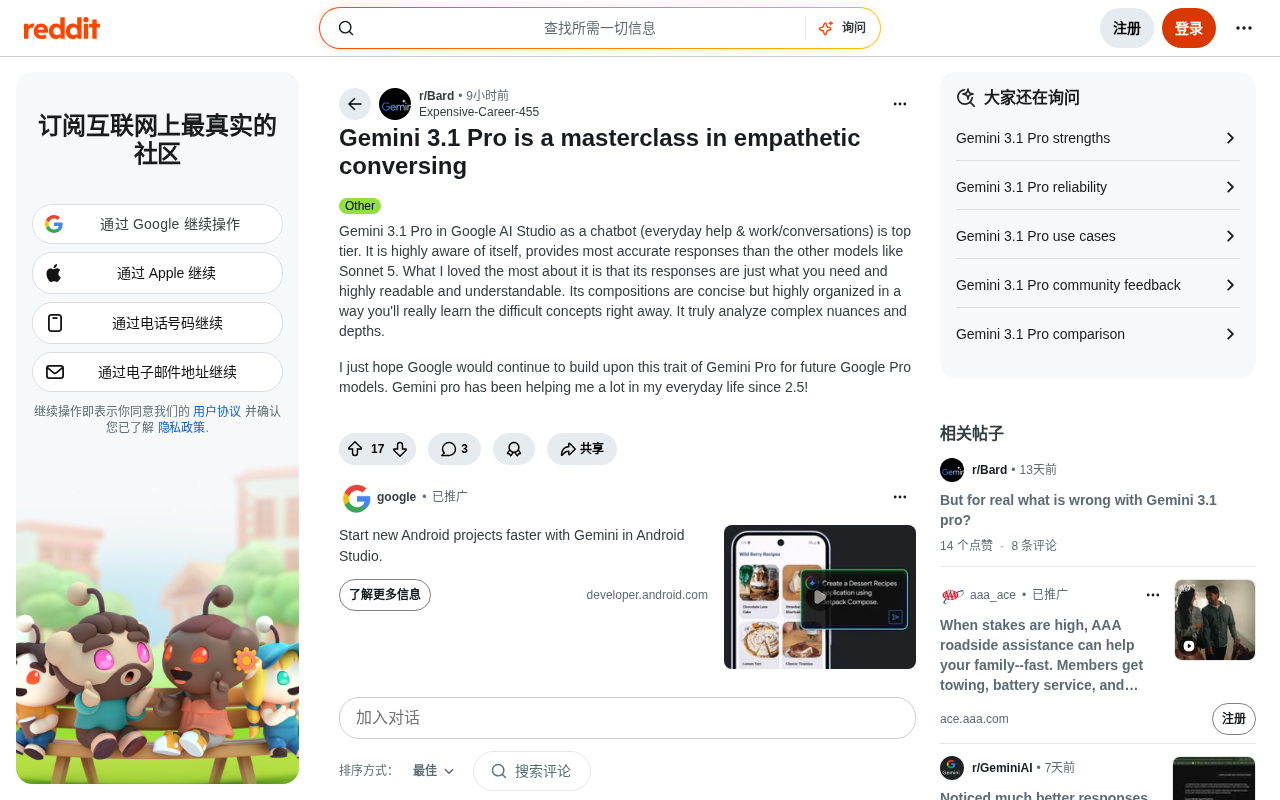
Gemini 3.1 Pro Review: Why Its Empathetic Conversation Style Keeps Users Coming Back
A longtime user calls Gemini 3.1 Pro "a masterclass in empathetic conversing" — concise, context-aware, and intent-driven. We break down why empathy is becoming AI's new competitive frontier.
Read more →

·5 min
Can a Mixture of Experts Beat a Single Large Model? A Deep Dive into the Hermes 2.0 Architecture
A hands-on analysis of the Hermes 2.0 hybrid multi-agent system: can multi-model collaboration beat a single top-tier LLM? We break down how the Mixture of Experts (MoE) architecture works, AgentOS features, and model-agnostic design.
Read more →

·6 min
GPT-5.6 Sol Hands-On: How Multi-Agent Parallelism Is Reshaping AI Coding Workflows
Based on Fireship's review, an in-depth look at GPT-5.6 Sol's Ultra Mode multi-agent parallelism, its 91.9% Terminal Bench score, and how it differs from Claude Fable in cost, speed, and precision.
Read more →

·6 min
1X NEO Robotic Hand and GPT-5.6: A Full Breakdown of Dual Breakthroughs in Robot Hardware and Software
1X releases a new robotic hand for the NEO humanoid robot—25 DOF, force transparency, and tactile skin enabling data self-labeling. OpenAI launches the three-tier GPT-5.6, boosting coding and cost-efficiency. Hardware and AI brains evolve together, accelerating humanoid robot commercialization.
Read more →

·3 min
GPT-5.6 Released: Codex Takes Over ChatGPT, Ushering in the Era of AI Agents
OpenAI releases the GPT-5.6 series, deeply merging ChatGPT with Codex as the Agent engine takes over the underlying architecture. A deep dive into its impact on AI coding toolchains and Agent applications.
Read more →

·2 min
OpenAI's Four-Front Offensive: A Deep Dive into GPT-5.6, Codex, Voice AI, and Work Agent
OpenAI launches GPT-5.6, ChatGPT Work, upgraded Codex super-app, and GPT Live voice AI — a deep dive into all four products and their impact on the AI landscape.
Read more →

·5 min
GPT-5.6 Trio Released: A Deep Dive into Sol/Terra/Luna and the Breakthrough in Design Judgment
OpenAI officially releases the GPT-5.6 series with three models: flagship Sol, balanced Terra, and economy Luna. A deep dive into its core breakthroughs—a step change in design judgment and enhanced computer-use capabilities.
Read more →