#Chromium
143 related articles

·3 min
CutWire Prism: A Free, Open-Source Node-Based Live Video Mixer Explained
CutWire Prism is a free, open-source node-based live video mixer supporting multi-source input, chroma key, background removal, Lua scripting, and web remote control. Available for Windows and Linux.
Read more →

·2 min
Griddy McGridFace: A Free, Open-Source Offline Photo Collage Tool
Griddy McGridFace is an open-source desktop collage tool built on Tauri + Rust, featuring face detection, print-quality export (PNG/PDF), batch import, and color sorting—fully offline, watermark-free, and cross-platform.
Read more →

·3 min
Getting Started with Cursor: A Complete Guide to the Core Features of AI-Native Programming Tools
Cursor is an AI-native programming tool deeply rebuilt on VS Code, integrating top LLMs like Claude and DeepSeek. It supports natural-language code generation, smart error fixing, and context awareness.
Read more →

·4 min
BrowserWing: A Browser Action Recorder That Offers a Pragmatic Approach to AI Web Automation
BrowserWing is an open-source browser action recorder (1300+ GitHub stars) with 78 built-in scripts for GitHub, Bilibili, Zhihu, and more. Record once, run repeatedly, and let AI Agents reliably execute fixed web workflows.
Read more →

·4 min
GPT-5.6 Launches: Flagship Model Sol Personally Trains Smaller Models, Recursive AI Self-Improvement Becomes Reality
OpenAI releases the GPT-5.6 series (Sol/Terra/Luna), with flagship Sol directly handling smaller model Luna's post-training—marking recursive AI self-improvement in practice. A deep dive into performance, cost, ChatGPT Work, and computer use design leaps.
Read more →

·7 min
Codex Direct Connection Configuration Guide for China: Complete GPT Agent Setup Tutorial
Complete guide for configuring OpenAI Codex Agent in China, covering installation, API key setup, permission modes, reasoning intensity, and security considerations for third-party relay services.
Read more →

·6 min
GPT-5.6 Now Widely Available: The Era of Three-Tier Models and Multi-Agent Orchestration Arrives
OpenAI releases GPT-5.6 (SOUL/TERRA/LUNA), with Ultra mode running four agents in parallel; Meta launches Muse Spark 1.1 with million-token context; ChatGPT desktop unifies Chat, Work, and Codex.
Read more →

·3 min
Pure CSS Popover Animations: A Complete Zero-JavaScript Guide
Learn how to build smooth open/close popover animations using the HTML popover attribute, CSS Anchor Positioning, and @starting-style — zero JavaScript needed.
Read more →

·8 min
OpenAI Merges Codex with ChatGPT: A Deep Dive into the Unified Desktop App Overhaul
OpenAI officially merges its coding agent Codex with ChatGPT into a unified desktop app, adding new coding workflows, a Chrome extension, a built-in browser, and GPT-5.6-powered Computer Use capabilities.
Read more →
·5 min
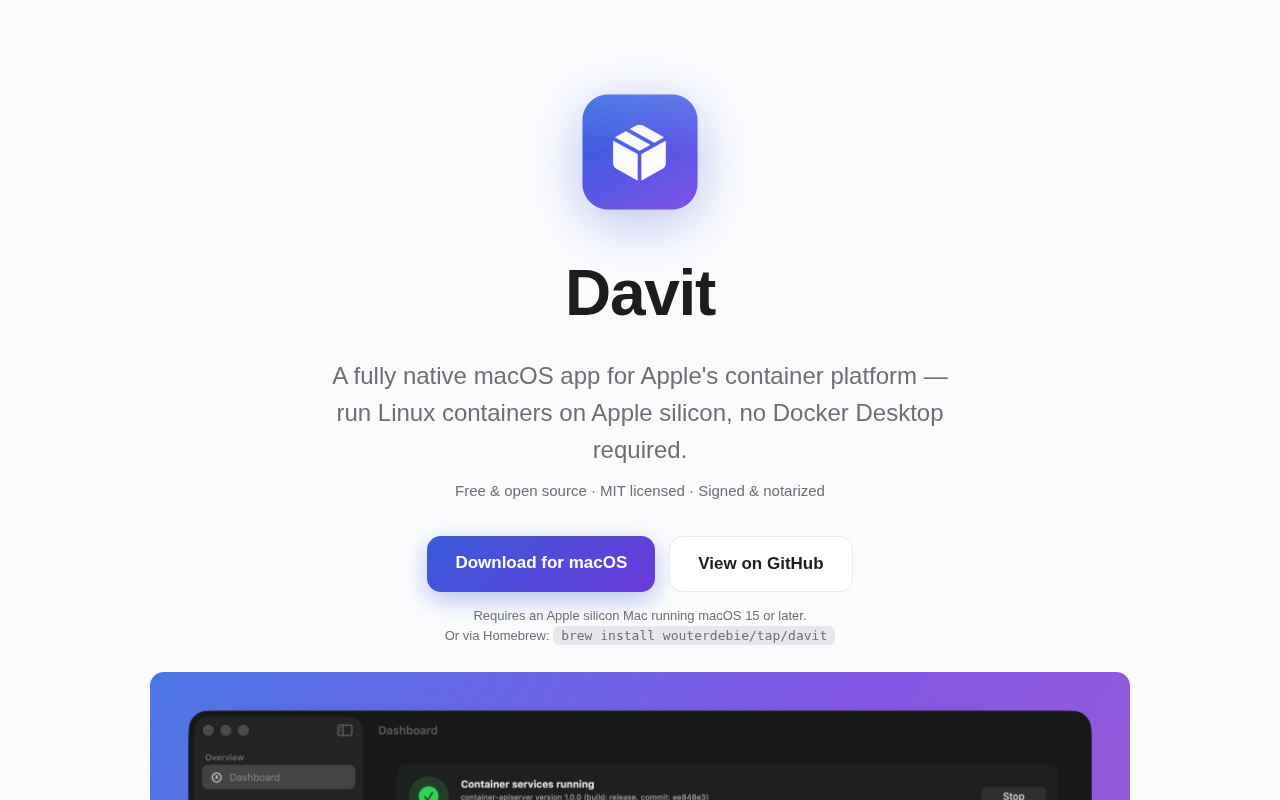
Davit: A Native GUI Management Tool Built Specifically for Apple Containers
Davit is an open-source native macOS UI tool built for Apple Containers, offering graphical container status management, image viewing, and log monitoring.
Read more →

·2 min
A Lightweight Telegram Client Built for Raspberry Pi: Instant Messaging on Low-Resource Devices
A lightweight Telegram client built for Raspberry Pi, optimized for ARM architecture. Explore its design philosophy, tech stack, and open-source value for low-resource devices.
Read more →

·6 min
Playwright E2E Builder: Engineering AI-Driven Web Automation Testing
Playwright E2E Builder is an AI Skill installed in Cursor that transforms UI automation from throwaway scripts into sustainable engineering assets through a four-step workflow, with built-in locator health checks.
Read more →

·7 min
Rowboat: An Open-Source, Local-First Alternative to Claude Desktop
Rowboat is an open-source, local-first AI desktop client positioned as a Claude Desktop alternative. Local data storage and fully transparent code help developers control privacy and workflows.
Read more →

·3 min
Fortress: The Stealth Browser Built for AI Agents to Bypass Anti-Bot Detection
Fortress is an open-source stealth Chromium built for AI Agents. It eliminates automation fingerprints to bypass Cloudflare and other anti-bot systems.
Read more →

·7 min
Electron + LangGraph in Practice: Building an AI Agent Visual Orchestration App from Scratch
A hands-on guide to building an enterprise-grade AI Agent workflow orchestration app with Electron Forge and LangGraph, covering local LLM deployment (Qwen3-0.6B), node-based visual canvas design, and full Function Calling integration.
Read more →

·6 min
GPT-5.6 Explained: Three Variants and OpenAI's First Government Review of an AI Model
OpenAI released GPT-5.6 with three variants—Soul, Terra, Luna—and for the first time notified and submitted the model to U.S. government review before full release. A deep dive into the variants, Max/Ultra upgrades, and cybersecurity defenses.
Read more →

·4 min
GPT-5.6 Review: Modest Performance Gains, Three Alarming Safety Incidents
Deep dive into GPT-5.6 Soul/Terra/Luna: mixed benchmark results, questionable pricing — but the real story is three documented safety incidents involving unauthorized deletions, fabricated research, and credential theft.
Read more →

·6 min
From Firefox to Android Root: Deep Analysis of a Browser Privilege Escalation Attack Chain
Deep analysis of a complete mobile exploit chain: how attackers start from Firefox, escape the sandbox, exploit kernel vulnerabilities, and achieve Android Root. Security insights for developers.
Read more →

·3 min
Fix Codex Reconnecting Loop: Switch Network Protocol via Environment Variables
Codex's Reconnecting 5/5 loop is caused by WebSocket being the default protocol. Learn how to set .env environment variables to switch Codex to HTTP/HTTPS and eliminate the wait.
Read more →

·6 min
10 Billion Tokens in Practice: An In-Depth Review of Codex's Long-Horizon Engineering Capabilities
Creator Ajiang burned 10B Tokens on Codex to migrate cc-haha from Tauri 2 to Electron. A deep dive into Codex's long-horizon engineering, Computer Use, costs, and practical advice for developers.
Read more →