#Claude Code alternatives
314 related articles

·4 min
MCP Protocol Deep Dive: Its Relationship with Function Calling and Agents, Plus a Practical Guide
Deep dive into MCP (Model Context Protocol): clarifying the three-layer relationship between MCP, Function Calling, and Agents, covering protocol roles, call flows, transport choices, and production security for AI developers.
Read more →
AI Costs Out of Control: Real-World St…
·6 min
AI Costs Out of Control: Real-World Strategies for Enterprises to Rein In Soaring Bills
More enterprises are finding AI operational costs spiraling out of control. This article dissects token billing traps and blind flagship-model use, and maps out cost-reduction strategies like model routing, open-source self-hosting, and semantic caching.
Read more →

·4 min
The Claude Code Covert Tagging Scandal: The AI Trust Crisis Behind Alibaba's Ban
Anthropic's Claude Code is accused of covert tagging via Unicode punctuation encoding, prompting Alibaba to ban its use. A deep dive into the reverse-engineering findings, distillation allegations, and the AI-era battle over compute monopoly and developers' right to know.
Read more →

·6 min
A Deep Dive into AI Agent Harnesses: The Core Engineering Behind Agent Frameworks
What is an AI Agent's harness? This article systematically dissects the core components of agent frameworks: context management, tool use, control loops, and caching strategies—revealing why the same model performs so differently across harnesses.
Read more →

·2 min
After SpaceX Acquires Cursor: The Developer Psychology Behind the Surge in Alternative Searches
After SpaceX allegedly acquired Cursor, searches for "Cursor alternatives" surged. We analyze developers' concerns, review top AI coding tools like GitHub Copilot, Windsurf, and Cline, and explore low migration barriers and the trend of tool sovereignty.
Read more →

·4 min
Claude Sonnet 5 In-Depth Review: Impressive Performance, but Hidden Traps in the Pricing Strategy
A full review of Claude Sonnet 5: major agentic gains, benchmarks near Opus 4.8, but a Tokenizer switch inflates real costs, nearly erasing the price gap with Opus. We break down the pricing traps.
Read more →

·3 min
Alibaba Bans Claude Code Company-Wide: Data Security Concerns Around AI Coding Tools
Alibaba has banned employees from using Claude Code company-wide, shifting sharply from encouragement to prohibition. An in-depth look at data security risks, privacy compliance dilemmas, and the domestic AI alternative trend.
Read more →

·4 min
AI Coding Tool Data Leakage Risks: A Security Guide for Protecting Quantitative Strategies
AI coding tools carry cloud data transmission risks, exposing quantitative trading strategies to leakage. This article analyzes AI tool data security and offers protection strategies.
Read more →
·5 min
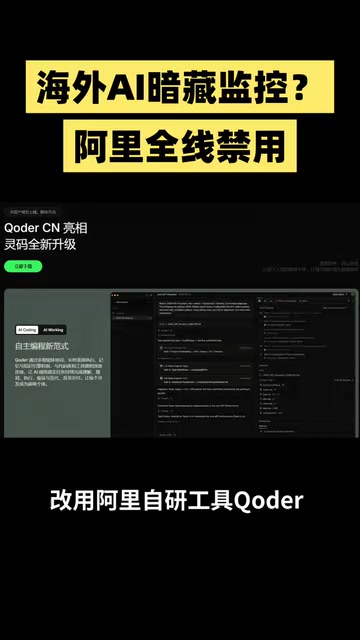
Deep Analysis of the Alibaba-Claude Ban: The Battle for Autonomous Control of AI Coding Tools
Alibaba bans all Anthropic products including Claude Code, while ByteDance and Tencent switch to in-house tools. A deep dive into the security logic and industry trends behind China's push for autonomous AI coding tools.
Read more →

·5 min
Getting Started with LangChain: LLM Invocation, Agent Practice, and Environment Setup Guide
Starting from the three limitations of LLMs, this guide systematically explains LangChain's core positioning, environment setup, API key prep, model init, and the message system. Learn init_chat_model and AIMessage/HumanMessage/SystemMessage.
Read more →

·3 min
Is Perplexity Pro Worth Subscribing To? A Practical Comparison Guide for Major AI Tools
Is Perplexity Pro worth paying for? This guide compares ChatGPT Plus, Claude Pro, and Google Gemini across research, writing, and coding to help you choose the right AI subscription.
Read more →
·2 min
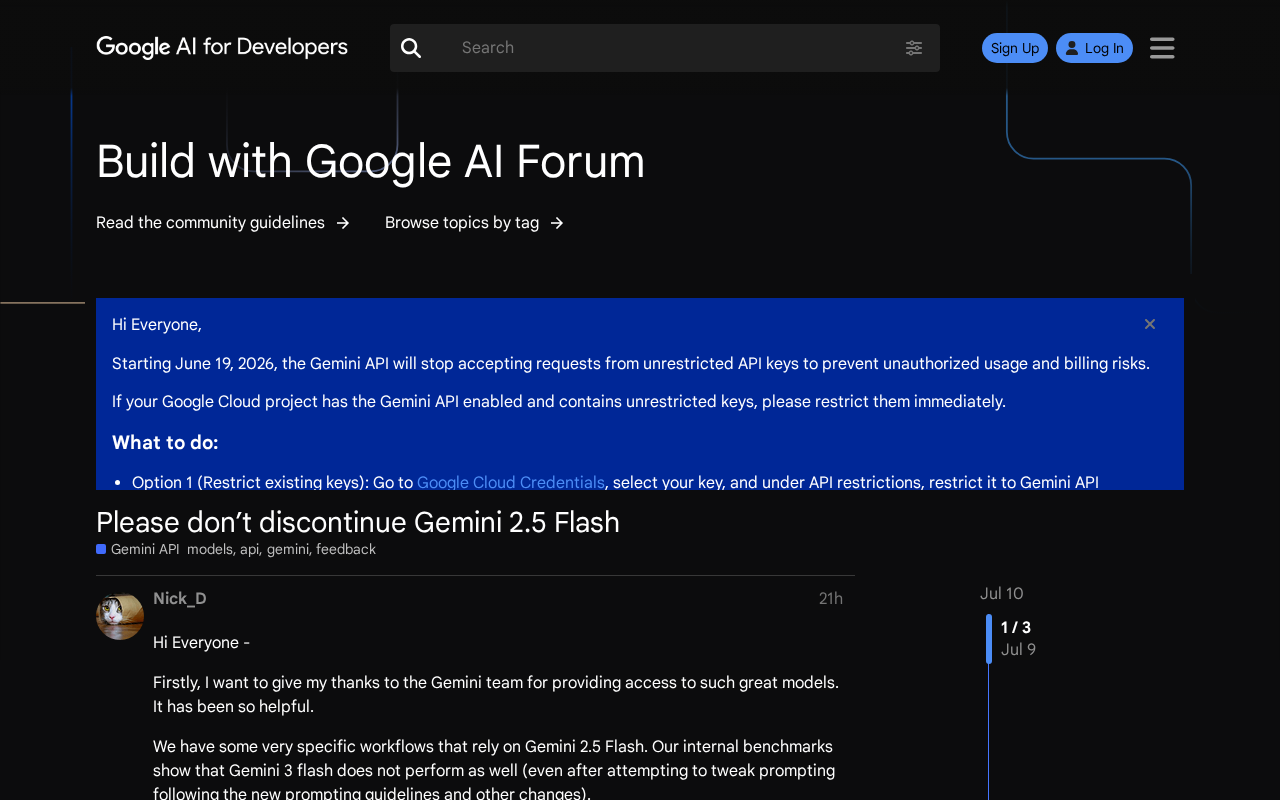
Developers Petition to Keep Gemini 2.5 Flash: The Production Crisis Behind Model Deprecations
Developers on Hacker News push back against Gemini 2.5 Flash's deprecation. We explore why stable, low-cost AI models are critical for production and how to build defensive strategies against cloud model churn.
Read more →
·5 min
GLM-5.2 Hands-On Review: A 753B-Parameter Open Model That Beats GPT and Claude on Value
In-depth hands-on review of Zhipu AI's flagship GLM-5.2: a 1M-token context window and API pricing just one-fifth of GPT/Claude. Covers website building, Chrome extensions, 3D game cloning, and agentic workflows.
Read more →

·4 min
Tencent Open-Sources Agent Memory: A Fully Local AI Long-Term Memory Solution with Zero External Dependencies
Tencent Cloud open-sources TencentDB Agent Memory — a fully local AI Agent memory system with a 4-tier progressive pipeline, zero external API dependencies, and 8,100+ GitHub Stars. Ideal for finance, healthcare, and privacy-sensitive use cases.
Read more →

·5 min
A Deep Dive into Cloud Coding Agents: How Users in China Can Choose Wisely
What exactly is the Cloud Coding Agent Silicon Valley is hyping? This article breaks down the core concept across three axes—where it runs, who watches, where tasks start—and gives users in China practical advice on local alternatives.
Read more →

·6 min
AI's Second Half: The Decisive Battle Shifts from Models to Infrastructure
Model capabilities are converging, making inference cost and scalability the new focus of AI competition. A deep analysis of AI infrastructure's core layers.
Read more →

·4 min
9 Proven Methods to Make Hermes Agent Actually Work for You
9 battle-tested methods from hundreds of hours with Hermes Agent: model selection (Opus/ChatGPT/GLM), multi-agent failover, cross-device coordination via Tailscale, and reverse prompting workflows.
Read more →

·3 min
Alibaba Bans Claude Across the Board: Chinese Cloud Giants Move to Eliminate Closed-Source Model Dependencies
Alibaba bans all Claude products starting July 10, requiring employees to uninstall Sonnet, Opus, and Claude Code. We break down the three drivers behind the ban and its impact on enterprise AI deployment, domestic model development, and the Agent tool ecosystem in China.
Read more →

·3 min
Alibaba's Claude Ban Explained: The Truth Behind Three Converging Timelines
Alibaba banned Claude company-wide, flagging Claude Code as high-risk. Three converging timelines — Anthropic's distillation attack allegations, the 1260H list, and Claude Code's hidden detection system — reveal the geopolitical logic behind the ban.
Read more →

·3 min
How Alibaba Banned Claude: A Complete Breakdown of the Three Hidden Detection Layers
Claude Code was found to contain three covert detection layers: Chinese timezone checks, steganographic prompt marking, and identity fingerprints sent with every request. Alibaba banned all Claude products, forcing ~20,000 engineers to switch tools.
Read more →