#Claude interview practice
145 related articles

·3 min
LangChain 1.3 in Practice: A Complete Technical Guide from LLMs to DeepAgent
An in-depth analysis of the core knowledge system of LangChain 1.3, covering the Harness architecture philosophy, DeepAgent positioning, LangGraph fundamentals, Agent memory, and human-in-the-loop.
Read more →

·3 min
Langchain.js Agent Development: A Guide to Deconstructing the OpenClaw Engine Architecture
An in-depth analysis of AI agent development based on Langchain.js—comparing workflow agents and Agent Loops, deconstructing the TypeScript implementation path of an OpenClaw-like engine, covering structured output, MCP, and LangGraph.
Read more →
·6 min
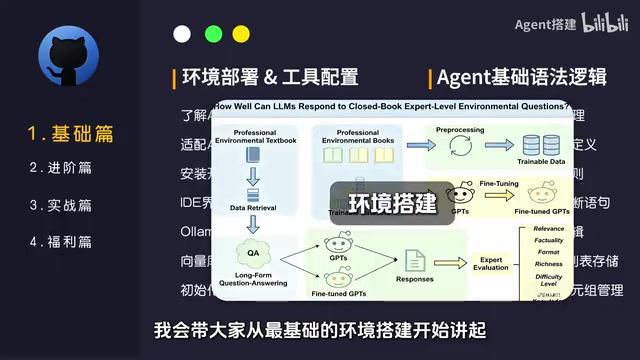
AI Agent Development Learning Path: Four Stages from Zero to Hands-On Projects
A systematic breakdown of the AI agent development learning path, covering four stages: fundamentals, RAG knowledge bases, tool use, multi-agent collaboration, and hands-on projects.
Read more →

·5 min
The Complete Guide to Building an AI-Powered Second Brain with Obsidian + Hermes Agent
An in-depth guide to building an AI-driven second brain with Obsidian + Hermes Agent. Covers living files, VPS deployment, core memory mechanisms, and skill visualization.
Read more →

·5 min
Building DeepSeek Agents and Knowledge Bases from Scratch: A Practical Guide to Commercial Deployment
A systematic guide to the full DeepSeek Agent development process: covering prompt engineering, the ReAct framework, workflow orchestration, local deployment, and business requirement breakdown for commercial-ready AI Agents.
Read more →

·3 min
Hermes Agent for Kubernetes Cluster Management: AIOps Tool Selection and Cost Analysis
An in-depth review of managing Kubernetes clusters with Hermes Agent, covering K8S AIOps tool evolution, the truth about Token costs, and a three-level AI operations framework.
Read more →

·5 min
From Large Models to AI Agents: A Complete Analysis of the Four Evolutionary Stages and Four Major Commercial Tracks
Prompt engineering and RAG can no longer meet enterprise digital transformation needs—AI Agents are the key. This article breaks down the four evolutionary stages of large model deployment and the four major Agent commercial tracks.
Read more →

·6 min
Zuckerberg Admits AI Progress Falls Short of Expectations: The Industry Truth Behind the Layoffs
Meta laid off 8,000 to bet on AI, yet Zuckerberg admits AI agents fell short of expectations. A look at the collective 'AI reflection' among OpenAI, Microsoft, and Google, plus research on AI's selective impact on jobs.
Read more →

·4 min
Landing an Amazon AI/ML Internship Without On-Campus Recruiting: A Complete Preparation Guide
No Amazon on-campus recruiting? This guide details the off-campus path for CS students: DSA practice strategy, ML/LLM skill-building, portfolio creation, resume optimization, and referral tips.
Read more →

·4 min
AI Agent Learning Roadmap: From Zero to Real-World Projects
A complete AI Agent learning roadmap covering agent principles, prompt engineering, RAG, multi-agent systems, and hands-on projects — from zero to real-world deployment.
Read more →

·3 min
From Raw LLMs to Agents: A Complete Guide to Enterprise-Grade AI Development
Prompt engineering and RAG are just the basics. Real enterprise AI runs on Agents. Explore the 4 stages of LLM deployment, Agent core capabilities, and industry trends.
Read more →
·6 min
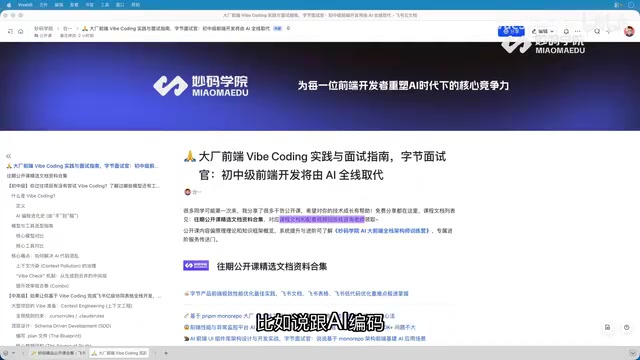
Vibe Coding in Practice at Big Tech: How Frontend Engineers Can Avoid Being Replaced in the AI Era
A big-tech interviewer reveals: junior/mid frontend dev is being replaced by AI. This article breaks down 3 core Vibe Coding interview questions to help you master key skills for the AI-assisted coding era.
Read more →

·4 min
9 Proven Methods to Make Hermes Agent Actually Work for You
9 battle-tested methods from hundreds of hours with Hermes Agent: model selection (Opus/ChatGPT/GLM), multi-agent failover, cross-device coordination via Tailscale, and reverse prompting workflows.
Read more →

·5 min
The Complete Guide to Claude Skills: Configure Once, Reuse Your Workflow Forever
An in-depth guide to Claude Skills: from built-in skills and plugins to building your own custom skills and continuous refinement. Learn to end repetitive instructions and build an automated, consistent AI workflow.
Read more →

·6 min
Skill vs MCP: The Essential Difference Between Two Types of AI Agent Capabilities and How They Work Together
Skill and MCP are two core concepts for building AI Agents. Skill encapsulates task execution methodology, while MCP provides a standardized protocol for connecting external tools. This article breaks down their core differences, abstraction levels, and collaboration.
Read more →

·7 min
6 Core Standards of a High-Value Agent Project That Impress Interviewers
Most Agent projects lack competitiveness in interviews due to missing business value and engineering depth. This article breaks down the 6 core standards of high-value Agent projects.
Read more →

·4 min
Career Switch to LLM Development: A Four-Level Skill Progression Roadmap
Want to switch careers into LLM development but don't know where to start? This guide breaks down a four-level skill roadmap — from basics and API calls to RAG, fine-tuning, Agent development, and multimodal — to help you build real AI career value.
Read more →
·7 min
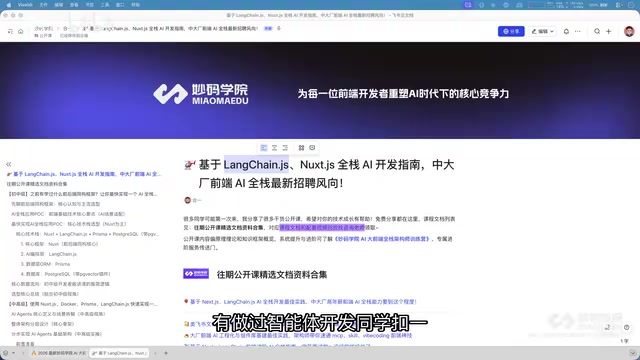
LangChain.js + Nuxt.js: An AI Full-Stack Advancement Path for Frontend Engineers
Frontend hiring now treats AI capabilities as a core assessment, covering RAG knowledge bases, AI Agent development, and LangChain.js engineering. Learn how LangChain.js + Nuxt.js helps frontend developers build memory- and retrieval-capable AI full-stack apps.
Read more →

·6 min
From Frontend Engineer to AI Agent Developer: A Complete High-Paying Skill Tree Breakdown
Pure frontend roles are shrinking; AI Agent development is the high-salary divide. This guide breaks down the full skill tree for frontend engineers pivoting to AI: TypeScript, frameworks, AI productivity, and Agent core concepts (MCP, Tool Calling, Skill).
Read more →

·4 min
Building an AI Agent Framework from Scratch: Deep Dive into Tool Calling, Memory, and Dual-Model Scheduling
Build an AI Agent from scratch — no frameworks. Deep dive into Function Call schema design, MCP remote mirroring, dual-model routing, and short-term memory management.
Read more →