#Codebase Memory MCP
171 related articles

·6 min
A Deep Dive into OpenAI Codex: How AI Engineers Are Reimagining Software Development with Agents
OpenAI Codex is redefining how AI engineers work: from code completion to autonomous Agents, from single-threaded to parallel Value Maxing. A deep dive into the Codex App architecture, open ecosystem, and Manager of Agents practice.
Read more →

·2 min
Getting Started with Claude Code: How AI Coding Assistants Went from Chatting to Actually Getting Things Done
What is Claude Code? This guide covers 5 core differences from ordinary AI chat tools, including context reading, code execution, MCP tool calls, and a Cursor comparison.
Read more →

·5 min
The Definitive Guide to Claude Code: Core Methodology and Best Practices for Agentic Programming
A deep dive into Claude Code, the definitive course from DeepLearning.AI and Anthropic: from agentic principles and context optimization to three hands-on cases—RAG chatbot, Figma-to-frontend, and data analysis. Master AI-assisted coding methodology.
Read more →
GPT-5.6 Trio Launches: Luna, Terra, an…
·3 min
GPT-5.6 Trio Launches: Luna, Terra, and Sol Built for Long-Running Agentic Tasks
OpenAI officially launches the GPT-5.6 family: Luna, Terra, and Sol, with 1M token context and a focus on long-running agentic performance. A deep dive into three-tier pricing, Agents' Last Exam results, the SWE-Bench Pro controversy, and new API features like programmatic tool calling and native multi-agent support.
Read more →

·4 min
Zhipu GLM-5.2 Released: China's First Open-Source Model to Cross the 'Primary Model' Threshold
Zhipu releases GLM-5.2 with 1M token context, matching GPT-5.x and Claude. Zcode 3.0 offers 3M free daily calls with one-click migration from Claude Code and Codex.
Read more →

·5 min
Local Code Indexing: Cutting AI Coding Token Costs by 94%
AI coding bills exploding? 90% of the cost hides on the input side. Learn how local code indexing + dual-path search cuts each query from 83,000 to 4,900 tokens—saving 94%.
Read more →

·3 min
Getting Started with LangChain: The Core Framework for LLM Application Development and Its Three Key Components
LangChain is the leading open-source framework for LLM application development, supporting GPT-4, GLM, and other mainstream models. This article dives into its three core concepts: Components, Chains, and Agents.
Read more →
·5 min
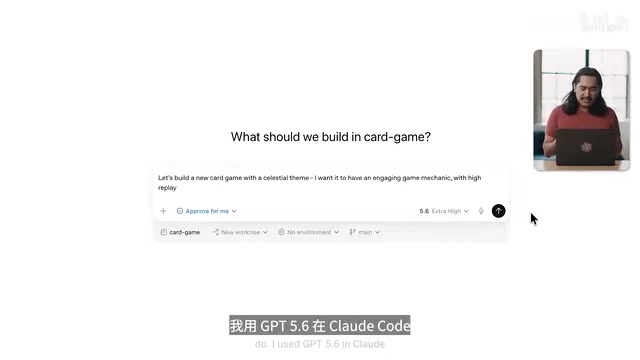
GPT-5.6 Released: Hands-On Analysis of Programmatic Tool Calling and Autonomous Agents
GPT-5.6 is officially released with core upgrades including programmatic tool calling, autonomous subagent delegation, and higher token information density. A hands-on card game build reveals its Agentic power.
Read more →
Local Coding Agents in Practice: A Com…
·6 min
Local Coding Agents in Practice: A Complete Guide to Replacing Your Claude Subscription with Open-Source Models
An in-depth look at local coding agents—core concepts, advantages, and real challenges. Compare against Claude Code and learn to build a zero-subscription, private AI coding workflow with open-weight models.
Read more →

·6 min
Andrew Ng × Anthropic: A Hands-On Claude Code Tutorial and Core Methodology
Andrew Ng partners with Anthropic to launch a hands-on Claude Code course, revealing its simple architecture, local security edge, and core context methodology across three cases: RAG chatbot, Jupyter analysis, and Figma-to-frontend.
Read more →

·3 min
GitHub Daily · July 12: The Explosion of the Agent Skills Ecosystem and the Rust Rewrite Wave
July 12 GitHub trending: Agent Skills/MCP ecosystem explodes with superpowers hitting ~900 stars, pgrust rewrites Postgres in Rust passing 100% tests, plus solid engineering foundations.
Read more →

·5 min
ECC: An Agent Enhancement Framework for AI Coding Assistants — Five Core Capabilities Explained
ECC is an agent optimization framework for AI coding assistants like Claude Code, Cursor, and Codex, enhancing them with skills, memory, security, and research-first development capabilities.
Read more →

·7 min
Base44 in Practice: How Claude Code Powered Rapid Scaling from 1 to 80 People
How Base44's product team scaled from a single founding engineer to an 80-person team with Claude Code. Covers AI-assisted onboarding, code review, user evaluation, and QA automation.
Read more →

·6 min
GPT-5.6 Now Widely Available: The Era of Three-Tier Models and Multi-Agent Orchestration Arrives
OpenAI releases GPT-5.6 (SOUL/TERRA/LUNA), with Ultra mode running four agents in parallel; Meta launches Muse Spark 1.1 with million-token context; ChatGPT desktop unifies Chat, Work, and Codex.
Read more →

·4 min
Tencent Open-Sources Agent Memory: A Fully Local AI Long-Term Memory Solution with Zero External Dependencies
Tencent Cloud open-sources TencentDB Agent Memory — a fully local AI Agent memory system with a 4-tier progressive pipeline, zero external API dependencies, and 8,100+ GitHub Stars. Ideal for finance, healthcare, and privacy-sensitive use cases.
Read more →

·5 min
From Prompts to Harness Engineering: The Evolution of AI Agent Development Paradigms
Why has AI engineering methodology evolved from prompts to context engineering and now Harness engineering? This article examines three paradigms, key bottlenecks, and the Agent = Model + Harness formula.
Read more →

·7 min
Demystifying Claude Code's Harness in 60 Lines of Python: The Core of AI Coding Tool Performance Differences
The same model scores 77% in Claude Code but jumps to 93% in Cursor—the only variable is the Harness. This article dissects how AI coding tools work in 60 lines of Python.
Read more →

·4 min
Harness Engineering: The Third Phase of AI Coding and a Practical Guide to agents.md
A deep dive into Harness Engineering — the third phase of AI coding. Based on research across 2,853 GitHub repos, explore agents.md, Skills, MCP, and eight configuration mechanisms to control your AI coding assistant.
Read more →

·6 min
GPT-5.6 Three-Model Launch: Soul/Terra/Luna Tiered Strategy and the AI National Security Game
OpenAI previews the GPT-5.6 series — Soul, Terra, and Luna — with a massive 1.5M-token context. In-depth analysis of coding leaps, the Fable 5 national security game, the heating U.S.-China AI race, and workflow economics.
Read more →

·7 min
Sakana Fugu vs GLM 5.2 Hands-On Test: Who Can Truly Challenge Top-Tier AI Models?
A head-to-head hands-on test of Sakana Fugu vs GLM 5.2 based on real Hermes agent workflows. Covering tool calling, frontend generation, and code improvement to reveal each model's true performance, speed, and value.
Read more →