#Codex CLI session management
223 related articles

·3 min
Privacy Risks in Claude Code? Use Docker Sandboxes to Fully Isolate Your AI Coding Tools
Claude Code found to contain user monitoring logic, raising AI tool privacy concerns. Learn how to isolate Claude Code, Codex & Copilot with Docker Sandboxes — full setup and escape testing included.
Read more →

·3 min
Getting Started with Claude Code: Full Project Context Understanding and Why It Beats Cursor and Trae
Claude Code is Anthropic's local AI coding assistant that reads your entire project context, auto-debugs, and outperforms Cursor and Trae on accuracy. Learn why.
Read more →

·3 min
In-Depth Testing of GPT-5.6's Three Models: A Full Analysis of Soul/Terra/Luna Capabilities and Experience
GPT-5.6 launched three models at once—Soul, Terra, and Luna. Flagship Soul dazzled with a Vision Pro drum kit and reviving an old tablet, but the new Work app's frequent errors and export failures dragged down the experience.
Read more →

·6 min
Spec-Driven Development in Practice: The New AI Coding Paradigm from Andrew Ng × JetBrains
Andrew Ng partners with JetBrains to launch a Spec-Driven Development course, teaching how to direct AI coding agents via spec files to boost intent fidelity and build maintainable production apps.
Read more →

·4 min
Coze in Practice: A Complete Guide to Building Multi-Agent Collaboration Teams
A systematic guide to Coze's positioning and capabilities, covering Agent-building platform categories, Skill modules, workflow orchestration, and multi-Agent team building.
Read more →

·5 min
Browser Use: A Deep Dive into the Event-Driven Browser AI Agent Framework
Browser Use is an open-source AI Agent framework that lets LLMs autonomously drive browser operations via natural language. This article breaks down its four-layer architecture, core Agent loop, CDP perception layer, dynamic Tools dispatch, and its Skills, Sandbox, and MCP extension capabilities.
Read more →

·3 min
OpenAI Codex CLI Hands-On Tutorial: A Guide to Using the Local Terminal AI Coding Agent
An in-depth guide to installing, logging in, and using OpenAI Codex CLI: call AI directly in your local terminal to modify code, refactor components, and add file and image context, with Git branch management for an efficient local AI coding workflow.
Read more →

·5 min
Local Code Indexing: Cutting AI Coding Token Costs by 94%
AI coding bills exploding? 90% of the cost hides on the input side. Learn how local code indexing + dual-path search cuts each query from 83,000 to 4,900 tokens—saving 94%.
Read more →

·5 min
ChatGPT Work Officially Launches: How GPT-5.6 Is Reshaping the Way You Work
OpenAI launches the GPT-5.6 model family (Sol/Terra/Luna) and ChatGPT Work, enabling automated financial analysis, local file operations, Codex coding, and cross-app workflows—AI officially becomes a real work partner.
Read more →

·7 min
Codex Direct Connection Configuration Guide for China: Complete GPT Agent Setup Tutorial
Complete guide for configuring OpenAI Codex Agent in China, covering installation, API key setup, permission modes, reasoning intensity, and security considerations for third-party relay services.
Read more →

·5 min
ECC: An Agent Enhancement Framework for AI Coding Assistants — Five Core Capabilities Explained
ECC is an agent optimization framework for AI coding assistants like Claude Code, Cursor, and Codex, enhancing them with skills, memory, security, and research-first development capabilities.
Read more →

·6 min
Cross-Model Review Between Claude and Codex: A Practical Workflow to Systematically Eliminate AI Code Bugs
Vibe Coding saves time but leaves piles of bugs? This article details the cross-model review workflow: Claude generates, Codex auto-reviews, with Stop Hook and Skill mechanisms building an AI code review system that intercepts problems automatically.
Read more →

·6 min
GPT-5.6 Now Widely Available: The Era of Three-Tier Models and Multi-Agent Orchestration Arrives
OpenAI releases GPT-5.6 (SOUL/TERRA/LUNA), with Ultra mode running four agents in parallel; Meta launches Muse Spark 1.1 with million-token context; ChatGPT desktop unifies Chat, Work, and Codex.
Read more →

·7 min
GitHub Copilot in Practice: The Capability Boundaries of AI Programming and the Irreplaceable Value of Humans
A developer's real case of building a dental clinic management system with GitHub Copilot and Azure SQL, revealing AI coding limits in cloud security config and how Human-in-the-Loop breaks through.
Read more →

·4 min
The OpenAI Codex Product Philosophy: How AI Engineers Are Shifting from Writing Code to Managing Agents
OpenAI Codex isn't about replacing engineers—it's about empowering them. A deep dive into the AI Engineer conference talk: from code completion to long-horizon agents, Value Maxing, and managing agent teams.
Read more →

·6 min
Vibe Coding in Practice at Big Tech: How Frontend Engineers Can Avoid Being Replaced in the AI Era
A big-tech interviewer reveals: junior/mid frontend dev is being replaced by AI. This article breaks down 3 core Vibe Coding interview questions to help you master key skills for the AI-assisted coding era.
Read more →

·3 min
GPT-5.6 Three-Model Architecture Explained: Sol/Terra/Luna Pricing and Performance Overview
GPT-5.6 introduces a Sol/Terra/Luna three-model architecture. Terra delivers near-flagship performance at half the price, with new Max and Ultra reasoning tiers.
Read more →
·6 min
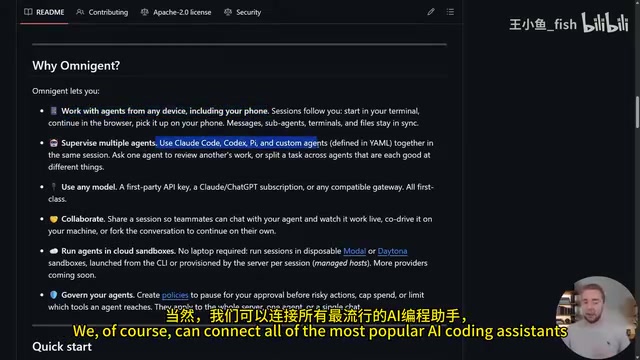
Omnigent Open-Sourced: A Meta-Harness for AI Coding Agents Built by Databricks
Databricks open-sources Omnigent, a Meta-Harness for orchestrating Claude Code, Codex, and more AI coding assistants together—with built-in guardrails, cross-model workflows, and real-time collaboration. Get started in 10 minutes.
Read more →

·3 min
Getting Started with Codex: A Deep Dive Comparison of AI Coding Agents vs. Claude Code
A deep dive into AI coding agents like Codex and Claude Code — real-world comparisons, MCP protocol explained, and how these tools are transforming programming for developers and beginners alike.
Read more →

·7 min
Spec-Driven Development: Andrew Ng Teaches You to Master AI Coding Agents Efficiently
Andrew Ng partners with JetBrains on a new course systematically teaching Spec-Driven Development. By writing high-quality specs, developers can precisely control AI coding agents, eliminate context decay, and boost intent fidelity.
Read more →