#Codex CLI setup
275 related articles

·4 min
Hands-On with GPT-5.6: A Single Prompt Builds a Real-Time Voice Anime App
Hands-on with GPT-5.6 Sol: auto-generate real-time voice anime characters from one prompt, write physics engines from scratch, and build unfamiliar toolchains autonomously. In-depth review of coding, agentic tasks, benchmarks, and its hallucination weakness.
Read more →

·5 min
Maximizing Codex Weekly Quota: A Complete Guide to Goal Commands and Long-Running Agent Configuration
Master Codex's Goal command mechanism. Use five standard project settings—agents.md, context.md, active-context and more—to solve context forgetting and hallucination in long-running Agents and maximize your weekly quota.
Read more →

·5 min
The Complete Guide to Building an AI-Powered Second Brain with Obsidian + Hermes Agent
An in-depth guide to building an AI-driven second brain with Obsidian + Hermes Agent. Covers living files, VPS deployment, core memory mechanisms, and skill visualization.
Read more →

·2 min
Local AI Agent Reads arXiv So You Don't Have To: Only the Papers That Actually Matter
Research Radar is an open-source local AI agent that fetches arXiv papers daily, scores and filters them in batches, deep-reads summaries, and pushes truly relevant content via Telegram. Supports local models, keeps data on your machine, free and self-hostable.
Read more →

·5 min
ChatGPT Work Officially Launches: How GPT-5.6 Is Reshaping the Way You Work
OpenAI launches the GPT-5.6 model family (Sol/Terra/Luna) and ChatGPT Work, enabling automated financial analysis, local file operations, Codex coding, and cross-app workflows—AI officially becomes a real work partner.
Read more →

·3 min
OpenAI Codex in the Cloud: Exploring Codebases, Auto-Coding, and Generating PRs End-to-End
A deep dive into OpenAI Codex's cloud workflow: using a Next.js project to demo Ask/Code modes, auto-generating Pull Requests, and locally verifying merges for AI-assisted development.
Read more →

·7 min
Codex Direct Connection Configuration Guide for China: Complete GPT Agent Setup Tutorial
Complete guide for configuring OpenAI Codex Agent in China, covering installation, API key setup, permission modes, reasoning intensity, and security considerations for third-party relay services.
Read more →
·6 min
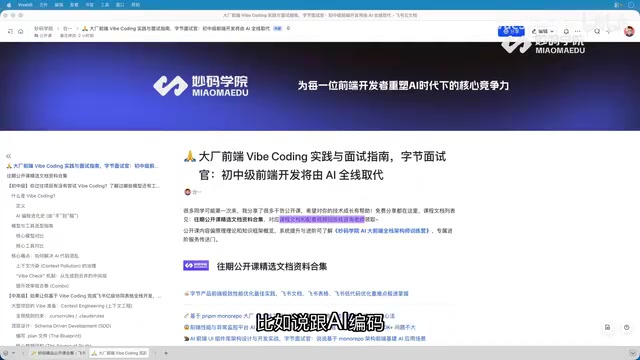
Vibe Coding in Practice at Big Tech: How Frontend Engineers Can Avoid Being Replaced in the AI Era
A big-tech interviewer reveals: junior/mid frontend dev is being replaced by AI. This article breaks down 3 core Vibe Coding interview questions to help you master key skills for the AI-assisted coding era.
Read more →
·6 min
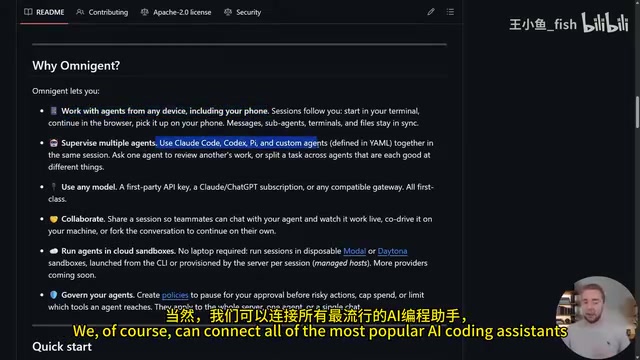
Omnigent Open-Sourced: A Meta-Harness for AI Coding Agents Built by Databricks
Databricks open-sources Omnigent, a Meta-Harness for orchestrating Claude Code, Codex, and more AI coding assistants together—with built-in guardrails, cross-model workflows, and real-time collaboration. Get started in 10 minutes.
Read more →

·5 min
The Complete Guide to Claude Skills: Configure Once, Reuse Your Workflow Forever
An in-depth guide to Claude Skills: from built-in skills and plugins to building your own custom skills and continuous refinement. Learn to end repetitive instructions and build an automated, consistent AI workflow.
Read more →

·3 min
Getting Started with Codex: A Deep Dive Comparison of AI Coding Agents vs. Claude Code
A deep dive into AI coding agents like Codex and Claude Code — real-world comparisons, MCP protocol explained, and how these tools are transforming programming for developers and beginners alike.
Read more →

·6 min
Codex China Direct Access Tutorial: Guide to Using DeepSeek as a ChatGPT Replacement
Use Codex without a ChatGPT account! This guide explains a China direct access solution for integrating the DeepSeek API via the Codex++ management tool.
Read more →

·4 min
How to Use Codex in China Without a ChatGPT Account: A Complete Guide with DeepSeek
No ChatGPT account? No problem. Learn how to configure DeepSeek API with Codex++ to use Codex in China — full setup guide, API key steps, and model switching included.
Read more →

·7 min
The Complete Codex Guide: From Installation to Real-World Practice
Master OpenAI Codex fast, even from scratch! Learn Codex vs ChatGPT differences, four versions, interface tips, plugins & skills, browser automation, plus six best practices.
Read more →

·3 min
AI + Python Reimagines Empirical Research: From Stata to Fully Automated Paper Generation
A PKU-Stanford trainer breaks down how Python surpasses Stata and R, how AI-driven Skills and Paper Workflow automate empirical research from data to LaTeX paper drafts.
Read more →

·4 min
How to Connect DeepSeek to Codex: A Complete Guide (No ChatGPT Account Needed)
No ChatGPT Plus account? Use the Codex++ management tool to connect DeepSeek to Codex in 5 steps. Top up ¥10 and experience AI agent control of your computer with detailed setup guide.
Read more →

·7 min
The Complete Guide to OpenCode: Installing, Configuring, and Using the Terminal AI Coding Assistant
An in-depth guide to installing, configuring, and extending OpenCode, the terminal AI coding assistant. Covers desktop and WSL installation, model config, MCP integration, and custom Agents.
Read more →

·6 min
herder: A Terminal Multiplexer for Multiple Coding Agents — Say Goodbye to Session Management Chaos
herder is a terminal multiplexer for coding agents like Claude Code and Codex, combining tmux power with mouse support, agent state awareness, and session persistence for efficient multi-agent workflows.
Read more →

·6 min
Playwright's Three Test Agents: A Deep Dive into Planner, Generator, and Healer
Playwright's three new Test Agents—Planner, Generator, and Healer—cover the full pipeline from test design to script generation and auto-repair, integrated with VS Code, Claude Code, and more.
Read more →

·5 min
UE5.8 + Claude Code: A Complete Guide to AI Agents Directly Controlling Unreal Engine
UE5.8's official MCP plugin enables Claude Code and other AI Agents to directly control Blueprints, PCG graphs, materials, and level design. Complete setup and testing guide included.
Read more →