#GitHub webhook
90 related articles

·4 min
Self-Healing Agent Loops: Using AI to Automatically Discover and Fix Programming Language Bugs
How Boundary built a self-healing AI Agent loop that automatically writes BAML code, discovers bugs, and generates fix PRs — a practical software factory with deduplication, human-in-the-loop leverage points, and extensible multi-loop design.
Read more →
DocuSeal: An Open-Source DocuSign Alte…
·2 min
DocuSeal: An Open-Source DocuSign Alternative — A Deep Dive into Self-Hosted E-Signature
DocuSeal is an open-source, self-hosted e-signature tool built with Ruby — a strong DocuSign alternative. Learn its features, architecture, and deployment options.
Read more →

·3 min
n8n Automated AI Video Generation Pipeline: From Prompts to Batch Output — Complete Guide
A complete guide to n8n AI video generation automation: LLM-structured prompts, batch reference images, async video polling, and Google Sheets cost tracking — triggered by a single Webhook.
Read more →

·2 min
QuantaMind: An Open-Source Tool for Testing AI Agent Reliability Locally
QuantaMind is a free, open-source local AI Agent reliability testing tool using pass^k scoring and deterministic evaluation, supporting Ollama, llama.cpp, vLLM, and more.
Read more →

·3 min
Claude Code for Test Engineers: 8 Practical Tips to Genuinely Boost Testing Efficiency
How can test engineers truly boost productivity with Claude Code? This guide covers test Skills, Hooks automation, MCP integration, and two hands-on cases you can use today.
Read more →

·4 min
AI Agents Powering the Full Research Pipeline: A Practical Guide to Automation from Topic Selection to Publication
Learn how to use AI Agents to link the entire research pipeline—from literature management, data analysis, and paper writing to scientific illustration and dissemination—building a reusable research automation workflow with NotebookLM, N8N, and Ollama.
Read more →

·4 min
4 Skills to Completely Transform Claude Code: Say Goodbye to Token Waste and Cut Daily Coding to 2 Hours
Does Claude Code always give irrelevant answers? This article breaks down 4 core Skill plugins: Project Context Engine, PRD Requirements Translator, Code Review tool, and Daily Report Generator—showing you how to transform Claude Code from a money-burner into a true AI coding assistant.
Read more →

·2 min
Zero-Cost Multi-Agent AI System: A Complete Breakdown of the Free-Tier Build
A CS student built a multi-agent AI system with memory, 8 sub-agents, and real-time web research using only free infrastructure like Cloudflare Workers and GitHub Actions. Full breakdown inside.
Read more →

·7 min
ManagedAgents.sh: A Deep Dive into the Model-Agnostic Open-Source Managed Agent Platform
ManagedAgents.sh is a model-agnostic managed agent platform from OpenComputer, supporting Claude, Pi, and Codex runtimes with Slack and GitHub integration.
Read more →

·6 min
From Video to Notes to Knowledge Base: A Practical Guide to AI-Assisted Learning Workflows
A complete AI learning workflow: batch download videos, auto-transcribe, generate structured notes with AI, then build intelligent search and Q&A via Dify. Turn scattered videos into a reusable personal knowledge base.
Read more →

·7 min
In-Depth Analysis of the GitLost Vulnerability: How GitHub AI Agents Were Tricked into Leaking Private Repositories
Security researchers disclose the GitLost attack, which uses prompt injection to trick GitHub AI agents into leaking private repository source code. An in-depth analysis of the attack principle, AI agent security risks, and developer defense recommendations.
Read more →

·3 min
200KB Minimalist CI/CD Tool: A Lightweight Deployment Solution for Indie Developers to Ditch Jenkins
A minimalist CI/CD tool built with Python+Flask — just 200KB, event-driven, and decentralized. Deploy automatically without Jenkins or GitHub Actions in 5 minutes.
Read more →

·3 min
Vibe Coding in Practice: The Right Methodology for Open Source Secondary Development
AI coding making your project messier? This article breaks down jungle development vs. secondary development, using Cursor and OpenClaw as examples to teach the "understand first, then execute" methodology.
Read more →

·4 min
Claude Code New Features Deep Dive: Remote Control, Multi-Agent Parallelism, and Auto Memory
Deep dive into Claude Code's major new updates: Remote Control for session takeover, Auto Mode to reduce interruptions, multi-agent code review, Auto Memory, and Routines for cloud automation workflows.
Read more →
Web Monitoring API Launches: Giving AI…
·3 min
Web Monitoring API Launches: Giving AI Agents Real-Time Awareness of Changes Across the Web
A new Web Monitoring API lets AI agents proactively detect changes across the entire web. Supports event-driven notifications for competitive intel, e-commerce, finance, and more. Free to integrate.
Read more →

·3 min
OpenHands Agent Canvas: The Central Control Console for Managing All AI Agents
Deep dive into OpenHands Agent Canvas: not another AI coding assistant, but a unified control plane for managing Claude Code, Codex, and other AI Agents with automated workflows and self-hosted deployment.
Read more →

·4 min
The Four Stages of AI Engineering Evolution: From Prompt to Loop Engineering Explained
A systematic breakdown of the four stages of AI engineering: Prompt Engineering, Context Engineering, Runtime Environment Engineering, and Loop Engineering — with core logic, bottlenecks, and real-world use cases.
Read more →

·3 min
Claude Code Routines Explained: Automation in Practice with Proactive AI Coding Agents
Deep dive into Claude Code Routines: build proactive AI coding agents with time-scheduled and event-driven triggers. Covers automated docs, deploy verification, and on-call investigation.
Read more →

·3 min
Python Webhook Callbacks in Practice: Ditch Polling for Efficient Async Communication
Build a complete Python Flask project comparing polling vs. Webhook async communication. Learn to implement callback endpoints for payment notifications and production-grade event-driven architectures.
Read more →
·3 min
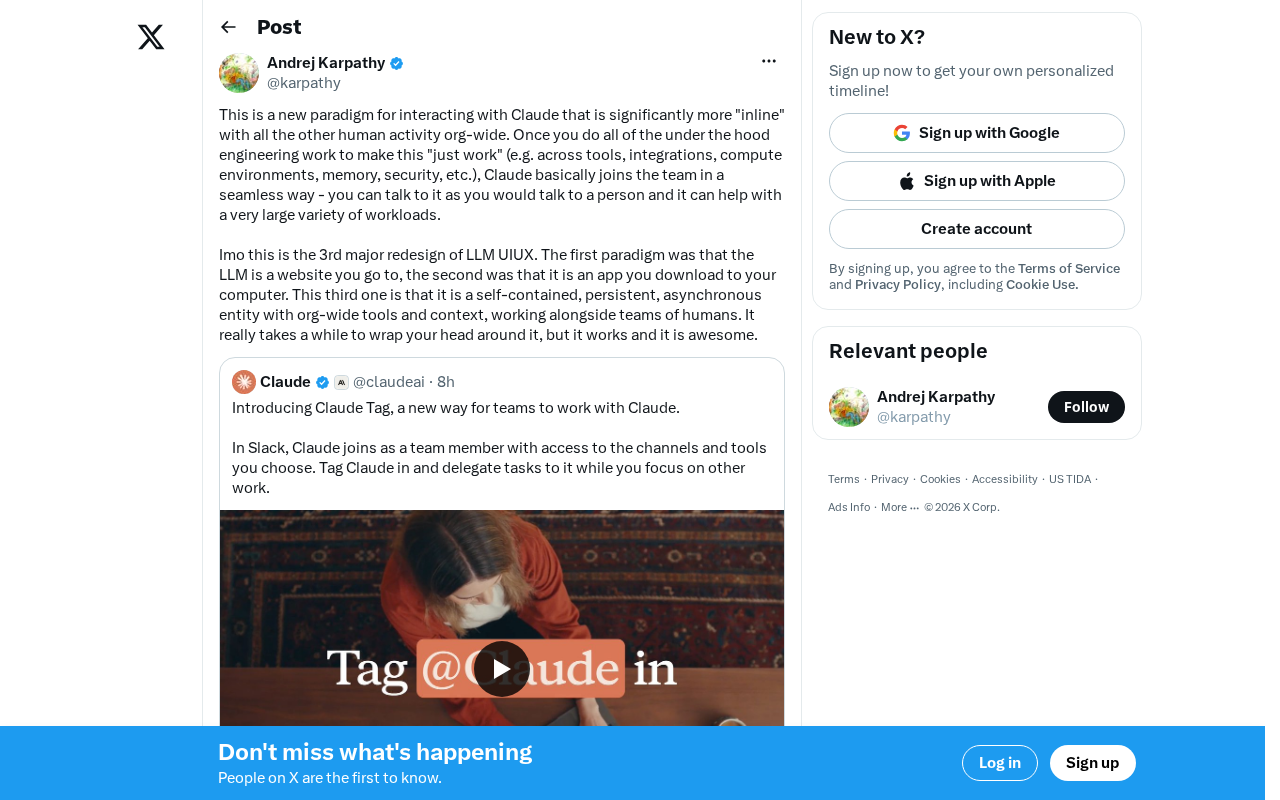
Three Paradigm Shifts in LLM Interaction: From Website to Desktop App to Team Member
Explore the three paradigm shifts in LLM interaction: from ChatGPT as a website, to desktop apps, to autonomous AI team members that collaborate asynchronously with humans.
Read more →