#Heap Code
612 related articles

·2 min
Heap Code: The Open-Source VS Code AI Coding Assistant That Truly Supports Local Models
Heap Code is an open-source VS Code extension supporting local models via Ollama and LM Studio, plus OpenAI-compatible APIs. Features completions, chat, inline edit, and agent mode — zero telemetry, no account required.
Read more →

·2 min
Cursor Code Review Agent Upgrade: 3x Faster, 22% Cheaper
Cursor's code review Agent (Bugbot) gets a major upgrade: 3x faster, 22% cheaper, 10% better bug detection. Explore the improvements, the /review command, and the AI code review landscape.
Read more →

·3 min
Is LLM Inference Actually Profitable? Breaking Down the Cost Structure and Business Logic of Large Model Inference
A deep dive into LLM inference cost structure and profitability models—from GPU throughput, MoE architecture, and KV Cache to scale effects—revealing the business logic behind API price wars.
Read more →

·4 min
11-Node LangGraph in Practice: Complete Architecture Breakdown of a Compliance-Grade RAG Agent
Deep dive into an 11-node Agentic RAG agent built with LangGraph, featuring 6-way intelligent routing, hallucination guards, PII masking, circuit breakers, and zero-cost deployment.
Read more →

·3 min
The GLM5.5 Leak Controversy: How the AI Community Distinguishes Real Leaks from Fake Ones
Reddit circulated a leaked GLM5.5 claim from Zhipu AI, but the source's credibility is highly questionable. Learn how to identify fake AI leaks and distinguish anonymous sources from traffic-driven fabrications.
Read more →

·3 min
The GLM5.5 Leak Controversy: How the AI Community Distinguishes Real Leaks from Fakes
Reddit debates a purported Zhipu AI GLM5.5 leak from a dubious source. Learn how to identify fake AI leaks, evaluate anonymous sources, and build media literacy.
Read more →

·3 min
Gemini 2.5 Flash Deprecation: A Practical Migration Guide for Image Understanding Models
Gemini 2.5 Flash will be deprecated in October 2026. Learn how to choose between gemini-3.1-flash-lite and gemini-3.5-flash-lite for image understanding tasks with migration evaluation methods and architecture tips.
Read more →

·3 min
Antigravity CLI Weekly Limit Real-World Testing: A Practical Guide to Maximizing Quota for Ops Workflows
Deep analysis of Google Antigravity CLI weekly usage limits, Flash vs Pro quota weights, and practical tips for sysadmin/homelab users to maximize subscription quota.
Read more →

·3 min
Antigravity CLI Weekly Usage Limits in Practice: A Practical Guide to Maximizing Quota for Ops Workflows
Analyzing Google Antigravity CLI weekly usage limits, Flash vs Pro quota weights, and practical tips like trimming context and batching requests to help sysadmin and homelab users maximize subscription quotas.
Read more →

·2 min
Gemini 3.6 Flash Hands-On: Upgrades in Both Quality and Token Efficiency
In-depth analysis of Google Gemini 3.6 Flash's core upgrades including output quality improvements and token consumption optimization, with developer migration advice.
Read more →

·2 min
Gemini 3.5 Flash-Lite: A Low-Cost, High-Throughput Powerhouse for Scaling AI
Deep dive into Google's Gemini 3.5 Flash-Lite model. This lightweight model is designed for high-frequency repetitive tasks like ticket sorting and data extraction, solving enterprise AI scaling challenges through ultra-low cost and high throughput.
Read more →

·2 min
Gemini 3.5 Flash-Lite: A Low-Cost, High-Throughput Powerhouse for Scaling AI
A deep dive into Google's Gemini 3.5 Flash-Lite model. Designed for high-frequency repetitive tasks like ticket sorting and data extraction, it tackles the core cost challenge of enterprise AI scaling through ultra-low pricing and high throughput.
Read more →
·3 min
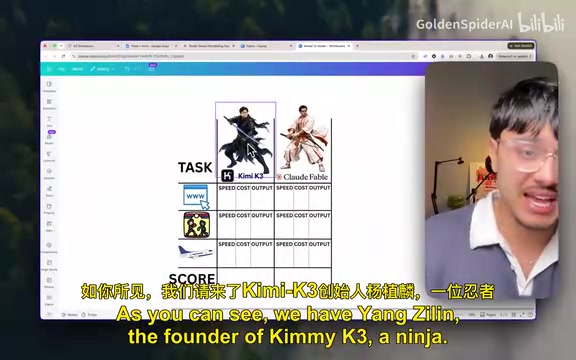
Kimi K3 vs Claude Real-World Test: Near-Equal Performance at 1/8 the Price
Real-world comparison of Kimi K3 vs Claude flagship across e-commerce pages, 3D fighting games, and flight simulators. Kimi K3 delivers 90% output quality at 1/8 the price with faster speeds and local deployment support.
Read more →

·3 min
Kimi K3 Open-Source Release: 2.8 Trillion Parameters Tops Global Programming Leaderboard
Moonshot AI's Kimi K3 launches with 2.8 trillion parameters, tops LMArena frontend coding leaderboard as world #1, completing tasks at one-third competitors' cost. Fully open-source for commercial use.
Read more →

·3 min
Kimi K3 Real-World Testing in 3D Modeling & Game Development: Can Open-Source Models Overtake Closed-Source Giants?
In-depth testing of Kimi K3 in 3D modeling, physics simulation, animation rigging, and game development vs Fable 5 and GPT Solve 5.6. Open-source model delivers top-tier results at one-quarter the price.
Read more →

·3 min
Kimi K3 Hands-On: 3D Modeling & Game Development — Can an Open-Source Model Outperform Closed-Source Giants?
Hands-on testing of Kimi K3 in 3D modeling, physics simulation, animation rigging, and game development versus Fable 5 and GPT Solve 5.6. The open-source model delivers top-tier results at a quarter of the price.
Read more →

·4 min
Kimi K3 Released: 2.8 Trillion Parameter Open-Source Model Tops Global Coding Leaderboard
Moonshot AI releases Kimi K3, a 2.8 trillion parameter open-source model using MoE architecture that tops the global frontend coding arena at under $1 per task, beating GPT and Claude.
Read more →

·3 min
Agent Skill Routing: Engineering Trade-offs Between Retrieval and LLM, and the Two-Stage Layered Architecture
Deep dive into Agent skill routing: comparing pure model vs. pure retrieval approaches, with a detailed two-stage layered architecture balancing accuracy, latency, and cost.
Read more →
·3 min
Deep Dive into Inkling: The First Frontier Open-Source Multimodal LLM from the West
Thinking Machines releases Inkling, an open-source multimodal LLM with near-trillion MoE parameters, 1M token context, Apache 2.0 license. Deep dive into architecture, benchmarks, and pricing.
Read more →

·4 min
Colibri: Running a 744-Billion-Parameter LLM on an Ordinary Laptop
Colibri uses MoE hot-cold separation and 4-bit quantization to run 744B-parameter models like GLM 5.2 on consumer hardware. Learn about its three-tier memory architecture and speculative decoding.
Read more →