#Java interview AI
125 related articles

·3 min
Harness Architecture in Practice: A Deep Dive into Enterprise-Level Agent Projects
A deep dive into Harness architecture in enterprise Agent projects, covering MCP protocol, sandbox isolation, multi-model scheduling, and ASGI deployment — key topics for LLM job interviews.
Read more →
·3 min
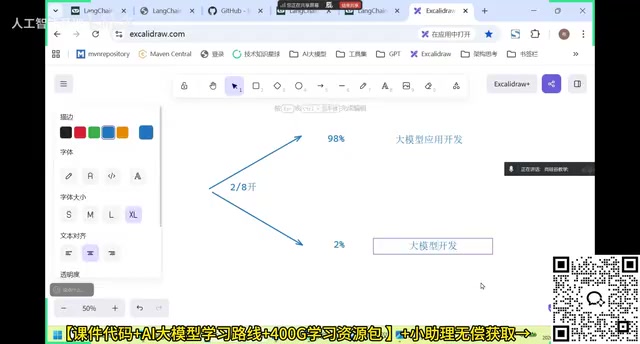
LangChain Practical Guide: From RAG Applications to Intelligent Agent Development
A comprehensive guide to LangChain: core concepts, RAG applications, Agent development, version selection (0.3/1.0), and career opportunities for Java/Python developers entering LLM development.
Read more →

·3 min
Will Vibe Coding Ruin Programmers? Coding Anxiety and How to Break Through in the AI Era
As Vibe Coding rises, many developers can't write code without AI. We break down the risks, whether traditional coding skills still matter, and how to rebuild them.
Read more →

·3 min
Sent Hundreds of Resumes with No Response? A Deep Dive into Tech Job Search Struggles and How to Break Through
Sending hundreds of resumes with no response? This article breaks down the core pain points in today's tech job market — ATS filtering, spray-and-pray fatigue, neglected referral channels — and offers actionable strategies to break through.
Read more →

·5 min
Java Backend Interview Sprint: A Systematic Methodology From Rote Q&A to Scenario Questions
How can you prepare efficiently for a Java backend interview? This article breaks down the core methodology of "process-driven interview engineering," covering resume optimization, understanding principles, scenario analysis frameworks, and production troubleshooting.
Read more →

·3 min
Java Developers Pivoting to AI: Why the Agent Direction Is the Best Choice
How can experienced Java and backend developers pivot to AI? This deep-dive explains why the Agent direction is the best fit — skills transfer well, market demand is high, and the path from "using frameworks" to "understanding source code" is clear.
Read more →

·4 min
Spring AI Alibaba Graph in Practice: HR Recruitment Workflow Agent Design and Core Technical Analysis
Build an HR recruitment workflow Agent with Spring AI Alibaba Graph, covering resume parsing, job matching, tiered question generation, HITL checkpointing, and time travel state rollback across 20 core technical points.
Read more →

·3 min
Building an AI Auto-Editing Workflow with n8n: Parallel Processing, Date Filtering, and Scheduled Triggers — A Full Dev Log
A complete walkthrough of building an AI auto-editing workflow in n8n: Merge node sync, Luxon date filtering, scheduled triggers, real bugs, and debugging tips for solo creators.
Read more →

·7 min
Getting Started with Dify: A Complete Guide from Local Deployment to Building Enterprise-Grade AI Applications
A detailed guide to Dify, the open-source LLM app development platform, covering its core features and full local deployment via VMware + Ubuntu + aaPanel + Docker. Supports 100+ models like DeepSeek and ChatGPT to build enterprise AI apps fast.
Read more →

·7 min
TypeScript + Zod: Dual Insurance for Type Safety in AI Agent Development
An in-depth look at the division of labor between TypeScript and Zod in AI Agent development: TypeScript handles compile-time static type checking, Zod handles runtime validation, forming a dual defense.
Read more →

·3 min
Building LangGraph from Scratch in TypeScript: A Complete Agent Development Guide for Frontend Engineers
How can frontend developers get into AI Agent development with TypeScript? This guide covers a four-stage path from API calls to building LangGraph from scratch, including Zod, state management, and node-edge design.
Read more →
·7 min
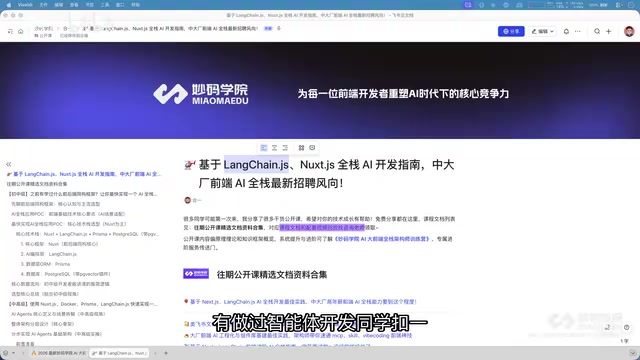
LangChain.js + Nuxt.js: An AI Full-Stack Advancement Path for Frontend Engineers
Frontend hiring now treats AI capabilities as a core assessment, covering RAG knowledge bases, AI Agent development, and LangChain.js engineering. Learn how LangChain.js + Nuxt.js helps frontend developers build memory- and retrieval-capable AI full-stack apps.
Read more →

·7 min
Building AI Agent Frameworks with TypeScript: The Core Development Paradigm for Full-Stack Developers
An in-depth look at why TypeScript is the top choice for AI Agent development: covering Zod structured output validation, LangGraph's graph state machine design, and a full learning path for front-end devs transitioning to full-stack AI.
Read more →

·6 min
From Frontend Engineer to AI Agent Developer: A Complete High-Paying Skill Tree Breakdown
Pure frontend roles are shrinking; AI Agent development is the high-salary divide. This guide breaks down the full skill tree for frontend engineers pivoting to AI: TypeScript, frameworks, AI productivity, and Agent core concepts (MCP, Tool Calling, Skill).
Read more →

·4 min
Frontend to Full-Stack AI: A Complete NestJS + LangChain Roadmap
Pure frontend roles are shrinking fast. Learn how mastering NestJS and LangChain AI agent development can unlock a 20–30% salary boost on your full-stack AI transition path.
Read more →

·3 min
Claude Code in Practice: Writing Maintainable AI Code with the Harness Methodology
Learn how to write controllable, maintainable AI code using the Harness methodology with Claude Code. Covers SDD, Agent orchestration, and enterprise-grade AI programming practices.
Read more →

·3 min
The Interview Game in the AI Era: Where Does Human Expertise Still Matter?
From CSS-trap interview questions to 30K-line code patches, explore where human expertise truly matters in the Agent Coding era — and why AI raises the bar, not lowers it.
Read more →

·4 min
Adding a 'Repair Layer' to Open-Source Models: How DeepSeek Can Outperform Claude Opus
Independent developer Ahmad Awais found that open-source LLM failures stem from Tool Calling bugs, not model capability. A deterministic repair layer + repair hints can make DeepSeek outperform Claude Opus.
Read more →

·7 min
AI Agent Development: A Four-Stage Competency Model from 15K to 40K RMB Salary Growth Path
A detailed four-stage competency model for AI Agent development: from Python/RAG basics (15K) to workflow orchestration (20K), inference optimization (30K), and Agent cluster governance (40K RMB).
Read more →

·4 min
Getting Started with Software Testing: A Complete Guide to Core Concepts and Classification Systems
A comprehensive guide to software testing fundamentals covering definitions, purposes, classification by phase, technique, and method, plus core concepts like smoke testing and regression testing.
Read more →