#LLM interview questions
167 related articles

·3 min
Build RAG and AI Agent Projects at Zero Cost: A Practical Guide to Open-Source Tools
Build high-quality AI projects on a budget. Learn how to use Ollama, Groq, Chroma, and other free open-source tools to build RAG systems and multi-Agent workflows from scratch.
Read more →
·3 min
Build RAG and AI Agent Projects at Zero Cost: A Practical Guide to Open-Source Tools
Build high-quality AI projects on a budget. Learn how to use Ollama, Groq, Chroma, and other free open-source tools to build RAG systems and multi-Agent workflows from scratch.
Read more →

·4 min
GenAI Job Interview Gone Wrong: Interviewer Googles Gemini for Questions on the Spot — What's Broken in AI Hiring?
A fresh grad interviewing for a GenAI Trainer role faced prime number coding and activation function questions while the interviewer used Gemini to generate questions live — exposing AI hiring chaos.
Read more →

·5 min
From Chat to Agent: Automating Your Entire Business Workflow with AI Agents
Veteran AI practitioner Remy breaks down the leap from chat models to AI agents: how agents work, the three pillars of context, tools, and skills, MCP connections, and hands-on architecture to make you a 100x employee.
Read more →

·2 min
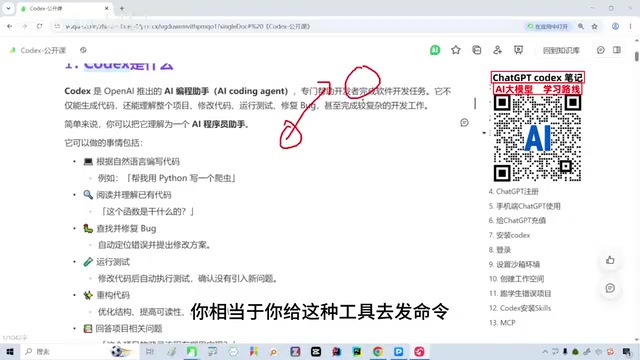
Getting Started with ChatGPT Codex: A Practical Guide to the AI Programming Assistant
Codex is OpenAI's AI programming assistant that lets you write code in natural language. This article breaks down Codex's core features, use cases, and why programmers must master AI coding tools.
Read more →
·2 min
Getting Started with ChatGPT Codex: A Practical Guide to the AI Coding Assistant
Codex is OpenAI's AI coding assistant that lets you write code using natural language. Learn its core features, use cases, and why programmers must master AI coding tools.
Read more →

·3 min
Spring AI Alibaba Graph in Practice: Building a Full-Process HR Recruitment Agent
A detailed guide on building a full-process HR recruitment Workflow Agent with Spring AI Alibaba Graph, covering resume parsing, multi-dimensional screening, tiered questions, human-in-the-loop, and state rollback.
Read more →

·4 min
Notion Co-founder: From Note-Taking Tool to AI Agent Workspace
Notion co-founder Simon Last shares Notion's journey from note-taking tool to AI agent workspace: from first tasting GPT-4 to personal and custom agents.
Read more →

·7 min
Enterprise AI Agent Security Isolation and Memory Design: NanoClaw Founder Breaks Down Real-World Lessons
NanoClaw founder David Boyd breaks down the core engineering of enterprise autonomous Agents: a triple security isolation model, LLM Wiki memory design, and the real-world path from personal Agents to team-scale deployment.
Read more →

·4 min
Java Developer to AI Architect: A Three-Layer Capability Upgrade Roadmap
How can Java engineers transition to AI Architect? This article breaks down three core capability layers — AI app development, production RAG, and AI Agent orchestration — using Spring AI Alibaba and LangChain4j to turn your Java foundation into a competitive edge.
Read more →

·7 min
The Complete Guide to LLM Application Engineer Interviews: Six High-Frequency Agent Topics
A focused guide to core LLM application engineer interview topics, covering agent architecture, Multi-Agent, Langfuse evaluation, security, and RAG optimization.
Read more →

·7 min
The Complete Guide to LLM Application Engineer Interviews: Six High-Frequency Topics in the Agent Domain
A focused guide to the core interview topics for LLM application engineers, covering agent architecture, Multi-Agent, Langfuse evaluation & tracing, security, and RAG optimization.
Read more →

·3 min
The Three Core LLM Job Roles Explained: Entry Requirements and Career Roadmaps
A deep dive into the three core LLM job roles — Application Engineer, R&D Engineer, and Algorithm Engineer — covering academic requirements, salaries, and skill roadmaps.
Read more →

·2 min
3-Month Roadmap to Becoming an AI/LLM Engineer: A Systematic Learning Guide
A 3-month structured roadmap for developers transitioning into AI/LLM engineering: Python & API basics, LangChain/FastAPI stack, and RAG/Agent projects.
Read more →

·3 min
Agent Infinite Loop Engineering Guide: Detection, Breaking, and Root Cause Analysis
How to handle Agent infinite loops? This guide covers three-layer loop detection, four strategy-switching techniques, root cause analysis, and multi-layer fallbacks for building stable, production-grade Agent systems.
Read more →

·3 min
Java Developers Pivoting to AI: Why RAG Knowledge Bases Are the Best Entry Point
Traditional Java roles are shrinking while AI demand surges. Learn the three paths into AI for developers, and why RAG knowledge bases are the highest-ROI entry point for Java engineers.
Read more →

·3 min
Frontend to AI Agent: Why TypeScript + Zod Have Become Non-Negotiable
Frontend engineers pivoting to AI Agent development: TypeScript and Zod are now must-have skills. Explore the full progression from API calls to building LangGraph-style frameworks, and nail the 3 core interview topics.
Read more →

·5 min
AI Coding Getting Worse With Every Edit? Skills v1.1 Reveals the Real Cause and Solution
AI code getting messier with edits? The root cause isn't weak model capability but a lack of context and process. A deep dive into Matt Pocock's Skills v1.1: grilling, vertical-slice tickets, TDD, and WebFinder.
Read more →
·3 min
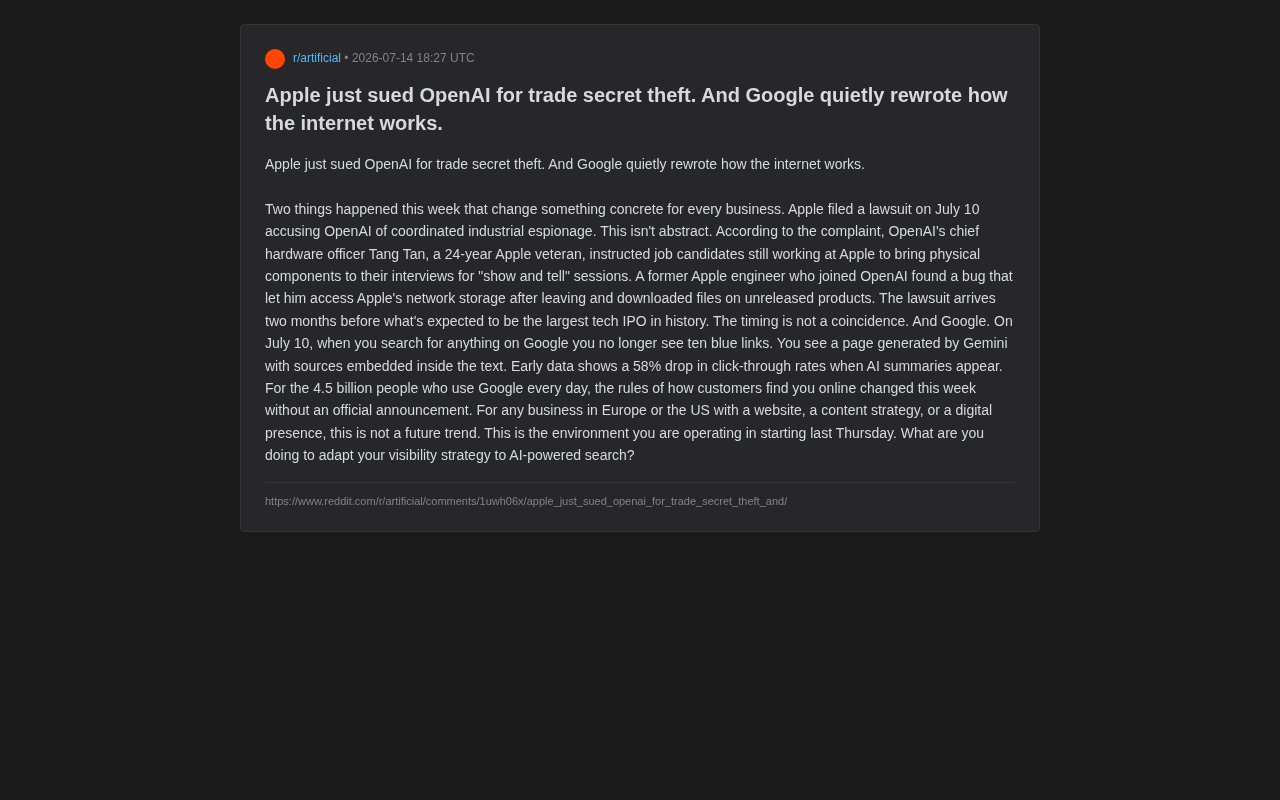
Apple Sues OpenAI for Trade Secret Theft, Google Rewrites Search Rules: A Complete Guide to Enterprise Visibility Strategy
Apple sues OpenAI for trade secret theft; Google quietly shifts to AI-generated search pages, causing a 58% drop in click-through rates. Here's what it means for your business visibility strategy.
Read more →

·3 min
Java Developers Transitioning to AI: A Practical Guide to Building RAG Knowledge Bases
How can Java developers break into AI? This guide covers the AI application engineer career path, RAG knowledge base fundamentals, vector database retrieval, and enterprise-grade RAG challenges.
Read more →