#LangGraph4J
496 related articles

·3 min
AI Not Working? Learn to Diagnose Which Layer Is the Problem — Loop, Harness, or Context
AI agents underperforming? The root cause usually isn't the model. This guide breaks down Loop, Harness, and Context Engineering so you can diagnose the real issue fast.
Read more →

·2 min
Getting Started with LangGraph: Graph Orchestration and State Machines for AI Agents
A comprehensive guide to LangGraph's core concepts: Graph API vs Functional API, three-layer architecture, and workflow visualization methods for building AI Agents.
Read more →

·7 min
The Complete Guide to LLM Application Engineer Interviews: Six High-Frequency Topics in the Agent Domain
A focused guide to the core interview topics for LLM application engineers, covering agent architecture, Multi-Agent, Langfuse evaluation & tracing, security, and RAG optimization.
Read more →

·7 min
The Complete Guide to LLM Application Engineer Interviews: Six High-Frequency Agent Topics
A focused guide to core LLM application engineer interview topics, covering agent architecture, Multi-Agent, Langfuse evaluation, security, and RAG optimization.
Read more →

·6 min
The AI Builder's Handbook: A Complete Guide to LLM Principles, RAG Architecture, and Agent Design
From the autocomplete nature of LLMs, tokens, and context windows to RAG vector databases, the MCP protocol, and AI agent loop design — this article uses vivid analogies to unpack the reality of AI engineering.
Read more →

·6 min
30-Minute Hands-On: Building a Working AI Agent from Scratch
Skip the dry theory and get hands-on! This article demonstrates step by step how to build a working AI Agent from scratch in 30 minutes using AI coding tools—covering the agent skeleton, tool system, memory mechanism, Flask web UI, and DeepSeek API integration.
Read more →

·3 min
LangChain v1.3 Hands-On Tutorial: Deep Dive into Agents, RAG, and Local Model Deployment
Deep dive into LangChain v1.3: compare LangChain, LangGraph, and DeepAgent paradigms, explore RAG pipelines, multi-agent systems, and local LLM deployment for enterprise AI apps.
Read more →
·2 min
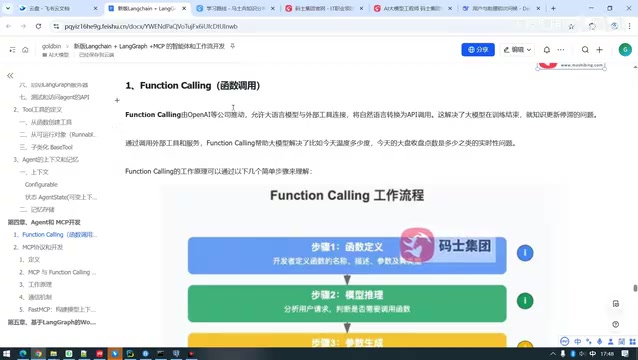
MCP for Beginners: The Essential Protocol for AI Agent Development
Learn what MCP (Model Context Protocol) is, why it's replacing Function Calling, and how it breaks AI data silos to enable remote tool invocation for agents.
Read more →

·6 min
GPT-5.6 Hands-On Deep Dive: Three-Tier Models + Ultra Multi-Agent, Codex Fully Evolved
OpenAI launches GPT-5.6 with three tiered models—Sol, Terra, and Luna—Ultra multi-agent parallel collaboration, Codex integrated into ChatGPT desktop, and an upgraded Computer Use.
Read more →
Open Deep Research: A Complete Guide t…
·2 min
Open Deep Research: A Complete Guide to LangChain's Open-Source AI Research Agent
A deep dive into LangChain's open-source project open_deep_research: an AI deep research agent built on LangGraph, supporting flexible multi-model and multi-search tool configuration, with 12,000+ stars.
Read more →

·3 min
Coze Deep Dive: A Complete Guide to the Agent Building Platform vs. Dify
A deep dive into ByteDance's Coze platform: tool categories, positioning vs. Dify, skill store, multi-agent collaboration, and workflow building — your AI Agent selection guide.
Read more →

·3 min
The Three Core LLM Job Roles Explained: Entry Requirements and Career Roadmaps
A deep dive into the three core LLM job roles — Application Engineer, R&D Engineer, and Algorithm Engineer — covering academic requirements, salaries, and skill roadmaps.
Read more →
·2 min
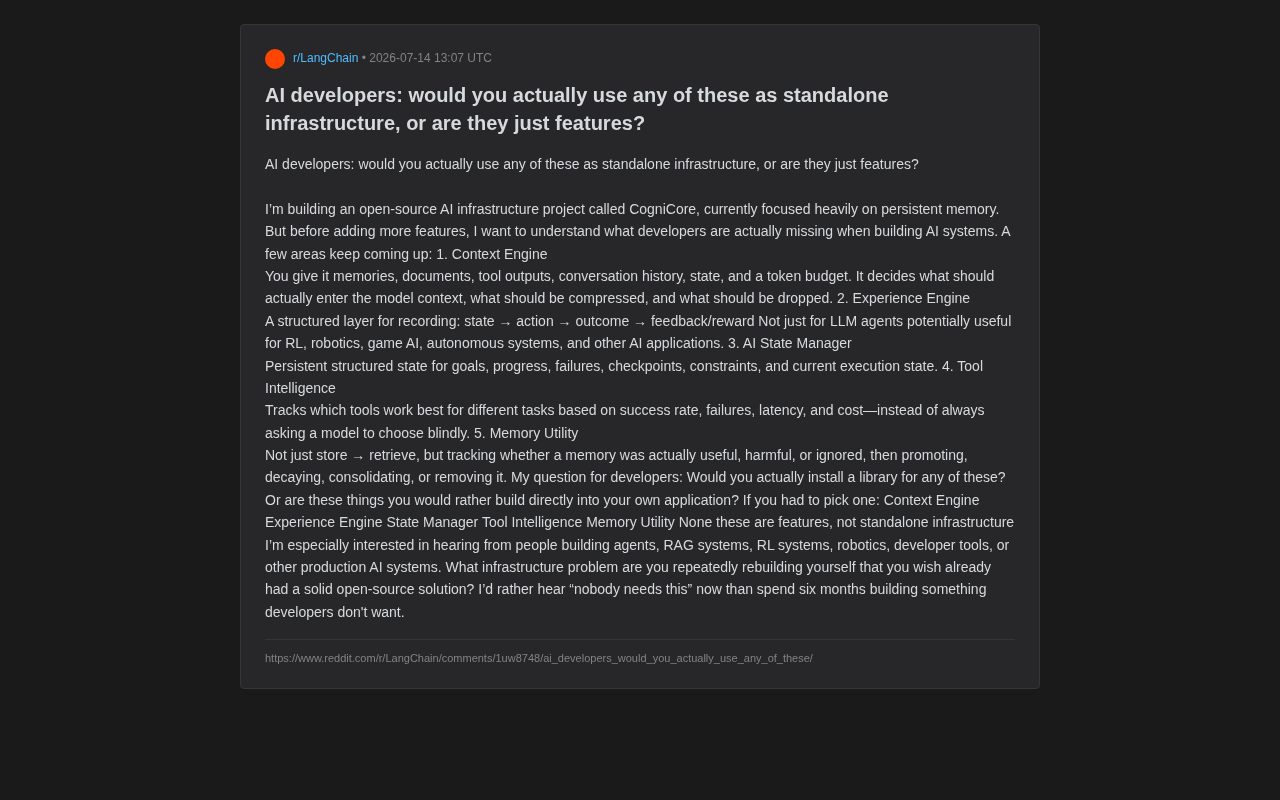
AI Infrastructure or App Feature? The Architecture Debate Sparked by CogniCore
CogniCore asks: should persistent memory, context engines, and state management be standalone AI infrastructure or in-app features? A deep dive into 5 key directions and the missing middleware of the agent era.
Read more →

·3 min
Frontend Developers Transitioning to AI: A Complete Three-Phase Minimalist Roadmap
A structured 3-phase roadmap for frontend developers transitioning to AI: master Transformer fundamentals, build RAG & Agent skills, then advance to model fine-tuning.
Read more →

·2 min
How to Choose Long-Horizon AI Workflow Tools? A Deep Comparison and Decision Framework for Leading Agent Solutions
Why do chatbots fail at long-horizon workflows? We compare Manus, Perplexity Comet, Claude, ChatGPT and more across task type, total cost, and automation level.
Read more →

·2 min
LangChain Agent Email Integration: Gmail API vs AgentMail — A Practical Comparison
Integrating email into LangChain agents: Gmail API's OAuth flow is too complex, while AgentMail offers a lightweight agent-native email API. A practical engineering comparison.
Read more →

·3 min
LangChain + MCP + Agent: A Complete Guide to Enterprise-Grade AI Agent Development
A deep dive into LangChain, LangGraph, MCP, and enterprise AI Agent development: covering Streamable HTTP updates, DeepSeek R1 Function Calling limits, and Qwen3 agent capabilities.
Read more →

·3 min
AI Agent Production Guide: Four Orchestration Patterns That Actually Work
Most AI agents never make it past the demo stage. This guide covers four production-grade agent patterns—workflow orchestration, policy-constrained execution, anomaly handling, and load routing—to help teams build reliable agent systems.
Read more →

·2 min
From Workflow Graphs to Distributed Protocols: Dissecting Multi-Agent System Architecture Paradigms
How does Cosmonapse replace LangGraph's graph structure with event-driven distributed protocols? A deep dive into two multi-agent architecture paradigms, their trade-offs, and when to use each.
Read more →

·2 min
AI Agents 101: The Core Difference Between LLMs and Agents, and How They're Built
What is an AI agent? How does it differ from a large language model? Learn the core concepts, the Agent formula (LLM + Workflow + Knowledge Base), and how to choose between Dify, LangChain, and LlamaIndex.
Read more →