#MLOps healthcare
37 related articles

·4 min
10 Years in the Field, Never Built a Model: The Gap Between Expectations and Reality for Data Scientists
A data scientist with nearly 10 years of experience confesses: 4 companies, zero regression models built. Exploring the gap between expectations and reality in data science careers.
Read more →

·3 min
Self-Hosted ASR Models vs. Cloud APIs: A Comprehensive Cost and Reliability Comparison
In-depth analysis comparing self-hosted ASR open-source models vs. cloud speech recognition APIs like Google, covering cost differences, reliability, and break-even calculations for Whisper, IBM Granite, and more.
Read more →

·4 min
Hospital On-Premises MLOps in Practice: A Complete Guide to Monitoring Self-Built and Vendor AI Models
A deep dive into how hospital on-premises MLOps platforms achieve production monitoring, covering data drift detection, fairness monitoring, vendor model auditing, and compliance strategies with Evidently+Grafana.
Read more →

·3 min
CounterDistill: An XAI Engineering Approach to Distilling Counterfactual Explanations into Global Rules
CounterDistill is an open-source XAI project that clusters and distills local counterfactual explanations into global interpretable rules, bridging the local-to-global gap in explainable AI.
Read more →

·4 min
Build or Buy LLM Infrastructure? A 7-Month Hands-On Retrospective Reveals the Hidden Costs
A 7-month retrospective on building LLM infrastructure from scratch: hidden costs of routing, fallback, evals, and a comparison of orq.ai, LangSmith, Helicone, Portkey, and LiteLLM.
Read more →

·3 min
OpenAI Reports User to FBI: The Battle Over AI Safety Monitoring Boundaries
OpenAI reported a user's ChatGPT conversations to the FBI, sparking debate. Deep analysis of AI content monitoring, user privacy boundaries, and the tension between AI safety and privacy rights.
Read more →

·3 min
The Overlooked "Boring" Infrastructure Behind Production-Grade AI Agents
Exploring the core challenges of AI Agents moving from demo to production: idempotency, approval states, retries, action ledgers, audit tables, and other critical infrastructure design patterns.
Read more →

·3 min
MLOps Multi-Environment Architecture: A Detailed Guide to the Dual Lifecycles of Systems and Models
A deep dive into MLOps multi-environment architecture design, clarifying the two distinct lifecycles—system CI/CD and model training-promotion—to build clear environment isolation and model delivery pipelines.
Read more →

·3 min
Heym: Deep Dive into a Self-Hosted Visual Agent Building Platform
Heym is a self-hostable visual platform for building agentic systems, offering multi-agent workflow orchestration, built-in observability, human approval mechanisms, and MCP protocol support.
Read more →

·3 min
AI Model Selection Guide: Pre-trained, Fine-tuned, or Trained from Scratch?
How to choose between pre-trained models, fine-tuning, and training from scratch for new AI projects. A systematic decision framework covering problem definition, data assessment, and cost trade-offs.
Read more →

·3 min
From Notebook to Production: A Full-Stack MLOps Practice Guide for No-Show Prediction Systems
A detailed guide on building a patient no-show prediction system from model selection to production, covering LightGBM recall optimization, FastAPI deployment, MLflow tracking, SHAP explainability, and CI/CD automation.
Read more →

·3 min
Cekura: A Deep Dive into the Automated Testing, Monitoring, and Self-Healing Closed-Loop Platform for Voice AI Agents
Deep analysis of how Cekura's five-step closed loop—scenario simulation, failure capture, root cause diagnosis, automatic prompt rewriting, and regression verification—solves voice AI agent quality assurance in production.
Read more →

·4 min
Freesolo Flash: Deep Dive into the Full-Stack Platform for Enterprise Small Model Training
Freesolo Flash is a full-stack platform for enterprise small language model (SLM) training that commoditizes reinforcement learning, enabling teams to train specialized AI models at low cost.
Read more →

·3 min
LLMOps Tool Selection Guide: An In-Depth Comparison of Tracing, Evaluation, and Governance Capabilities
In-depth analysis of LLMOps tool selection, comparing Langfuse, LangSmith, Helicone, and Orq.ai across tracing, evaluation, and governance capabilities with practical recommendations.
Read more →

·4 min
Transitioning from DevOps to MLOps: A Complete Learning Roadmap
How can DevOps engineers efficiently transition to MLOps? This guide covers MLOps core concepts, standard workflows, essential tools, and Azure practices with a progressive learning roadmap.
Read more →

·3 min
Unified Prompt Management, Evaluation & Observability: A Comprehensive Comparison of LangSmith and Other Leading Platforms
In-depth comparison of LangSmith, Langfuse, PromptLayer, Helicone, and Orq.ai across Prompt management, Evals, and observability to help teams choose the best unified LLM Ops platform.
Read more →

·2 min
Getting Started with Dify: A Complete Guide to the Open-Source Enterprise AI Application Platform
A complete guide to Dify, the open-source AI application platform: its core positioning, key differences from Coze, workflow-building capabilities, and enterprise private deployment advantages.
Read more →

·3 min
Dify for Beginners: A Complete Guide to Building AI Applications
A beginner's guide to Dify covering Docker deployment, MySQL setup, model integration, five app types (Chatbot/Agent/Workflow), and publishing — build LLM apps fast.
Read more →
·4 min
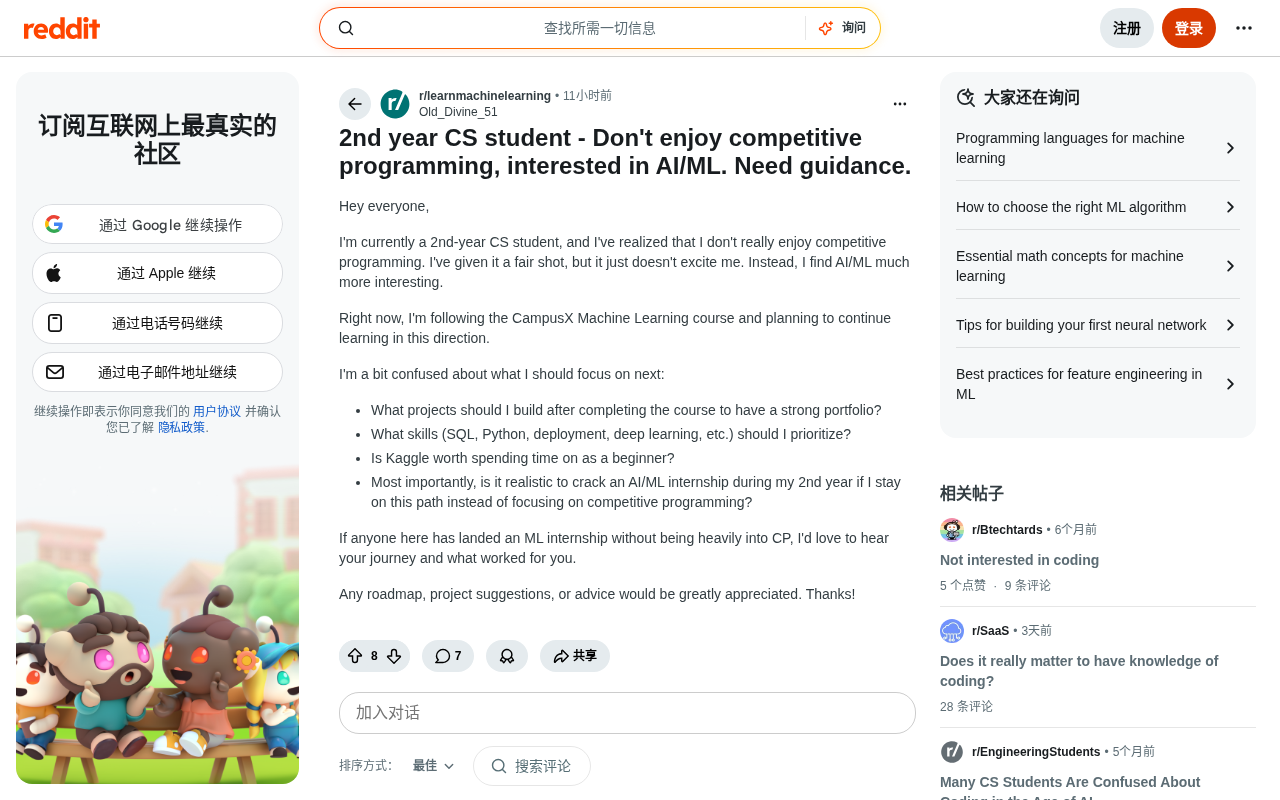
No Competitive Programming Required: How CS Students Can Pivot to AI/ML and Land Internships
How can CS students who dislike competitive programming systematically pivot to AI/ML? This guide covers skill priorities (Python/SQL/ML/deployment), portfolio strategy, Kaggle tips, and real paths to landing AI/ML internships.
Read more →
·4 min
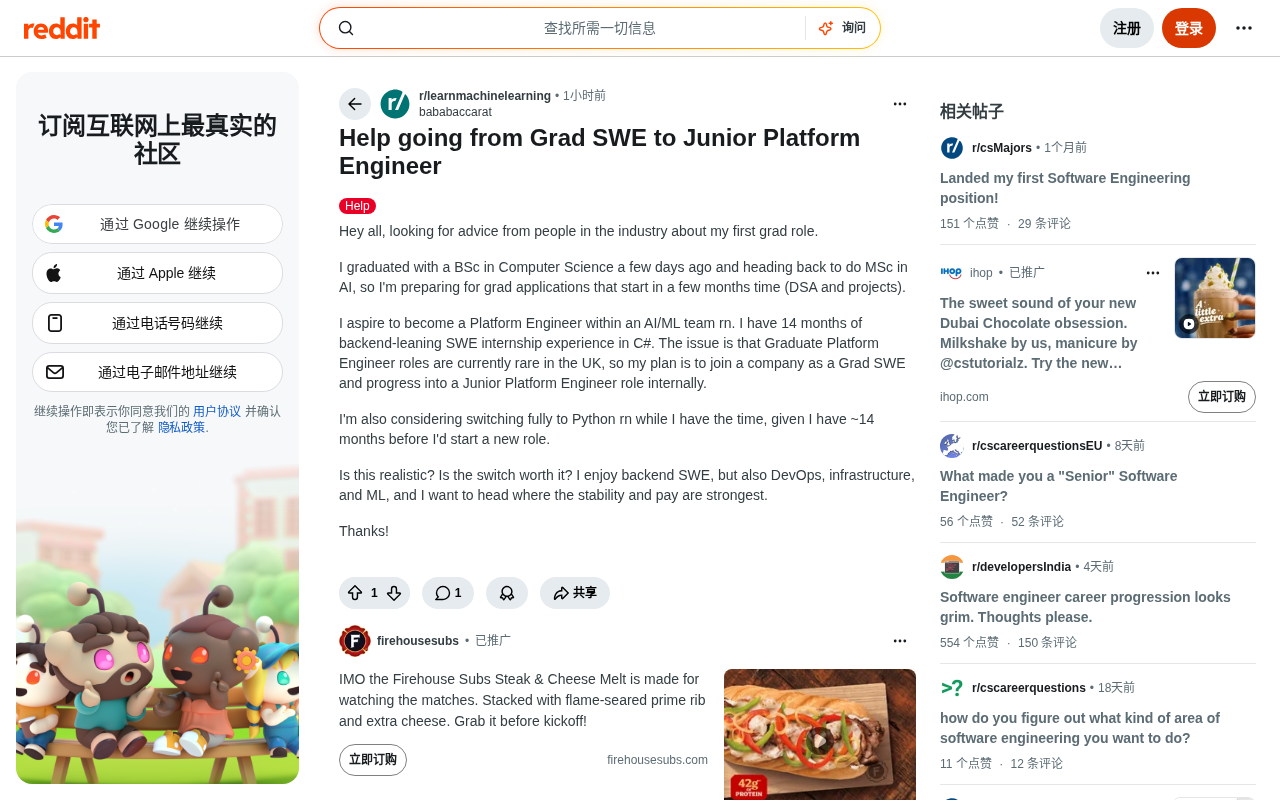
From New Grad SWE to Platform Engineer: Career Paths and Tech Stack Choices in the AI Era
How can new graduates transition from software engineer to platform engineer? This article breaks down the path of joining as a Grad SWE first, then transferring internally, analyzes C# vs Python trade-offs, and offers a 14-month prep plan for AI/ML infrastructure.
Read more →