#Ollama Dify integration
129 related articles

·2 min
CrewCode: An Open-Source Desktop Tool for Parallel Scheduling of Multiple AI Coding Agents
CrewCode is a free open-source Electron desktop app that runs multiple AI coding agents in parallel via Git Worktree isolation, supporting Claude Code, Codex, and more with crew orchestration and context handoff.
Read more →

·2 min
grok2api: In-Depth Analysis of the Multi-Account Grok API Gateway Open Source Project
In-depth analysis of grok2api, a Go-based multi-account Grok API gateway supporting Grok Build, Web, and Console modes with load balancing and high availability.
Read more →

·3 min
Local LLM Selection Guide: Practical Applications for Cybersecurity Purple Teams
A deep dive into how cybersecurity Purple Teams and SOC analysts can select locally deployed LLMs, covering hardware constraints, censored vs. uncensored models, specific recommendations, and RAG integration.
Read more →

·4 min
Should You Build or Outsource Your Agent Evaluation Framework? An Open-Source Author's Deep Inquiry
Should AI Agent reliability verification be built in-house or outsourced? An open-source author's candid question sparks industry reflection on eval frameworks.
Read more →

·3 min
Locally Deploying LLMs for Trading Bots: Hardware Selection & Model Recommendations
How to deploy LLMs locally on AMD RX 7800 XT 16GB for trading bots: ROCm ecosystem, 7B-14B model picks (Qwen2.5, Llama 3.1), Ollama/LM Studio setup, and system architecture design.
Read more →

·3 min
Building a Local AI Agent Architecture: From Scattered Scripts to Your Personal Jarvis
A practical guide to consolidating scattered automation scripts into a local AI Agent hub. Covers Function Calling, Ollama+Qwen2.5 deployment, tool orchestration architecture, and a complete implementation roadmap.
Read more →

·3 min
Practical Guide to Setting Up a Local AI Coding Environment on MacBook Pro M4
Complete guide to setting up a local AI coding environment on MacBook Pro M4, covering Ollama, MLX, Continue, Qwen3-Coder 30B configuration, and performance optimization strategies for 32GB RAM.
Read more →

·3 min
Complete Guide to Running Claude Code with Ollama: API Error Troubleshooting & Local Model Optimization
Guide to running Claude Code via Ollama locally: troubleshooting API errors, output token limits, model freezes, with model selection, parameter tuning, and alternative tool recommendations.
Read more →

·3 min
A Beginner's Guide to AI Agents: Two Learning Paths for Developers and Practitioners
How to learn AI Agents from scratch? This guide covers two clear paths: developers go from Python to LLMs to open-source framework source code; practitioners use Claude Code or similar tools to get results fast.
Read more →
·3 min
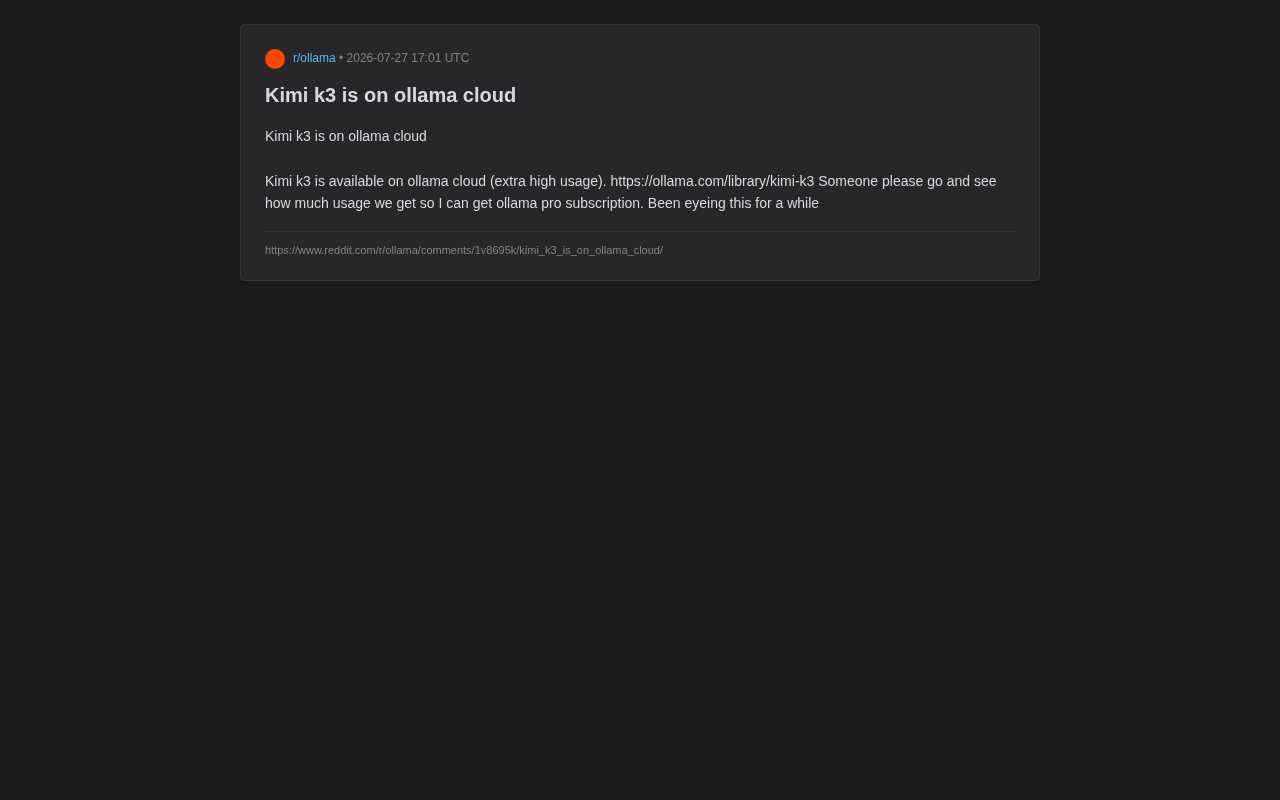
Kimi K3 Launches on Ollama Cloud: Free Tier, User Experience, and Developer Guide
Kimi K3 officially launches on Ollama Cloud as an "extra high usage" model. This guide covers free tier quotas, cloud inference experience, technical advantages, and how developers can seamlessly call this high-performance LLM.
Read more →

·4 min
Spring AI 1.0 Practical Guide: A Java Developer's Fast Track to Building AI Applications
Spring AI 1.0 is here — Java developers can now build AI apps without switching to Python. This guide covers LLM integration, RAG, intelligent customer service, and Agent patterns for enterprise deployment.
Read more →

·8 min
LangChain Crash Course: A Complete Roadmap from Zero to Agent Development
A systematic roadmap from LangChain and LangGraph to multi-agent development, covering RAG, Tool Calling, MCP, and more, helping developers break into AI app development.
Read more →

·3 min
AI Development for Java Engineers: A Complete Guide to LangChain4j Agents
Java developers can build AI apps too! Learn LangChain4j fundamentals including RAG, Agents, Function Calling, and hands-on projects — no Python required.
Read more →

·3 min
Dify 1.8 Complete Beginner's Guide: Build 20+ AI Apps Fast
A complete Dify 1.8 guide covering 3 deployment methods (Docker/cloud/source), MySQL integration, 5 app types (Chatbot/Agent/Workflow), model selection, and publishing strategies.
Read more →

·3 min
Dify for Beginners: A Complete Guide to Building AI Applications
A beginner's guide to Dify covering Docker deployment, MySQL setup, model integration, five app types (Chatbot/Agent/Workflow), and publishing — build LLM apps fast.
Read more →

·3 min
Dify Getting Started: A Complete Zero-to-Production Guide for Building AI Applications
A complete guide to Dify — covering deployment, five core app types (chatbot, Agent, workflow, and more), LLM integration, and publishing for zero-experience developers.
Read more →

·2 min
Local Models & Open-Source Toolchains: How to Protect Data Sovereignty in the AI Era
Learn how local LLMs (Llama, Mistral, Qwen) and open-source toolchains protect your data sovereignty, reduce platform dependency, and give you full control over AI workflows.
Read more →

·3 min
Dify + MCP in Practice: Building a Multi-Scene Life Assistant Agent with ModelScope MCP Marketplace
Build a multi-scene life assistant Agent using ModelScope MCP Marketplace and Dify. Integrates Amap, LeetCode, recipe, and news MCP Servers with Qwen3 via Chatflow.
Read more →

·2 min
Getting Started with Ollama: A Powerful Tool for Deploying Open-Source LLMs Locally
Ollama is a free, open-source LLM management platform that lets you deploy open-source models like DeepSeek locally with one click. It supports macOS, Windows, Linux, and Docker, with both API and CLI modes to build private AI apps at zero cost.
Read more →

·5 min
Building DeepSeek Agents and Knowledge Bases from Scratch: A Practical Guide to Commercial Deployment
A systematic guide to the full DeepSeek Agent development process: covering prompt engineering, the ReAct framework, workflow orchestration, local deployment, and business requirement breakdown for commercial-ready AI Agents.
Read more →