#OpenAI Codex pricing
370 related articles

·2 min
Is $200/Month Worth It? A Deep Dive into AI Agent Subscription Costs and ROI
Is $200/month for AI Agents worth it? We break down credit consumption mechanics, tool tradeoffs, and ROI calculations for ChatGPT Pro, Claude Max, and more.
Read more →
OpenAI May Roll Out Universal Usage Li…
·2 min
OpenAI May Roll Out Universal Usage Limits — How Should ChatGPT Users Prepare?
OpenAI's Codex hits rate limits fast — is this a preview of broader ChatGPT usage caps? We analyze compute costs, tiered subscriptions, and how users can prepare.
Read more →

·2 min
GPT-5.6 Three-Tier Model Breakdown: How Sol/Terra/Luna Rewrite the Agent Cost Structure
OpenAI releases GPT-5.6 with three tiers: flagship Sol, balanced Terra, and budget Luna. Sol leads competitors by 13 points on Agent benchmarks at one-quarter the cost, rewriting Agent economics.
Read more →

·3 min
GPT-5.6 Launch: Three Models Taking on Claude, and a Full Breakdown of the ChatGPT Work Super App
OpenAI launches GPT-5.6 with three models (Soul/Terra/Luna) targeting Claude. Leads Agent benchmark by 13 points at 1/4 the cost. ChatGPT Work super app takes on Anthropic directly.
Read more →

·3 min
Getting Started with Codex: A Comprehensive Comparison with Claude Code and How to Choose
A deep comparison of Codex vs. Claude Code on pricing, stability, and frontend/backend strengths — plus how to choose between Cursor, Claude Code, and Codex.
Read more →

·3 min
GPT-5.6 Hands-On: Building a Shooter Game and a Premium Website from a Single Prompt, Plus GPT-Live Voice Experience
Hands-on with GPT-5.6 and GPT-Live: build a playable shooter game from one prompt in 19 minutes, generate a premium animated website via multimodal understanding, and experience emotional two-way voice conversation. A full review of ChatGPT and Codex deeply integrated.
Read more →

·6 min
GPT-5.6 vs Grok 4.5 on the Same Day: A Packed Week of Flagship AI Model Launches
OpenAI's GPT-5.6 launches with Sawa, Terra, and Luna sub-models the same day as Musk's Grok 4.5, while Anthropic, Meta, and NVIDIA make their moves. A packed week of flagship AI launches.
Read more →

·3 min
In-Depth Testing of GPT-5.6's Three Models: A Full Analysis of Soul/Terra/Luna Capabilities and Experience
GPT-5.6 launched three models at once—Soul, Terra, and Luna. Flagship Soul dazzled with a Vision Pro drum kit and reviving an old tablet, but the new Work app's frequent errors and export failures dragged down the experience.
Read more →

·3 min
GPT 5.6 + Codex In-Depth Review: Three-Tier Models and Ultra Mode Fully Explained
GPT 5.6 updates Codex with Sol/Terra/Luna model tiers, Ultra thinking mode, 350K context, and stronger autonomous loops. Full hands-on review of all core upgrades.
Read more →

·3 min
ChatGPT Plus/Pro Plans: A Complete Comparison of Features and Payment Methods
A detailed breakdown of ChatGPT Plus ($20) vs Pro ($100/$200) plan features, comparing credit card, gift card, and Google Play top-up methods, plus an honest look at third-party top-up risks.
Read more →

·4 min
Running Out of Codex Quota? An In-Depth Review of HeyRoute's GPT-5.5 Integration
Codex quota running out too fast, or API costs too high? HeyRoute offers a low-cost AI coding relay via GPT-5.5, with ~1.08s first response and 99.95% success rate. This in-depth review covers its selling points, pricing, and caveats.
Read more →

·4 min
Making Money with AI Coding Gigs: Platform Selection, Pitfall Avoidance, and a Rational Guide to Getting Started
AI coding tools have dramatically lowered the barrier to freelance gigs, but what risks lurk behind claims of "earning over 10,000 a month"? This article breaks down platform tiering on Zhubajie, Upwork, and more, plus three key pitfalls for beginners.
Read more →

·5 min
GPT-5.6 In-Depth Field Test: A Real-World Log After Burning Through $200K
A developer stress-tested GPT-5.6 for six weeks across 67 projects, burning $180K-$240K in inference. Real cases of task persistence, Rust rewrites, autonomous browser control — plus honest frontend and 3D shortfalls.
Read more →

·3 min
GPT-5.6 Three-Model Hands-On Test: A Complete Comparison of Sol, Terra, and Luna
An in-depth hands-on test of the GPT-5.6 series' three models—Sol, Terra, Luna—compared with Fable and Sonnet 5. Sol wins overall at nearly half the price. Full analysis of prototyping, code debugging, and browser use.
Read more →

·6 min
The Eight-Step Method for Agent Development: A Practical Path from Pitfalls to Production
Many enterprises fail at AI Agents due to choosing the wrong tools and lacking methodology. This article outlines an eight-step Agent development method—from cognitive foundations, scenario selection, hand-writing ReAct, and structured output to Tool Use, RAG, evaluation sets, and production fallback.
Read more →

·5 min
GPT-5.6 Launches: Comprehensive Upgrades to ChatGPT Work, Sites, and Desktop Client
OpenAI releases the GPT-5.6 model family, launching enterprise-focused ChatGPT Work, one-click ChatGPT Sites, and a major desktop client upgrade, with coding now ahead of rivals. Meta, Google, and Kimi follow intensively.
Read more →
·5 min
GPT-5.6 Released: Outperforms Rivals but Halted by Government—Cybersecurity Capabilities Trigger Regulatory Red Line
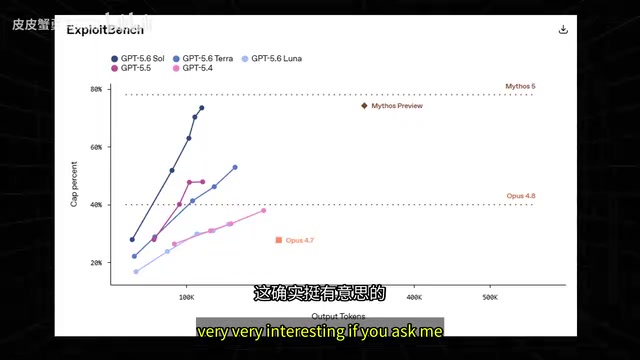
OpenAI releases GPT-5.6 (Sol/Terra/Luna), beating Anthropic on Terminal Bench at ~40% lower cost. But its cybersecurity capabilities hit danger thresholds, limiting access to trusted partners at government request.
Read more →

·6 min
1X NEO Robotic Hand and GPT-5.6: A Full Breakdown of Dual Breakthroughs in Robot Hardware and Software
1X releases a new robotic hand for the NEO humanoid robot—25 DOF, force transparency, and tactile skin enabling data self-labeling. OpenAI launches the three-tier GPT-5.6, boosting coding and cost-efficiency. Hardware and AI brains evolve together, accelerating humanoid robot commercialization.
Read more →

·3 min
GPT-5.6 Deep Dive: SOL, TERRA & LUNA — Performance Benchmarks and Pricing Breakdown
OpenAI's GPT-5.6 series (SOL, TERRA, LUNA) benchmarked via PinBash: major gains in math and backend tasks, but frontend visuals remain a weakness. Full pricing and model selection guide.
Read more →

·3 min
Spending $200K to Test GPT-5.6: Have AI Coding Assistants Reached a Tipping Point?
Developer Theo spent ~$200K over 6 weeks testing GPT-5.6 across 67 projects — from 20-hour autonomous coding runs to fixing boot partitions and Rust rewrites.
Read more →