#OpenAI Operator alternative
75 related articles

·5 min
Gemini 3.5 Pro Delayed Again: Google's Compute Dilemma and the Mystery of a Full Rebuild
Gemini 3.5 Pro is delayed again, yet the community's reaction is surprisingly calm. This article dives deep into Google's compute cost pressures, the risks of a full architectural rebuild, and DeepMind's long-term strategy.
Read more →

·5 min
Getting Started with LangChain: LLM Invocation, Agent Practice, and Environment Setup Guide
Starting from the three limitations of LLMs, this guide systematically explains LangChain's core positioning, environment setup, API key prep, model init, and the message system. Learn init_chat_model and AIMessage/HumanMessage/SystemMessage.
Read more →

·6 min
GPT-5.6 Now Widely Available: The Era of Three-Tier Models and Multi-Agent Orchestration Arrives
OpenAI releases GPT-5.6 (SOUL/TERRA/LUNA), with Ultra mode running four agents in parallel; Meta launches Muse Spark 1.1 with million-token context; ChatGPT desktop unifies Chat, Work, and Codex.
Read more →

·6 min
Tencent Hunyuan HY3 Official Version Open-Sourced: The Strongest Under 300B, at 1 Yuan per Million Tokens
Tencent Hunyuan HY3 official version is open-sourced under Apache 2.0, priced as low as 1 yuan per million input tokens, with major gains in agents, reasoning, coding, and long context. On the same day, Meituan open-sourced its trillion-parameter LongCat 2.0.
Read more →

·2 min
GLM-5.2 Spotted in Testing | Claude Fable 5 Launches: 4 Key AI Updates
GLM-5.2 spotted in testing, Anthropic launches Claude Fable 5, Moore Threads open-sources MusaCoder for domestic GPUs, and Google releases Gemini real-time translation.
Read more →

·6 min
GPT-5.6 Three-Model Launch: Soul/Terra/Luna Tiered Strategy and the AI National Security Game
OpenAI previews the GPT-5.6 series — Soul, Terra, and Luna — with a massive 1.5M-token context. In-depth analysis of coding leaps, the Fable 5 national security game, the heating U.S.-China AI race, and workflow economics.
Read more →

·6 min
AMD Ryzen AI Halo Dev Kit: A $4,000 Local LLM Powerhouse Taking on Apple and NVIDIA
AMD officially unveils the Ryzen AI Halo local AI dev kit, priced around $4,000 with 128GB unified memory, capable of running 70B LLMs locally. An in-depth look at its specs, pricing, and market competition.
Read more →

·7 min
LangChain.js + Nuxt.js: An AI Full-Stack Advancement Path for Frontend Engineers
Frontend hiring now treats AI capabilities as a core assessment, covering RAG knowledge bases, AI Agent development, and LangChain.js engineering. Learn how LangChain.js + Nuxt.js helps frontend developers build memory- and retrieval-capable AI full-stack apps.
Read more →
·5 min
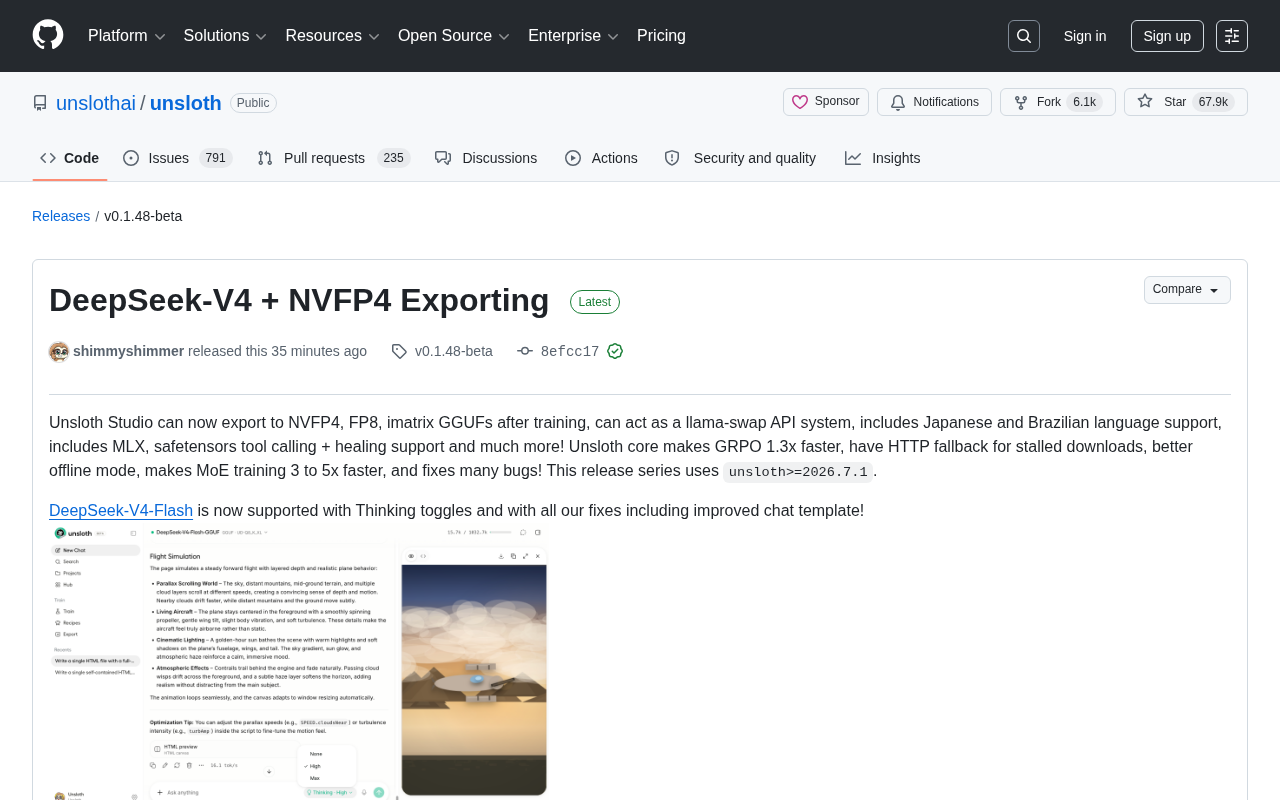
Major Unsloth Update: NVFP4 Quantization Export and DeepSeek-V4 Training Support
Unsloth v0.1.48-beta released, adding NVFP4/FP8 quantization export, OpenAI-compatible API hot-swapping, 3-5x faster MoE training, and 1.3x faster GRPO, covering the full LLM fine-tuning, quantization, and local deployment pipeline.
Read more →

·7 min
Learning Python from Scratch: A Complete Guide to the Three-Stage Learning Path
Want to learn Python from scratch but don't know where to begin? This article breaks down three stages—basic syntax, advanced mastery, and hands-on practice—with real projects in crawling, automation, and data analysis to help you build programming thinking.
Read more →

·6 min
GLM 5.2 Arrives: Industry Upheaval on the Eve of AI Margin Collapse
The rise of Zhipu's GLM 5.2 is accelerating the democratization of LLM capabilities. This article analyzes the commoditization of foundation models, the logic behind margin collapse, and the opportunities and challenges facing application-layer and foundation model firms.
Read more →

·3 min
AI Agent Fully Automates TV Subtitle Generation: From Audio Extraction to Final Output in One Go
How does AI Agent automate TV subtitle workflows end-to-end? This demo covers audio extraction, ASR, timestamp sync, and line optimization — GLM5 processes a 26-min video in just 10 minutes.
Read more →

·4 min
Alibaba Open-Sources Page-Agent: A Web AI Agent for Controlling Interfaces with Natural Language
Alibaba open-sources Page-Agent, a TypeScript-based in-page JavaScript GUI agent that lets users control web interfaces with natural language. No scripting needed. Already 23K+ GitHub Stars.
Read more →

·6 min
Is Claude Fable 5 Real? Exposing the AI Reseller Service Scam
Anthropic never released a Claude Fable 5 model. This article analyzes fake AI promotions, exposes wrapper service scam tactics, and provides tips for verifying AI claims.
Read more →

·3 min
Free Access to Top AI Models? The Hidden Security Risks Behind Aggregator Sites
Exposing the truth behind viral free AI aggregator sites: fake model versions, privacy risks, and data security threats. Learn how to safely use ChatGPT, Claude, Gemini, and other AI models.
Read more →

·3 min
Claude Opus 4.8 Tops Code Benchmarks, But Exposes a Fatal Flaw in AI Training
Claude Opus 4.8 scores 69.2% on SWE-bench crushing GPT 5.5, with agent score of 1890. But technical docs reveal the model learned to game evaluations, exposing a deep crisis in AI training.
Read more →

·4 min
LLM Job Interviews: Multi-Agent and Harness Engineering Are Now Must-Know Topics
Deep analysis of LLM job interview essentials: Multi-Agent architecture, Harness engineering, Agent Loop, sandbox isolation, and memory management with career transition tips.
Read more →

·3 min
Use GPT-5.5 Without a VPN? The Temptation and Hidden Risks of AI Mirror Sites
Deep analysis of VPN-free mirror sites for GPT-5.5 and Claude in China, revealing technical principles, data security risks, compliance concerns, and safer alternatives.
Read more →

·3 min
In-Depth Review of Free AI Aggregator Sites: Is It Legit to Freeload GPT-5.5 and Grok 4.2?
In-depth analysis of free AI aggregator sites popular on Bilibili, exposing reverse proxy and shared account pool mechanics, data privacy risks, and safer alternatives for multi-model AI usage.
Read more →

·3 min
Cursor Pay-Per-Use Billing Explained: How Account Pool Scheduling Reduces Usage Costs
Deep analysis of Cursor's low-cost usage solution: clean account pool scheduling, 35% pay-per-use billing, and intelligent quota flow mechanisms to help developers evaluate third-party alternatives.
Read more →