#OpenRouter
139 related articles

·3 min
LongCat 2.0: Meituan Trains a 1.6 Trillion Parameter LLM on Domestic Chips
Meituan open-sources LongCat 2.0, a 1.6T-parameter MoE model trained on 50,000+ custom chips without NVIDIA GPUs or Google TPUs, rivaling OpenAI and Google.
Read more →

·3 min
31 Companies Sign Agent Privacy Pact: Industry Self-Regulation Framework Goes into Effect
31 companies sign China's first AI agent privacy pact covering screen-reading authorization, training data restrictions, and payment caps. Plus: domestic LLM tops OpenRouter, Meta's $40B compute bet, and agent commercialization challenges.
Read more →

·3 min
30 Cents vs $27: Open-Source Models Face Off in Coding, With DeepSeek Leading at 100x Cost-Efficiency
A hands-on comparison of AI models—Fable 5, DeepSeek V4 Flash, GLM 5.2, Qwen 3.6—building a sales CRM. The priciest cost $27.69, the cheapest just 30 cents. A deep dive into open-source LLM coding value.
Read more →
·3 min
Tencent Hunyuan HY3 In-Depth Review: How a Small Open-Source Model Punches Above Its Weight
In-depth analysis of Tencent's open-source reasoning model Hunyuan HY3: MoE architecture, 295B total params, Apache 2.0 license, coding & front-end rivaling DeepSeek V4 Pro at 1/35 the cost.
Read more →

·5 min
The Complete Guide to Building an AI-Powered Second Brain with Obsidian + Hermes Agent
An in-depth guide to building an AI-driven second brain with Obsidian + Hermes Agent. Covers living files, VPS deployment, core memory mechanisms, and skill visualization.
Read more →

·3 min
Building a Local AI Environment on Ubuntu with Hyper-V: The Complete 1Panel + OpenCode + Hermes Workflow
Create an Ubuntu 22.04 VM on a Windows host with Hyper-V, then deploy the 1Panel dashboard, OpenCode gateway, and Hermes agent to build a complete local AI Agent runtime. Includes port config and troubleshooting.
Read more →

·5 min
GPT-5.6 In-Depth Review: Crushing Competitors on Value, But Its Jailbreak Vulnerabilities Can't Be Ignored
OpenAI's GPT-5.6 Soul, Terra & Luna are priced at one-third of Claude, leading Anthropic Fable on many benchmarks. We analyze its value, reasoning, and jailbreak risks.
Read more →

·2 min
ComfyUI MCP: AI Autonomously Builds Workflows, Generate Images Locally with a Single Sentence
The open-source ComfyUI MCP project uses Anthropic's MCP protocol to let LLMs like Claude directly control ComfyUI node graphs—describe needs in natural language, AI auto-builds the workflow, and renders locally on your GPU. Zero-click AI image generation.
Read more →

·2 min
Affordable Alternatives to Codex and Claude Code: A Practical Guide to Open-Source Tools
Struggling with $100/month subscription fees? This guide covers open-source AI coding tools like Aider, Cline, and Continue, combined with OpenRouter's pay-as-you-go model, to help you build an efficient AI coding workflow at minimal cost.
Read more →

·2 min
Claude Usage Limits Tighten: Is the Era of Unlimited AI Coming to an End?
Anthropic's Claude is bidding farewell to its "unlimited use" strategy, shifting toward tiered billing and usage management. This article explores the compute cost logic behind it, the impact on heavy users, and multi-model strategies.
Read more →
·7 min
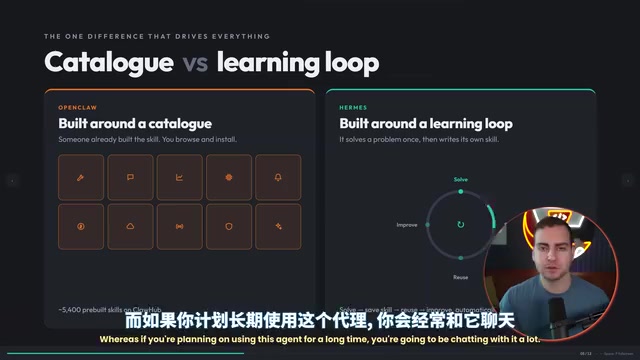
OpenClaw vs Hermes: An In-Depth Comparison and Selection Guide for AI Agent Tools
An in-depth comparison of OpenClaw and Hermes Agent, covering skill management, memory mechanisms, security, and gateway configuration to help you find the right AI agent solution.
Read more →

·7 min
Building AI Agents in Rust: The GAIA Benchmark Reveals the Capability Ceiling of Large Models
A Rust-based AI Agent evaluation framework uses the GAIA benchmark to compare GPT, Claude, DeepSeek and other models with no tools. Results show pure LLMs cap at ~25% accuracy, revealing why tool use is decisive for Agents.
Read more →

·4 min
Complete Guide: Connecting Claude Code to DeepSeek — Local Setup + VS Code Integration
A step-by-step guide to installing Claude Code locally on Windows and swapping its underlying model for the DeepSeek API—enabling low-cost AI coding with no VPN required. Covers Node.js setup, Claude Code config, and getting a DeepSeek API Key.
Read more →

·2 min
The Battle Over AI Subscription Rights: The Trust Game Behind Anthropic's Model Availability
A Reddit debate exposes the core tensions in AI subscription services: can providers remove models after adding them to paid tiers? An analysis of trust costs, compute pressures, and user rights.
Read more →

·2 min
Claude Sonnet 4 Returns to Cursor: Tops CursorBench, But at the Highest Cost Per Task
Claude Sonnet 4 returns to Cursor, topping CursorBench while carrying the highest cost per task. A deep dive into performance vs. cost trade-offs for AI coding tools.
Read more →

·7 min
Turning Any AI Agent into an Orchestration Hub: A Deep Dive into Multi-Agent Collaboration Architecture
An in-depth analysis of the "any Agent as an orchestrator" design philosophy, exploring the technical implementation of multi-Agent collaboration, context management, and workflow automation.
Read more →

·2 min
Claude Sonnet 5 Leaked, Zhipu Hits HK$1 Trillion Market Cap: AI Industry Roundup for June 23
June 23 AI roundup: Claude Sonnet 5 leaked with 1M context window, Zhipu hits HK$1T market cap, Alibaba releases Happy Horse 1.1, and Sakana AI launches a multi-model orchestration system.
Read more →

·2 min
Zero-Cost Multi-Agent AI System: A Complete Breakdown of the Free-Tier Build
A CS student built a multi-agent AI system with memory, 8 sub-agents, and real-time web research using only free infrastructure like Cloudflare Workers and GitHub Actions. Full breakdown inside.
Read more →

·7 min
From Vibe Coding to Engineered AI Programming: A Practical Guide to Enterprise Development
AI coding tools are changing development, but Vibe Coding hides risks in code quality and maintenance. This article explores Engineered AI Programming, compares Codex and Claude Code, and reveals real enterprise development paths.
Read more →

·3 min
Running LLMs Locally: The Illusion vs. the Real Value of Open-Weight Models
Open weight ≠ runnable locally. This article breaks down the hardware barriers, VRAM limits, electricity costs, and parallelism constraints of models like GLM 5.2 and DeepSeek — revealing where open-weight models truly add value: driving cloud competition, not home replication.
Read more →