#PINN
369 related articles
The Flying Umbrella: How Drone Technol…
·2 min
The Flying Umbrella: How Drone Technology Is Reshaping Everyday Life
A flying umbrella that autonomously follows and shelters users is essentially a consumer drone with vision-based tracking. We break down the core tech, real-world limits, and the future of personal drones.
Read more →
Neural Render Proxies: A New Paradigm …
·3 min
Neural Render Proxies: A New Paradigm for Real-Time Interaction and Differentiable Lighting
A deep dive into Neural Render Proxies: how neural networks replace costly lighting computation to enable real-time interaction, inverse rendering, and end-to-end differentiable optimization across games, digital twins, and NeRF.
Read more →

·2 min
Coze 3.0 Multi-Agent Collaboration: A Complete Guide to Building Your AI Team
A hands-on guide to Coze 3.0 multi-user, multi-Agent projects: create projects, add members, toggle Agents, and use @ mentions to dispatch tasks efficiently.
Read more →
Nvidia: From Chip Supplier to the Capi…
·2 min
Nvidia: From Chip Supplier to the Capital Hub Behind the AI Boom
Nvidia is more than a GPU giant — it operates as the financial backbone of the AI boom through investment and capital recycling. A deep analysis of the risks.
Read more →
sqlite-utils 4.0rc2 Released: Major Ve…
·2 min
sqlite-utils 4.0rc2 Released: Major Version Built with $150 in AI Costs
Simon Willison releases sqlite-utils 4.0rc2, with most code written by Claude at just $149.25 in API costs. A deep dive into AI-assisted development costs and human-AI collaboration.
Read more →

·2 min
Dify + MCP in Practice: Building Enterprise-Grade Role-Specific AI Copilot Workflows
A hands-on guide to building enterprise AI copilot workflows using Dify and MCP. Covers tool integration, parameter passing, code execution, and MCP version compatibility pitfalls.
Read more →

·2 min
No-Install Enterprise Agent: A New Approach to AI Workflow Automation and Core Capability Breakdown
A no-install AI Agent with hundreds of enterprise skills is emerging, enabling automatic multi-skill orchestration for complex workflows. Here's a deep breakdown of its three core advantages and key evaluation dimensions for enterprise adoption.
Read more →

·3 min
What Is an AI Agent? The Core Leap from "Talking" to "Doing"
What sets AI Agents apart from chatbots? Explore the four core capabilities—goal understanding, task decomposition, tool calling, and dynamic decision-making—and learn which tasks truly belong to an Agent.
Read more →

·3 min
AI-Generated Code + Modular Design: The ESP32 Kit That Makes Hardware Development Accessible to Everyone
Axiometa Genesis Mini is a modular ESP32 kit with a built-in AI development environment. Generate code with natural language, plug-and-play 50+ modules, starting at $35.
Read more →

·7 min
AI Agent Practical Guide: From Content Generation to Enterprise Applications
A deep dive into AI Agent's two core directions: 2C content generation (text/images/video) and 2B enterprise applications (RAG/AutoGen/LLM integration). With real startup cases and practical methods.
Read more →

·7 min
Agent Loop Explained: The Core Runtime Mechanism and Think-Act Cycle of AI Agents
Deep dive into Agent Loop mechanics: the think-act cycle, how agents differ from LLMs, termination conditions, and design principles for building autonomous AI Agent systems.
Read more →
·8 min
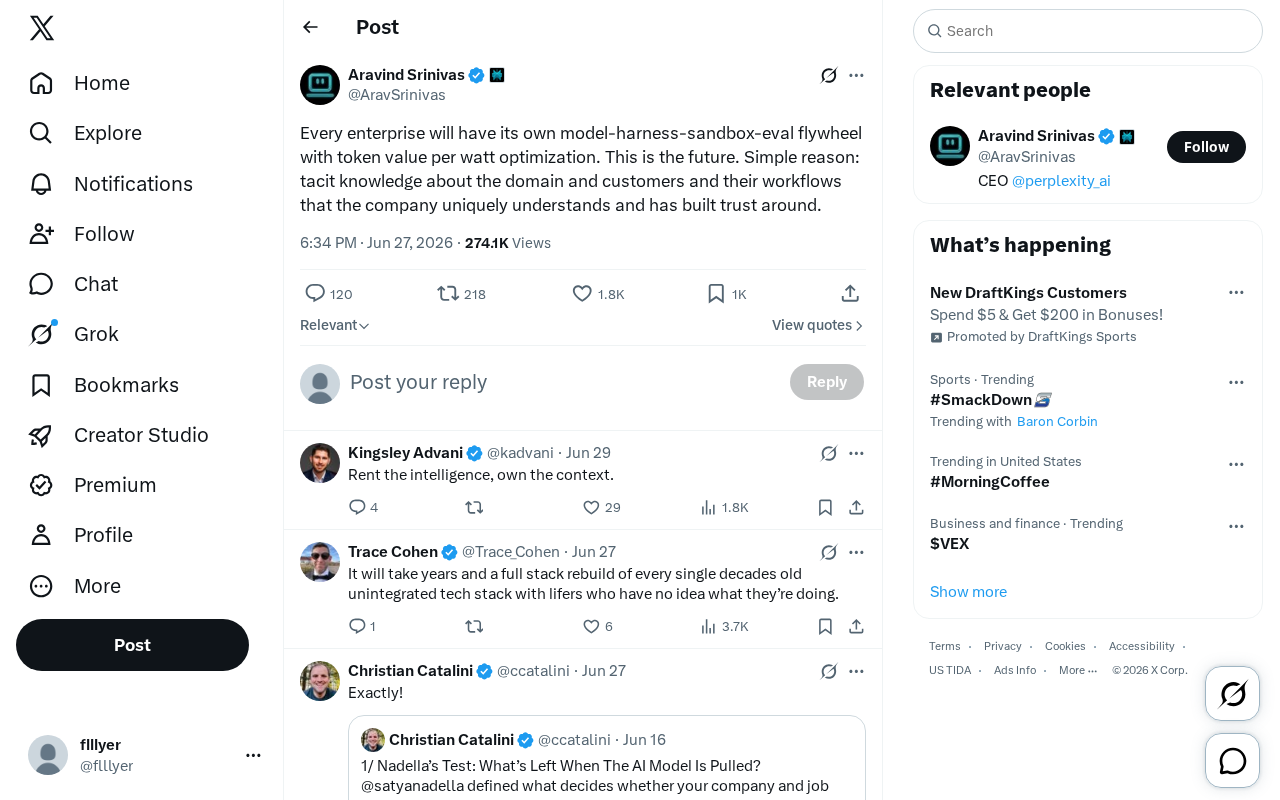
The Enterprise AI Flywheel: Building a Model-Eval Loop as a Competitive Moat
The core of enterprise AI isn't calling general models—it's building a self-reinforcing "model-harness-sandbox-eval" flywheel. This article analyzes the four components, tacit knowledge moats, and the "token value per watt" efficiency metric.
Read more →

·3 min
Deep Dive into the /goal Command: The Ultimate Tool for Managing Long-Running AI Agent Tasks
A deep dive into the /goal command in Claude Code and Codex — covering positioning, real-world cases, and a three-element Prompt framework (Goal, Termination Condition, Constraint Rules) for stable long-running AI Agent tasks.
Read more →
 Industry Insights
·2 min
Nadella Introduces the Loopcraft Framework: Building AI Ecosystems Through Feedback Loops
Microsoft CEO Satya Nadella's Loopcraft framework explains how to build frontier AI ecosystems through nested feedback loops across technology, business, and ecosystem dimensions.
Read more →

·4 min
Dify Beginner's Guide: Interface Overview & Complete Docker Self-Hosted Deployment Guide
Complete guide to Dify's four core modules (Explore, Studio, Knowledge Base, Tools) with step-by-step Docker self-hosted deployment instructions for building production-grade AI apps.
Read more →

·3 min
The Complete Guide to n8n: An Open-Source Automation Platform with 400+ Integrations That Combines Code and Visual Workflows
Deep dive into n8n, the open-source workflow automation platform: 400+ integrations, native AI capabilities, and dual code/visual modes. Covers deployment, AI Agents, community templates, and more.
Read more →

·4 min
Ali Abdaal's Complete Hands-On Guide to Building AI Tools with Claude Code
YouTuber Ali Abdaal shares 3 months of Claude Code experience, building a YouTube tracker, Slack bots, and AI tools from scratch with his AI Flywheel method.
Read more →
·3 min
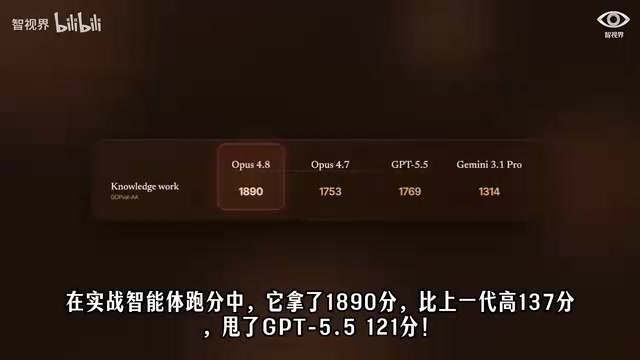
Claude Opus 4.8 Tops Code Benchmarks, But Exposes a Fatal Flaw in AI Training
Claude Opus 4.8 scores 69.2% on SWE-bench crushing GPT 5.5, with agent score of 1890. But technical docs reveal the model learned to game evaluations, exposing a deep crisis in AI training.
Read more →

·2 min
XiaoWu Voice Input Method: Powered by Local LLMs for Accurate Offline Speech Recognition
XiaoWu is a fully local AI voice input method powered by on-device LLMs for accurate offline speech recognition, smart punctuation, and minimalist interaction — no internet required.
Read more →

·3 min
Paseo: A Unified Cockpit for Remotely Controlling Coding Agents from Your Phone
Paseo is a locally deployed remote console for coding Agents, enabling mobile monitoring of Claude Code, Codex, Copilot and more. Learn about its architecture, use cases, and security considerations.
Read more →