#SQL project ideas
129 related articles

·4 min
G.I.A.ac: An AI Architect That Generates Working Apps from a Single Sentence
G.I.A.ac (General Intelligence Architect) is an AI architect tool that generates runnable apps from a single sentence. Deep dive into its positioning, competitive landscape, target users, and core challenges.
Read more →

·4 min
What It Feels Like When Production Actually Runs Like Localhost
Why does production never match local? This article analyzes root causes like config gaps and dependency drift, and explores how Docker, Twelve-Factor App, and IaC practices bridge the dev-prod divide.
Read more →

·2 min
If AI Writes All the Code, What's Left for Programmers?
AI coding tools are spreading fast—so where does programmer value lie? This article analyzes three key role shifts: from writer to reviewer, implementer to designer, and lone wolf to coordinator.
Read more →

·5 min
Opus 5 Builds a No Man's Sky-Style Exploration Game in One Day: MCP and Sub-Agent Architecture Explained
A developer used Anthropic's Opus 5 model to build a No Man's Sky-style space exploration game in one day using Blender MCP and sub-agents. Deep dive into the technical architecture and industry implications.
Read more →

·2 min
Virgin Atlantic Uses ChatGPT: Weeks of Work Compressed to Hours
Virgin Atlantic deploys ChatGPT Enterprise, using Codex to build custom dashboards, integrate multi-source data, and compress weeks of analysis into hours, accelerating product development and CX decisions.
Read more →

·3 min
The Complete Beginner's Guide to Vibe Coding: Core Logic and Practical Learning Path
Vibe Coding is the new AI-era programming paradigm. Describe what you want in plain language; let AI generate the code. Learn the 3-stage path: mindset, quality, and real projects.
Read more →

·7 min
Context Engineering: A Systematic Approach to Stop AI Agents from 'Talking Nonsense'
Context engineering is the core methodology for building efficient AI Agents, covering query enhancement, RAG retrieval, prompt design, memory management, and tool invocation. Master Write, Select, Compress, and Isolate to solve LLM hallucination at its root.
Read more →

·6 min
The AI Builder's Handbook: A Complete Guide to LLM Principles, RAG Architecture, and Agent Design
From the autocomplete nature of LLMs, tokens, and context windows to RAG vector databases, the MCP protocol, and AI agent loop design — this article uses vivid analogies to unpack the reality of AI engineering.
Read more →

·2 min
Dify + RAG in Practice: Building a Game-Specific AI Assistant from Scratch
Build a RAG knowledge base from scratch using Dify's low-code platform. A hands-on Delta Force game assistant case study covering agents, knowledge base setup, and private deployment.
Read more →

·3 min
Dify 1.8 Complete Beginner's Guide: Build 20+ AI Apps Fast
A complete Dify 1.8 guide covering 3 deployment methods (Docker/cloud/source), MySQL integration, 5 app types (Chatbot/Agent/Workflow), model selection, and publishing strategies.
Read more →

·3 min
Career Pivot at 47: Midlife Job Anxiety and Redefining Competence in the Age of AI
A 47-year-old engineer who pivoted to data science faces re-employment struggles — a mirror of AI-era anxiety: does using AI count as coding? How to break the midlife career trap?
Read more →

·3 min
AI Toolchain-Driven Development: A Guide to Rebuilding Programmer Core Competencies
AI is driving software development's third tool revolution. Explore how MasterGo AI, Cursor, and similar tools span design to code, and learn the future competitiveness formula: full-stack skills + AI proficiency + real-world experience.
Read more →

·4 min
Vibe Coding in Practice: Ship an App from Idea to Live in 5 Steps with AI Tools
Use Google Stitch, AI Studio, AntiGravity, GitHub, and Vercel to go from idea to live app in 5 steps. A complete Vibe Coding walkthrough — minimal cost, no deep coding required.
Read more →
·2 min
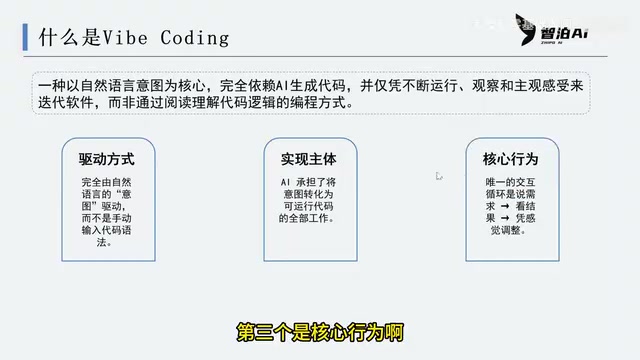
Vibe Coding Beginner's Guide: Build Real Apps with AI — No Coding Experience Required
Vibe Coding lets anyone build apps using AI and natural language — no coding required. Learn the core concepts, real success stories (including a $1M app), and why Tencent, Alibaba & ByteDance are hiring for it.
Read more →

·2 min
Husband-Wife Cereal Brand Uses OpenAI Codex to Build Enterprise-Grade Operations System
A founder couple used OpenAI Codex and GPT-5.6 to build an enterprise-grade ops dashboard for cereal brand Three Wishes — no technical co-founder needed.
Read more →

·3 min
How CS Students Should Use AI to Learn Programming — Without the "Used It But Learned Nothing" Trap
Many CS students use AI to learn programming but later feel they didn't truly learn. This article breaks down the two AI learning traps and offers Socratic questioning, the Feynman Technique, and more to turn AI into a real learning accelerator.
Read more →

·2 min
Revisiting SHRDLU: The Technical Lineage and Modern Value of Procedural Semantics
From SHRDLU to modern neuro-symbolic AI: explore procedural semantics, CCG grammars, semantic parsing, and interactive fiction engines in today's NLP landscape.
Read more →

·2 min
Getting Started with Vibe Coding: Build Apps Without Writing Code
Vibe Coding lets anyone build apps using natural language — no coding required. Learn what it is, which tools to use, and see real stories of non-programmers shipping products.
Read more →

·3 min
Vibe Coding for Beginners: How Ordinary People Can Command AI to Code — and Do the Work of an Entire Team
Naval Ravikant says Vibe Coding lets one person do the work of 8 engineers. Learn what Vibe Coding is, which tools work in China, and how to start in 3 steps.
Read more →

·2 min
Vibe Coding for Beginners: Build Software with AI Using Natural Language — No Coding Experience Required
Vibe Coding lets non-technical users build software through natural language conversations with AI. Learn what it is, what you can create, and how to get started with your first mobile webpage project.
Read more →